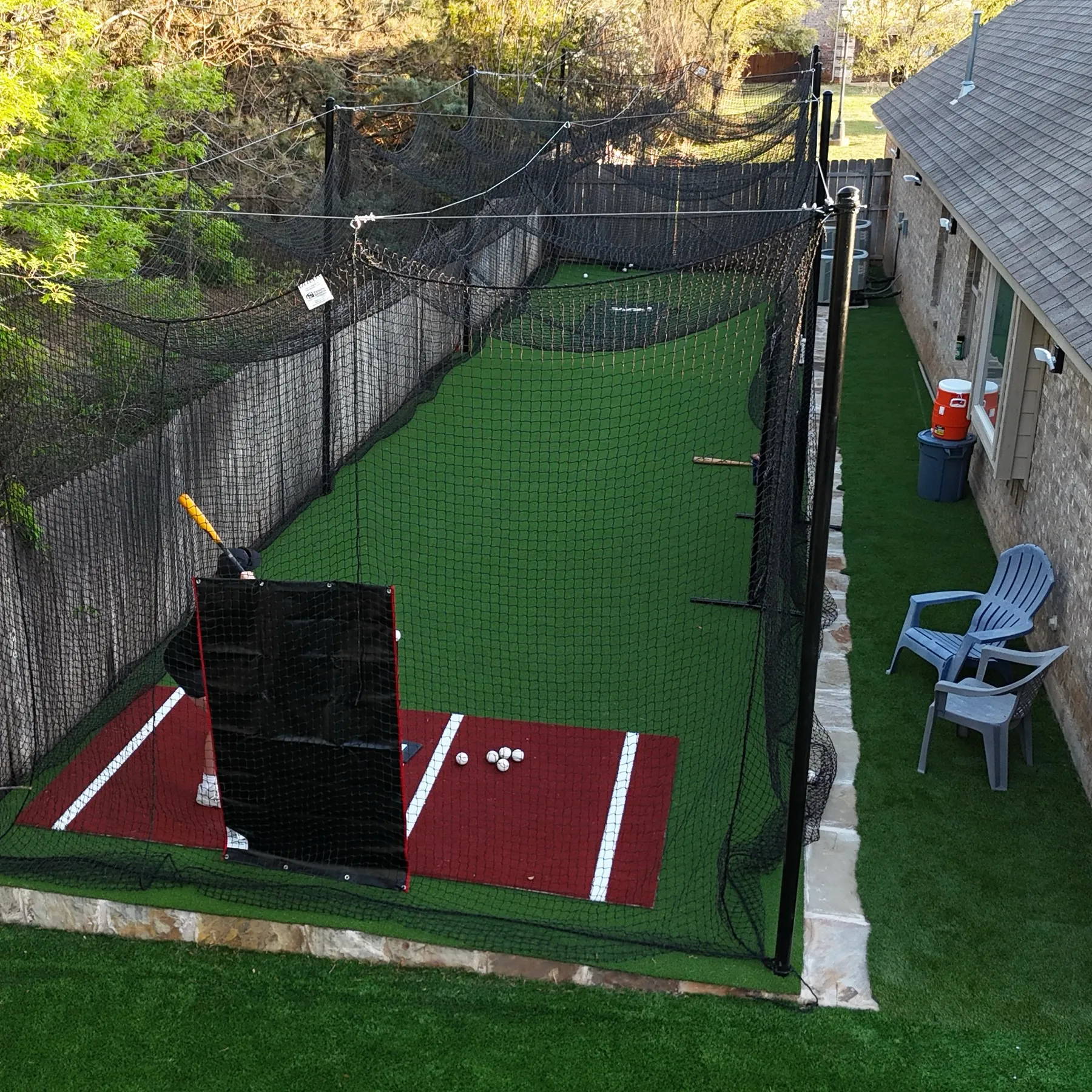
Every parent who’s driven to a public batting facility on a Tuesday night knows the routine: check the app for an open bay, wait for the group ahead to clear out, drive home, do it again in three days. A backyard cage removes that entire loop. But “removes the hassle” is a soft benefit, and a $6,000 to $12,000 structure deserves a harder look than that. So here’s the actual math, including the part where you rent it out and make some of it back.
What you’re buying before a single dollar comes back
Three things change the day the cage goes up, and none of them show up on a spreadsheet:
Unlimited availability. No booking window, no waiting for a bay, no driving distance. If your kid gets home from school with 20 minutes before dinner and wants to work on a swing flaw from the weekend’s game, that’s available. So is 6:45am before a Saturday tournament, or a 30-minute session squeezed in between two other kids’ activities. Public cage time is scarce by design (the facility only has so many bays). Your backyard cage isn’t scarce for you.
Zero travel time. This is the part that’s easy to undercount. If the nearest decent public cage is even 15 minutes each way, that’s 30 minutes of windshield time added to every practice session, on top of whatever the session itself costs. Twice a week for a full season, that’s real hours back in a parent’s evening, every single week, indefinitely.
A gathering point for the team. A cage in the backyard turns into the place teammates show up to hit before or after games, where parents end up standing around talking while their kids take reps. That’s a genuine, if hard-to-price, benefit for a family invested in a travel team or a kid who’s serious about the sport. It’s the same reason some families build a pool: the value isn’t just the asset, it’s what gathers around it.
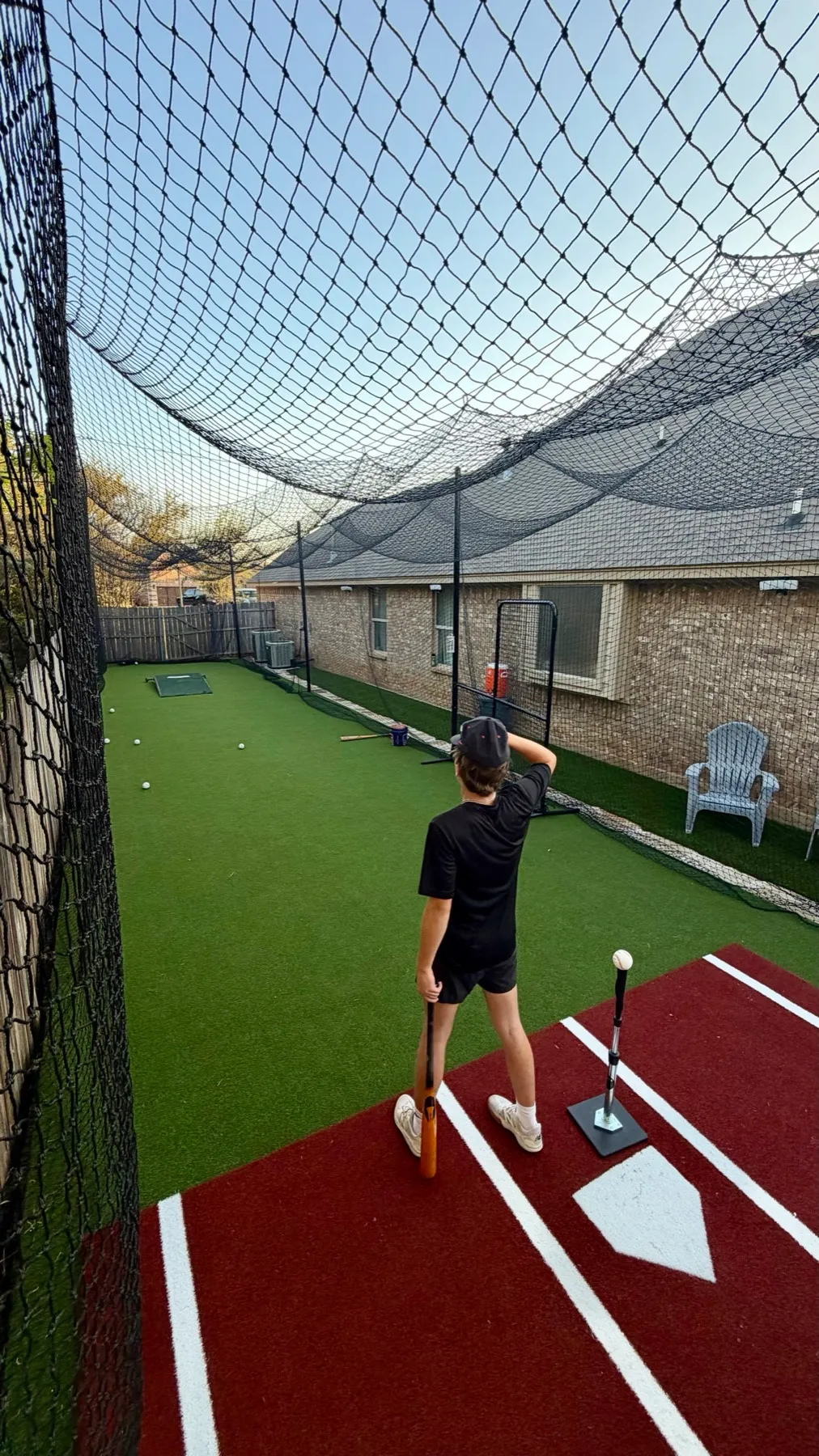 Tee work at 6pm on a school night. No drive, no waiting for a bay, just walk out the back door.
None of that requires charging anyone anything. But if you’re going to have unused cage time most of the week anyway, there’s a real case for renting it out.
The math on charging the team
Here’s the scenario: you let your kid’s team (or a couple of neighborhood families) use the cage for a modest fee, say $50 an hour, instead of leaving it empty. How fast does that actually offset the build cost?
Run three honest scenarios, not the optimistic one:
| Usage | Sessions/month | Monthly revenue | 5-month season |
|---|---|---|---|
| Conservative (roughly weekly, allowing for rainouts and skipped weeks) | 4 | $200 | $1,000 |
| Moderate (about 1.5x/week) | 6 | $300 | $1,500 |
| Committed (2x/week, no missed weeks) | 8 | $400 | $2,000 |
Against our actual backyard package pricing, here’s what that means for payback:
| Package | Price | Seasons to break even (conservative) | Seasons to break even (committed) |
|---|---|---|---|
| Backyard Rookie 30 | $5,999 | ~6 | ~3 |
| Backyard Rookie 40 | $6,299 | ~6.3 | ~3.2 |
| Backyard Starter 35 | $8,999 | ~9 | ~4.5 |
| Backyard Pro 55 | $12,199 | ~12.2 | ~6.1 |
Read honestly, a single team renting time at $50/hour doesn’t pay off a backyard cage in one season. That’s the straight math and we’re not going to dress it up. What changes the picture is volume: if two teams (yours plus a neighbor’s, or two age groups sharing the same bay on different evenings) split time on the same cage, you’re at 16 sessions a month instead of 8, which is $800/month and $4,000 over a 5-month season. At that rate, a Backyard Rookie 30 is close to paid off in a season and a half, and a Backyard Pro 55 lands around three seasons instead of six.
The honest takeaway: rental income turns a backyard cage from “sunk cost you’d buy anyway for the convenience” into “asset that pays for a meaningful chunk of itself,” especially past year one. It’s not a business. It’s a modest offset on something you were going to build regardless.
One thing worth doing before you start charging anyone
If you’re going to take money from other families for regular use, even $50 at a time, tell your homeowner’s insurance carrier. Occasional, informal use by your kid’s own teammates is one thing; a standing arrangement where other families pay to use a structure on your property is the kind of liability exposure some policies want to know about. It’s a five-minute phone call, and it’s the difference between “informal team perk” and “thing that becomes a problem if someone gets hurt.” Worth doing regardless of how modest the fee is.
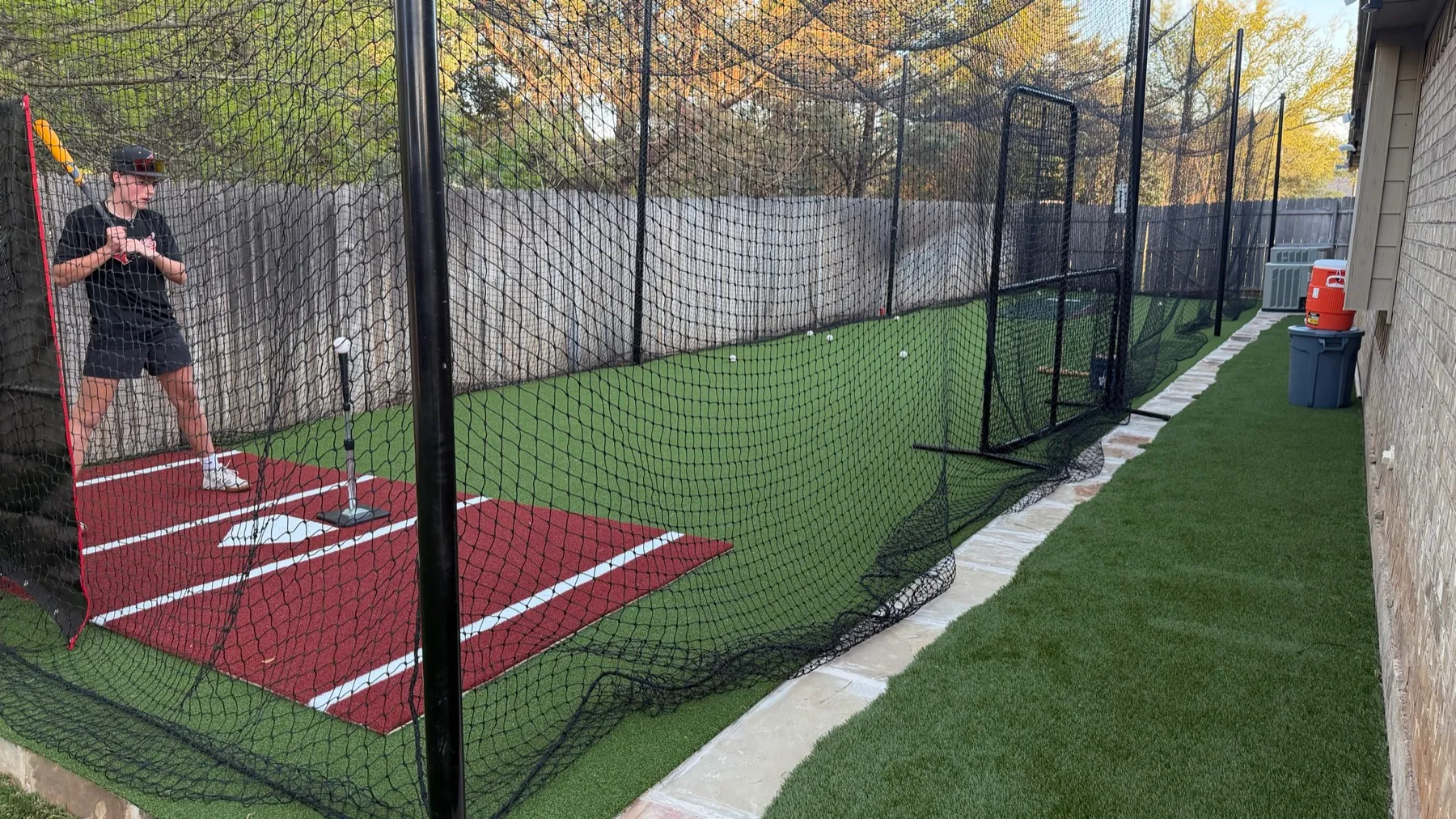 A full-length side-yard build. The chairs next to the cage get as much use as the cage itself once the team starts showing up.
Sizing the cage that makes this math work
The rental math above assumes a real cage, sized for actual team reps, not a toy. Our backyard packages run from a $5,999 Rookie 30 up through a $12,199 Pro 55, all Cimarron equipment with Bearcat net hanging and surfacing. If you already know roughly what size and frame you want, browse the four pre-priced packages and pick the one that fits your footprint and budget.
If your yard has an odd shape, a slope, or you want to spec netting gauge and surfacing yourself, run the cage configurator instead. Five steps, real pricing, no guessing.