Technical Reference
ASTM F1292 for playground turf.
What F1292 actually certifies, how critical fall height maps to your equipment, why the shock pad does the real work, and what a school or daycare bid spec has to say to produce a compliant playground.
If you are putting synthetic turf under playground equipment at a school, daycare, church, or park, ASTM F1292 is the standard your surface has to meet. It is a head-injury safety test, not a comfort spec, and it is the standard insurers, licensing agencies, and plaintiff attorneys reach for first. This page explains what the certification covers, what it does not, and how to write a spec that produces a playground that stays compliant, not just one that passed on day one.
What F1292 certifies
F1292 measures impact attenuation: how well a surface protects a child’s head in a fall. The test drops an instrumented headform onto the surface from a specified height and records two values. G-max is peak deceleration, in gravities. HIC, the Head Injury Criterion, weighs both the severity and the duration of the deceleration pulse. A surface passes at a given fall height only if g-max is at or below 200 and HIC is at or below 1,000. Those two thresholds are the bright lines of playground surfacing, and they come straight from head-injury research.
Critical fall height vs. equipment height
The critical fall height (CFH) is the highest drop height at which the surface still passes both criteria. Every surfacing system carries a CFH rating from its lab testing. On the other side of the equation, every piece of playground equipment has a designated fall height, generally the highest platform, deck, or climbing point a child can stand on.
Compliance is the match between the two: the surfacing CFH must meet or exceed the equipment fall height throughout the use zone. An 8-foot deck over turf certified to 6 feet is a non-compliant playground even though every individual component has paperwork. When we quote a playground, the first question we ask is the fall height of the tallest structure, because that number sizes the whole surfacing system.
The shock pad does the work
Playground turf passes F1292 because of what is under it. The turf and infill contribute minimal attenuation on their own; the shock pad beneath the turf, a foam or bonded-rubber layer of specified thickness and density, provides nearly all of the protection. Pads are manufactured and certified in thickness tiers, and CFH scales with thickness: pads around an inch commonly certify in the 4 to 6 foot range, while thicker or layered pads reach 10 feet and beyond. The exact numbers vary by product, which is why the certificate for the specific system, not a generic thickness chart, is what belongs in your submittals.
One more thing the certificate assumes: the installed system matches the tested system. Same pad, same thickness, same turf, same infill depth. Substitutions to save money quietly void the rating.
IPEMA certification
IPEMA, the International Play Equipment Manufacturers Association, runs the third-party certification program most institutional buyers rely on. An IPEMA-certified surface has been tested by an accredited independent lab to F1292 at its stated CFH, and the listing is publicly verifiable. Many Texas school district and municipal specs require IPEMA certification by name rather than accepting a manufacturer test report. If your spec does not say it yet, add it: it costs nothing and it removes the weakest link in the paper chain.
What a school or daycare bid spec needs
- Required CFH stated as a number, matched to the tallest equipment fall height, not just a citation of F1292.
- IPEMA-certified F1292 documentation for the exact turf-plus-pad system, delivered with submittals.
- Install documentation of pad thickness, seam continuity, and infill depth. We photograph pad seams on every commercial playground before turf goes down.
- ASTM F3313 field verification after install, with a retest cadence (annual is the common institutional choice).
- Accessibility per ASTM F1951 where routes cross the surfacing, standard on public school work.
Lab rating vs. field reality: F1292 and F3313
The lab certification proves the system design. It does not prove your playground, as installed and as aged, still performs. That is what ASTM F3313 is for: the same instrumented headform test, run in place on the installed surface. Compacted infill, a pad that has taken on water or degraded, and separated seams all push g-max and HIC upward over time, so a playground can drift out of compliance without looking any different. Field verification at install plus periodic retesting is what closes that gap, and the documented reports are what protect the district if an injury claim ever arrives. Maintenance matters here too: grooming, infill top-ups, and working drainage (see our permeability and drainage reference) keep the system performing the way it tested.
A recent playground build
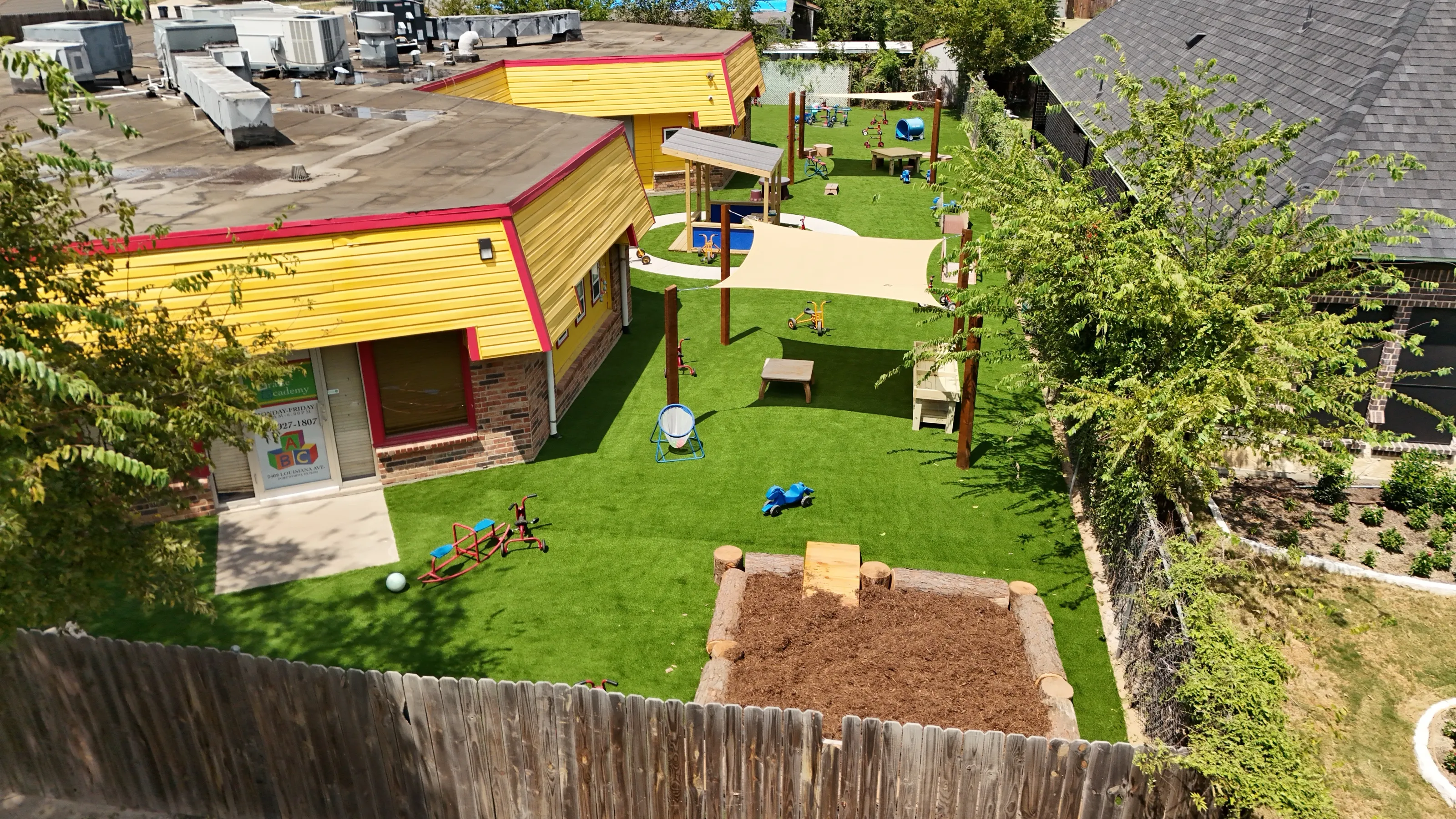
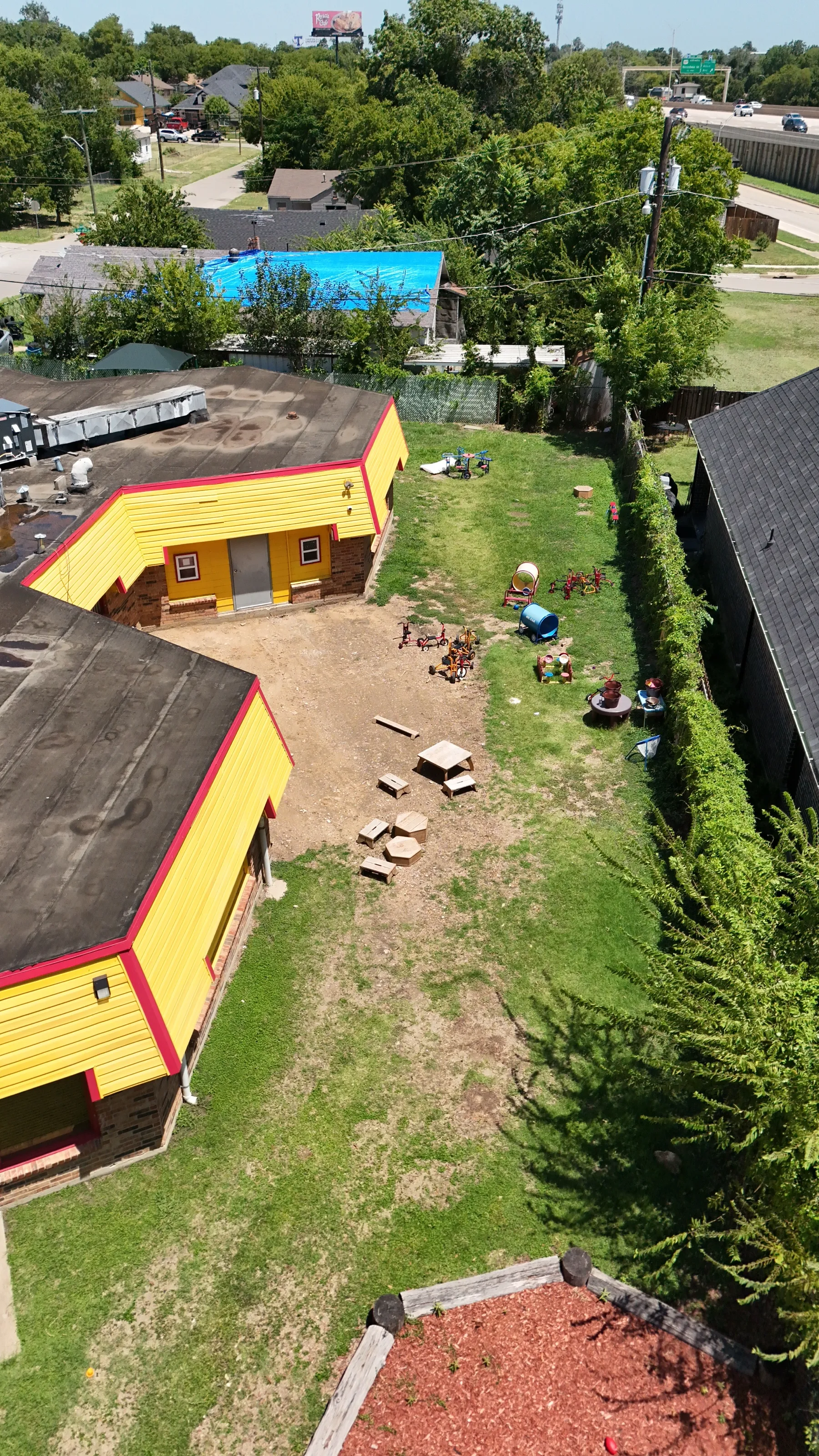
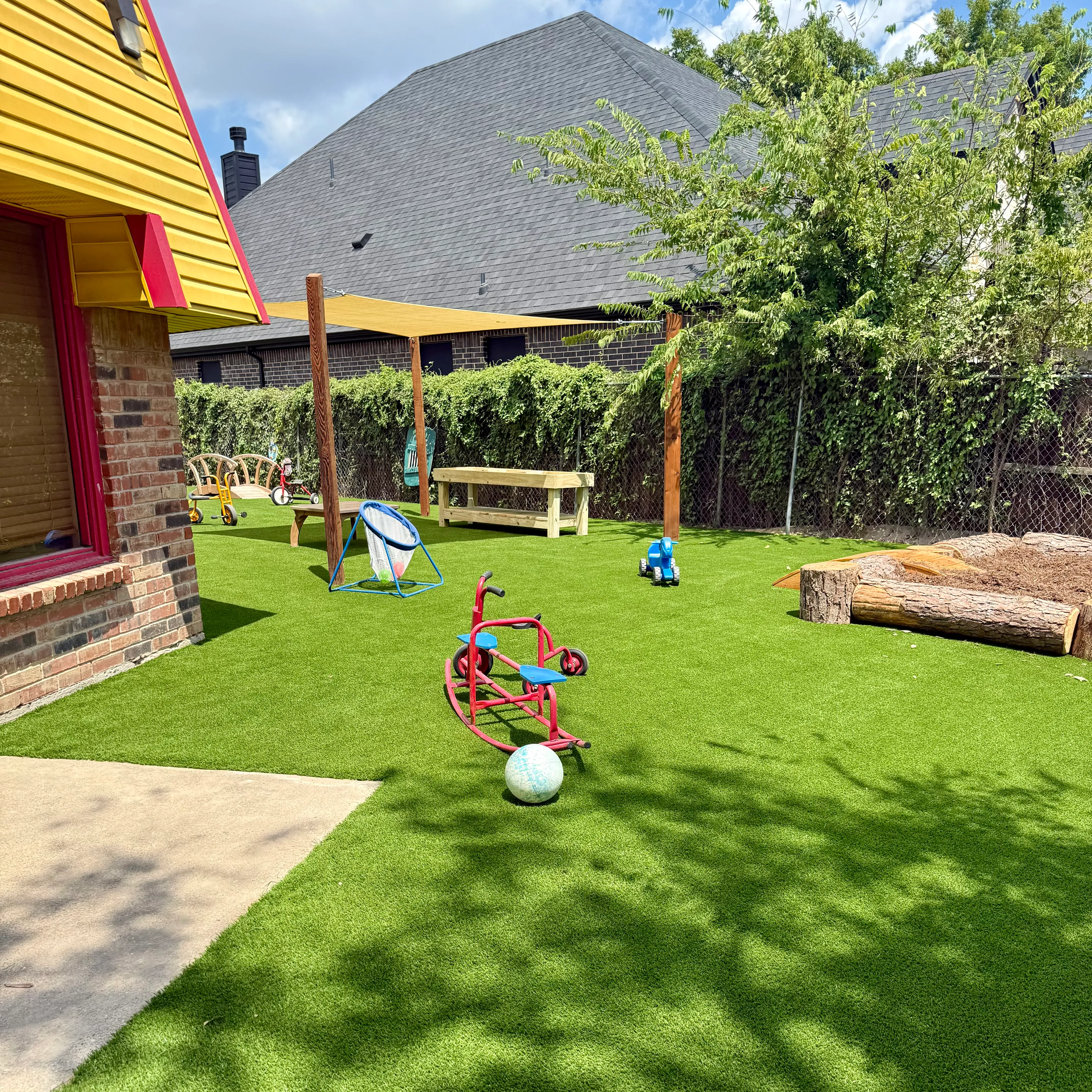
Perfect Praise Academy, a daycare in Fort Worth, replaced a worn, patchy 6,000 SF play yard with playground-grade turf over a certified pad system, in partnership with Green Space Learning. Drag the slider to see the before and after.
We install playground turf systems across DFW with IPEMA-certified pads matched to your equipment fall heights, and every commercial proposal includes the F1292 documentation your spec requires. Send us the spec, or the playground layout if the spec is not written yet, and we will respond with a full submittal package.
Spec Desk
Writing a bid spec? Start from our model spec document, or send us your RFP and we will respond within one business day.
ASTM F1292 playground turf FAQ
What is ASTM F1292?
ASTM F1292 is the Standard Specification for Impact Attenuation of Surfacing Materials Within the Use Zone of Playground Equipment. It drops an instrumented headform onto the surface from a specified height and measures two things: peak deceleration (g-max) and the Head Injury Criterion (HIC). A surface passes at a given fall height if g-max is at or below 200 and HIC is at or below 1,000. The highest height at which it still passes is its critical fall height rating.
What is needed for a school to install turf under ASTM F1292?
Three things. First, a surface system (turf plus shock pad) with a laboratory F1292 certification at a critical fall height that meets or exceeds the fall height of the tallest piece of playground equipment. Second, an installation that matches the certified system exactly: same pad thickness, same turf, same infill, with documentation. Third, most district specs require the certification to come from an IPEMA-validated listing and require the installer to deliver the certificates with submittals.
What is critical fall height and how does it relate to equipment height?
Critical fall height (CFH) is the maximum fall height at which a surface still passes both F1292 criteria (g-max at or below 200, HIC at or below 1,000). Every piece of playground equipment has its own designated fall height, usually the height of the highest platform or climbing point. For a compliant playground, the surfacing CFH must be equal to or greater than the equipment fall height everywhere within the use zone. CPSC guidance and most school safety codes are built on this match.
Do I need a pad under playground turf?
For any playground with equipment, effectively yes. Turf and infill alone provide minimal impact attenuation; the shock pad under the turf does almost all of the work. Pads are certified in thickness tiers, and thicker pads carry higher critical fall height ratings. As a rough guide, pads around one inch commonly certify in the 4 to 6 foot range and thicker multi-layer pads certify to 10 feet or more, but the only number that counts is the tested CFH on the certificate for the exact system being installed.
What is IPEMA certification for playground surfacing?
IPEMA (International Play Equipment Manufacturers Association) runs a third-party certification program that validates a manufacturer claim of F1292 compliance through independent laboratory testing. An IPEMA listing means the surface system was tested by an accredited lab at the stated critical fall height, and the listing is publicly searchable. Many school district and municipal bid specs require IPEMA-certified surfacing rather than accepting a manufacturer test report alone.
How often should playground turf be tested for compliance?
The lab F1292 rating certifies the system as manufactured; it does not guarantee the surface as installed or as aged. The common institutional practice is field verification at installation, then periodic retesting: annually for high-use school and daycare playgrounds, and after any event that could change the system, like pad repairs, infill loss, or drainage work. Field testing is done under ASTM F3313, which applies the same headform test to the installed surface.
What is the difference between ASTM F1292 and F3313?
F1292 is the laboratory specification: it certifies a surfacing system design at a rated critical fall height under controlled conditions. F3313 is the field test method: it drops the same instrumented headform on the actual installed playground to verify the surface performs in place. A bid spec should cite both: F1292 certification in submittals, and F3313 field verification after install and on a retest cadence.
Does maintenance affect F1292 compliance?
Yes, and this is the part most owners miss. Compacted or migrated infill, a waterlogged or degraded pad, and seams that have separated all raise g-max and HIC over time, so a playground that passed at install can quietly fall out of compliance. Grooming, infill top-ups, and drainage upkeep protect the rating. Documented periodic field testing is what proves compliance if an injury claim ever lands on the district desk.