The project
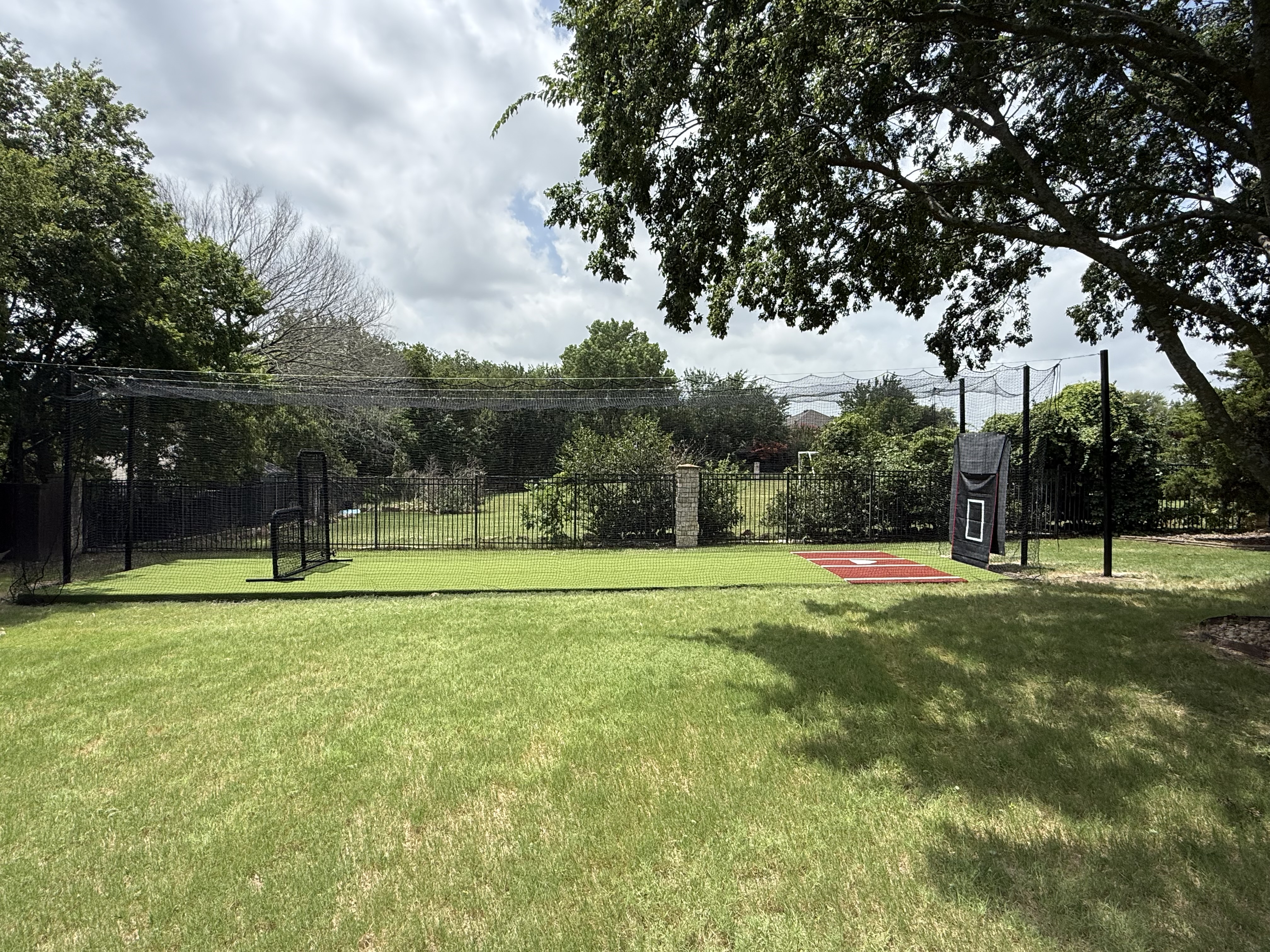
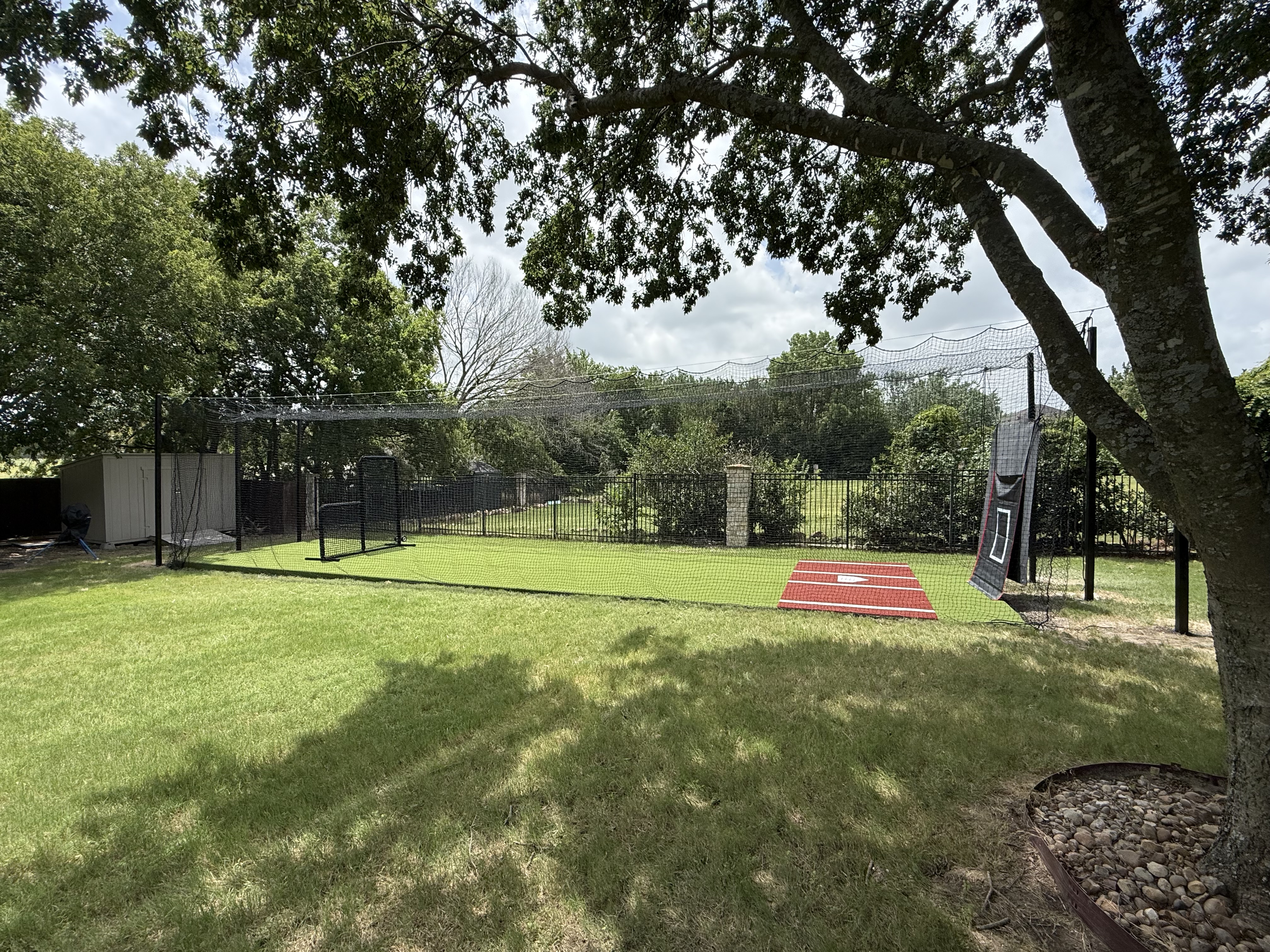
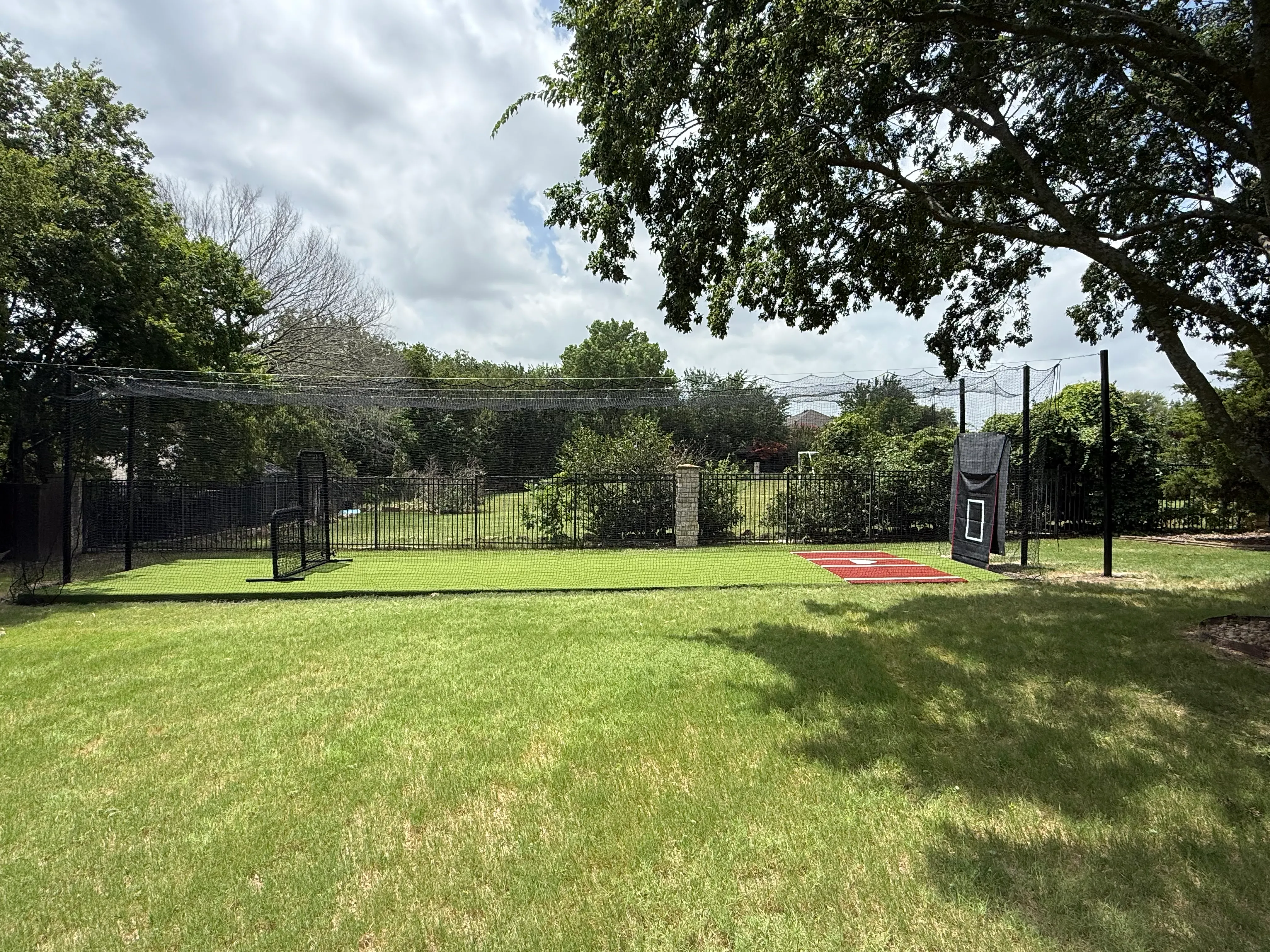
A travel-ball family in Allen wanted a real hitting setup at home instead of another rotation of rental-cage time slots. The result is a full-size 55x12x12 outdoor batting cage: a Cimarron net rigged to four freestanding steel posts, a 660-square-foot turfed hitting area built on a crushed recycled-concrete sub-base, and a genuine clay batter’s box instead of a painted outline.
Steel posts, not a bolt-together frame
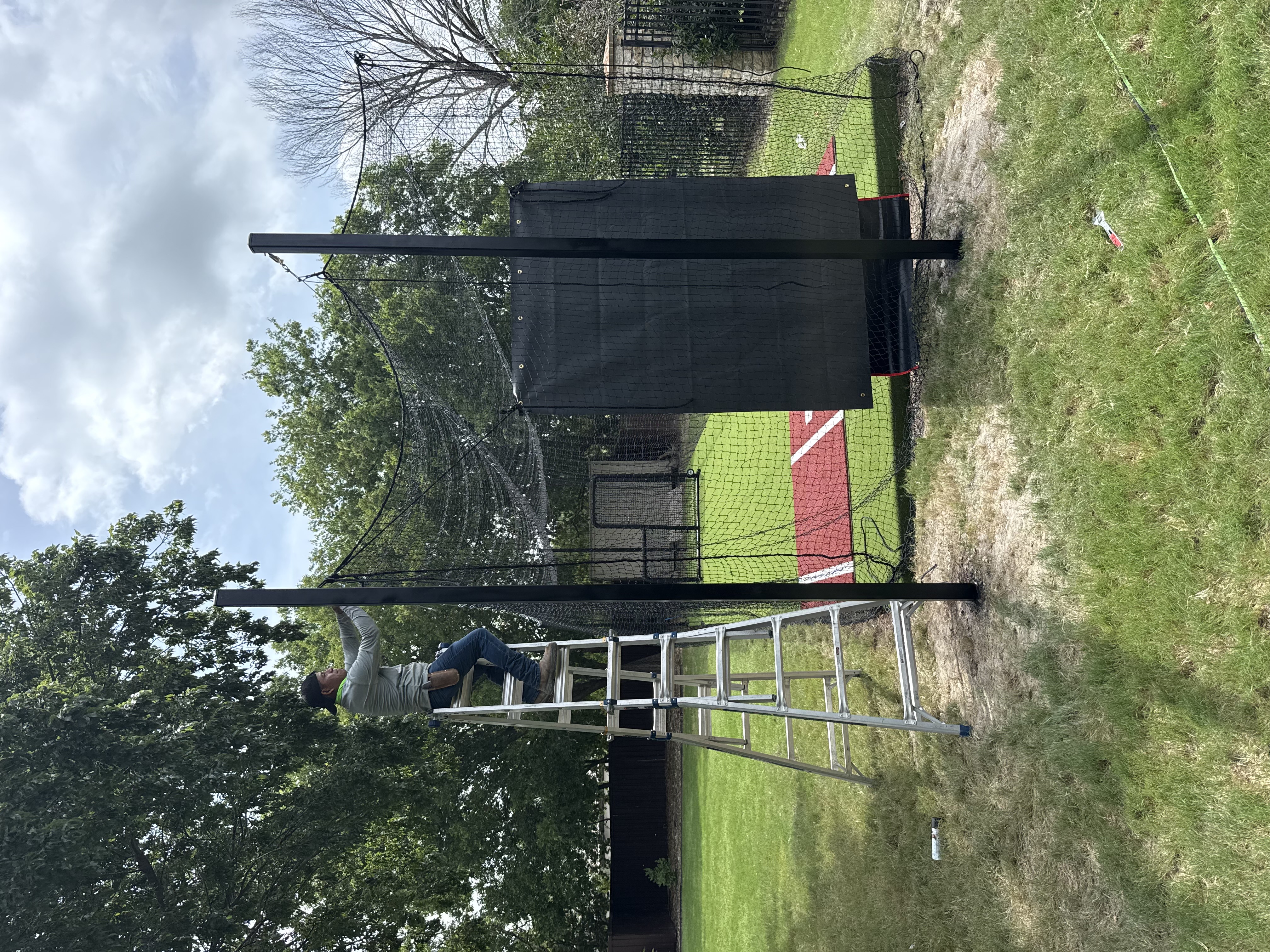
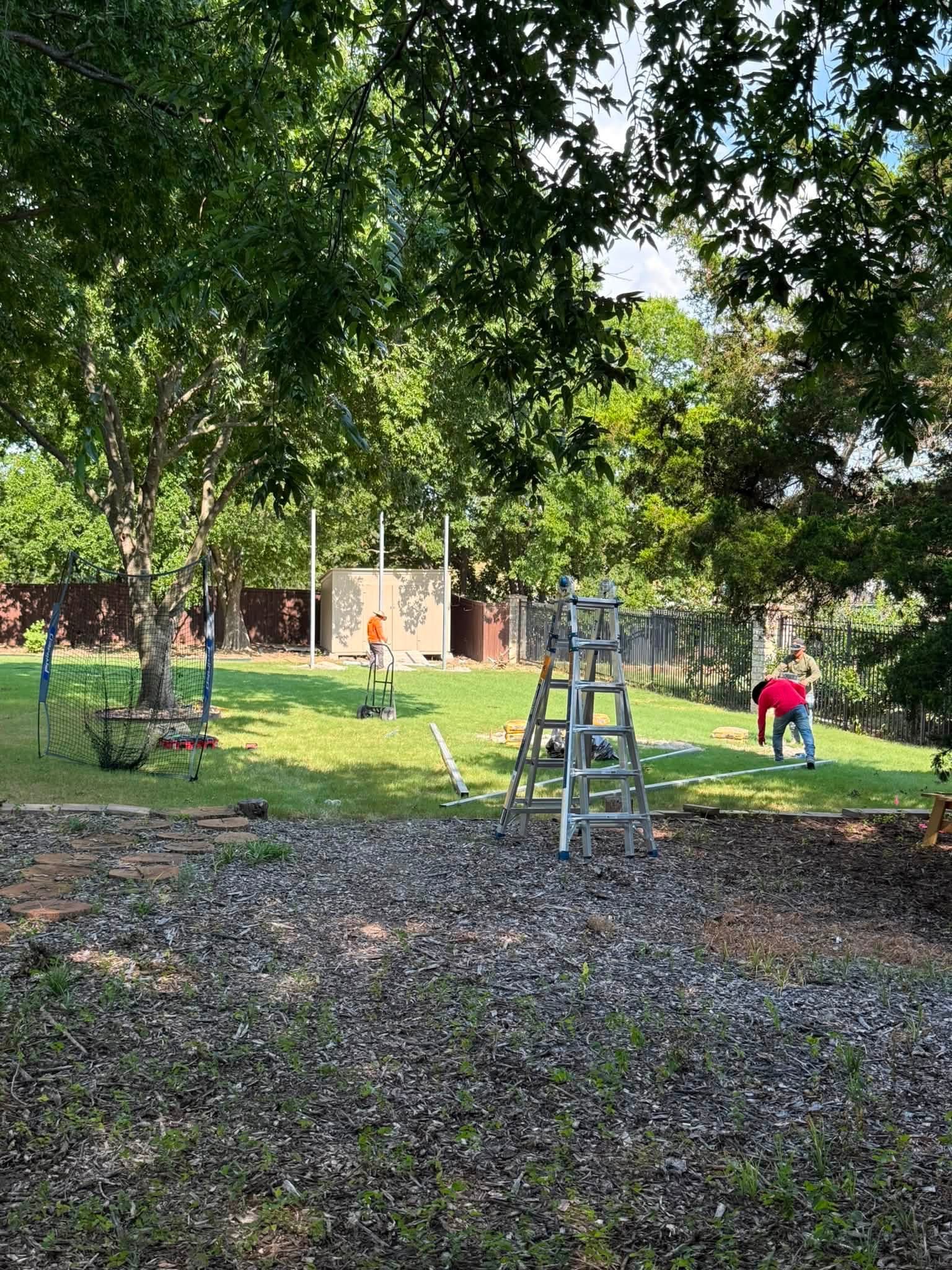
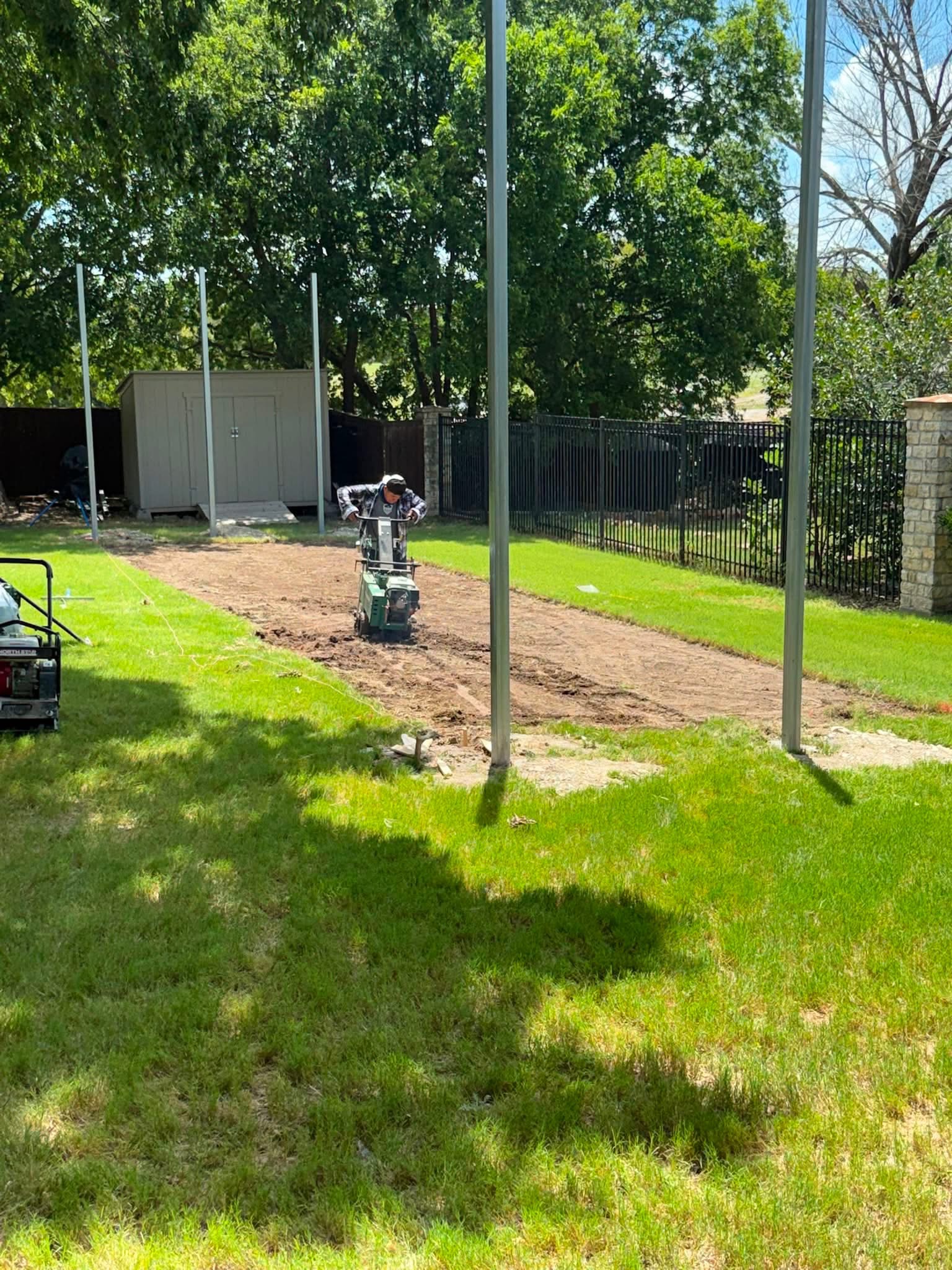
The cage frame is four black steel posts, 15 feet tall, set 3 feet below grade. That’s a real foundation, not a kit frame pinned to the surface. A freestanding post system like this holds a full-size net through North Texas wind without guy-wires eating up yard space on every side, and it reads as permanent structure to an HOA reviewing the plans (relevant in a lot of Allen neighborhoods).
The netting itself is a Cimarron 55’x12’x12’ #24 twisted poly batting cage net, rigged with a Cimarron 55’ cable kit and 50 Cimarron carabiners. #24 twisted poly is the standard gauge for a backyard cage that’s going to see regular use across multiple seasons rather than every-day facility traffic.
Crushed concrete base, no-infill turf
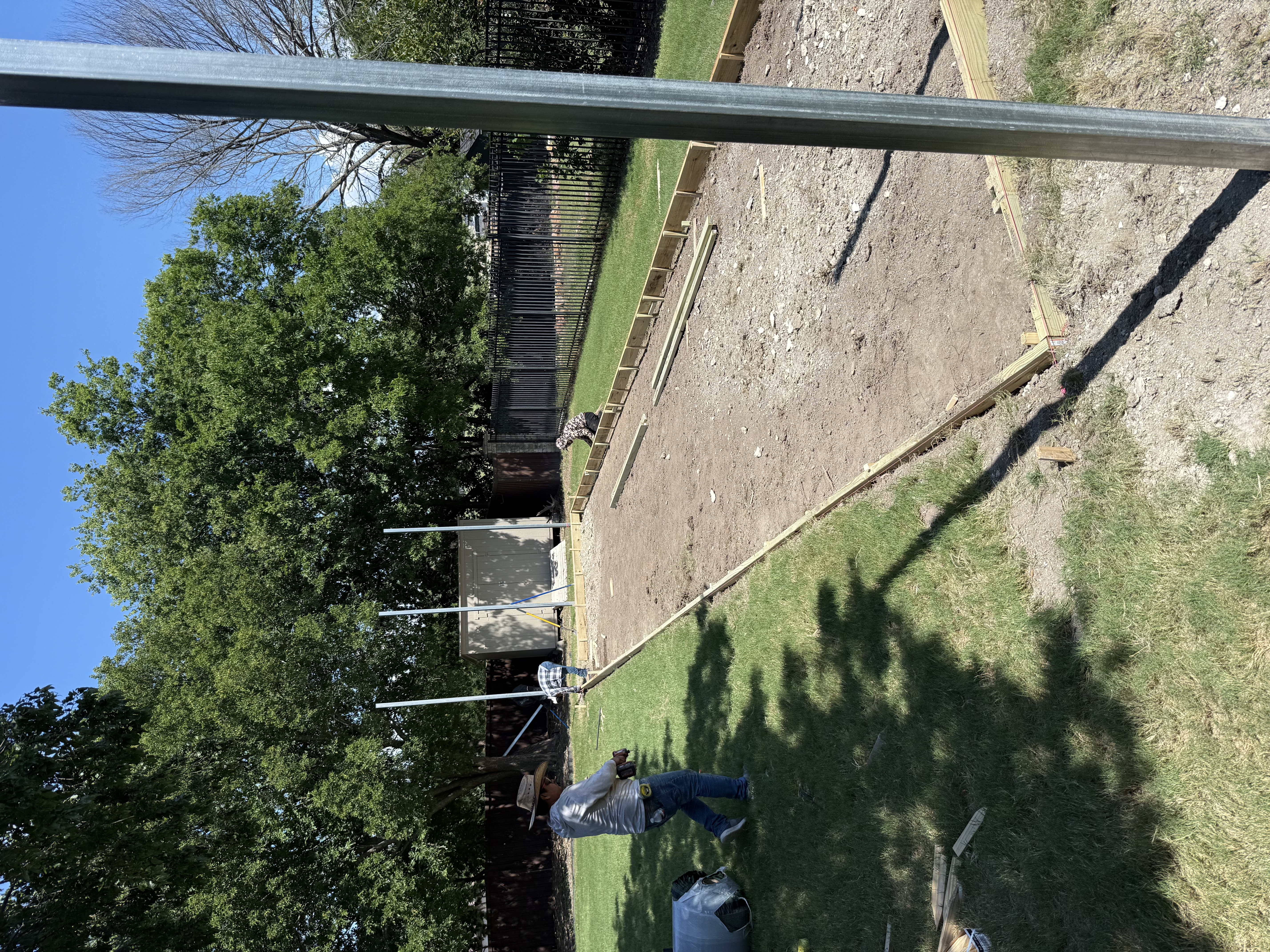
Underneath the turf is a crushed recycled-concrete sub-base, capped with a 15-year commercial-grade weed barrier before the turf goes down. That combination handles drainage the way an outdoor cage needs to: water moves through the base instead of pooling under the net posts or turning the batter’s approach to mud after a DFW downpour.
The turf itself is Batting Cage Pro artificial turf, a product spec’d for the wear pattern a hitting cage actually produces (repeated foot-planting in the box, not general foot traffic) and installed with no infill required. No infill also means nothing to migrate into the net, the L-screen, or a pitching machine over years of use.
A batter’s box inlay, not just a painted rectangle
Instead of leaving the hitting turf uniform, we cut in a clay-look batter’s box inlay with painted white lines, home plate, and pitching-distance markers. The contrast against the green field turf reads the same way it does at a real field: the hitter’s eye finds the box immediately instead of guessing where to stand.
An L-screen rounds out the setup for front-toss and machine work, giving whoever’s throwing protection without needing a second net structure.
Why the backyard beats the rental cage
The math on a rental-cage membership doesn’t hold up past a season or two for a family with a kid seriously in the game: a recurring monthly fee, a drive across town, and a shared time slot that has to work around everyone else’s schedule too. A cage in the backyard turns “get some swings in” from a 45-minute round trip into walking out the back door. For a full-size 55x12x12 build like this one, that’s front-toss, machine work, and short-distance live BP available any evening the yard’s free.
What a build like this costs
Bearcat backyard cage installs typically run $8,000 to $35,000, depending on frame system, net gauge, whether the hitting surface gets dedicated turf or uses existing grass, lighting, and any batter’s-box or pitching-machine work. A build with a full crushed-concrete base, commercial turf, and a real clay batter’s box like this one sits toward the upper half of that range.
Get a quote for your yard and we’ll walk the space, check what the frame and drainage need to look like, and put a real number on it.
About Bearcat Turf & Outdoors
Bearcat Turf & Outdoors is a family-owned, Aledo-based outdoor contractor serving the full DFW metroplex, including Allen and the rest of Collin County. We install batting cages, artificial turf, and outdoor training surfaces on residential and commercial properties. HUB Certified by the State of Texas, BBB Accredited, fully insured.
See all projects · Backyard batting cages · Free quote
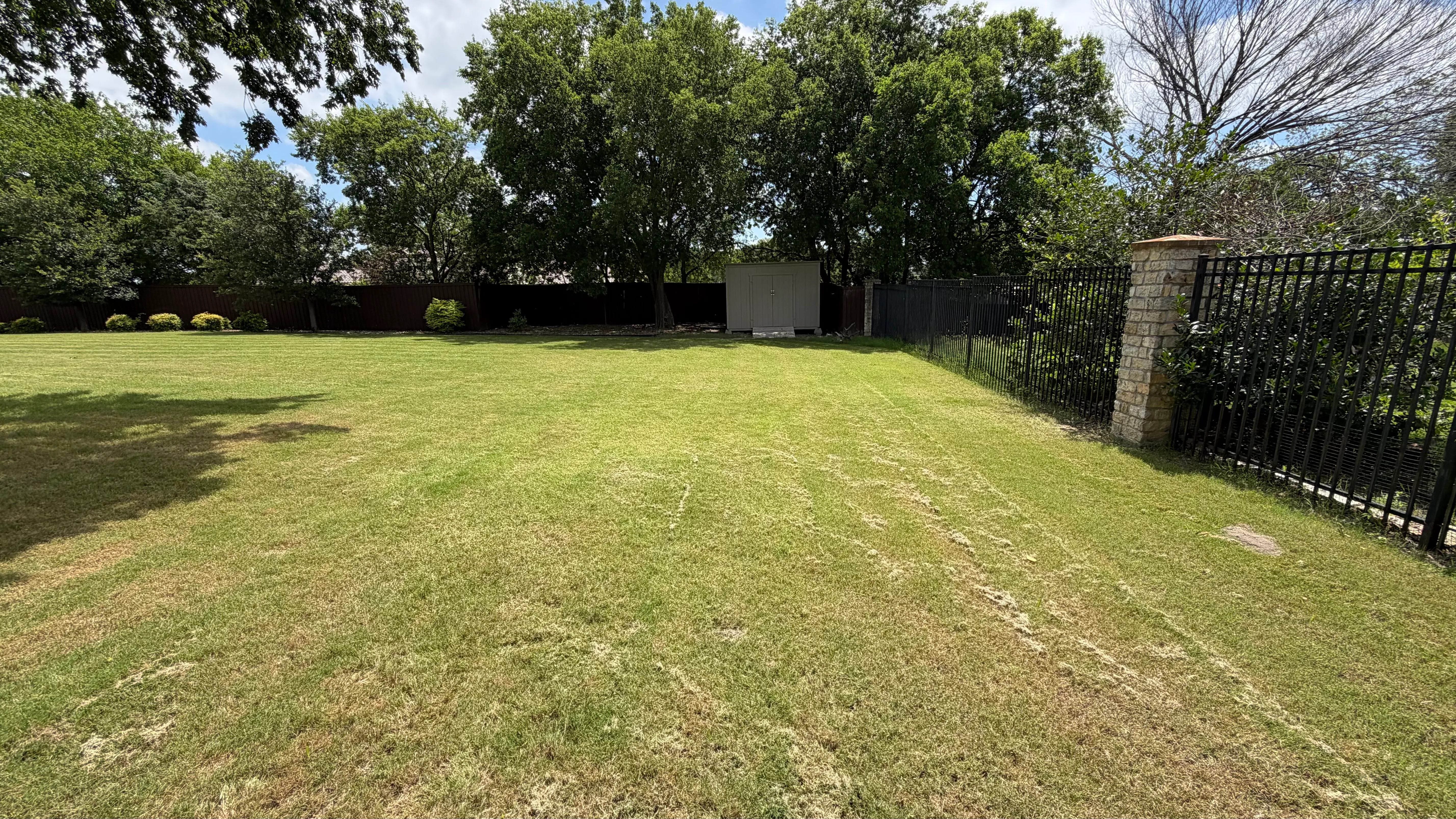
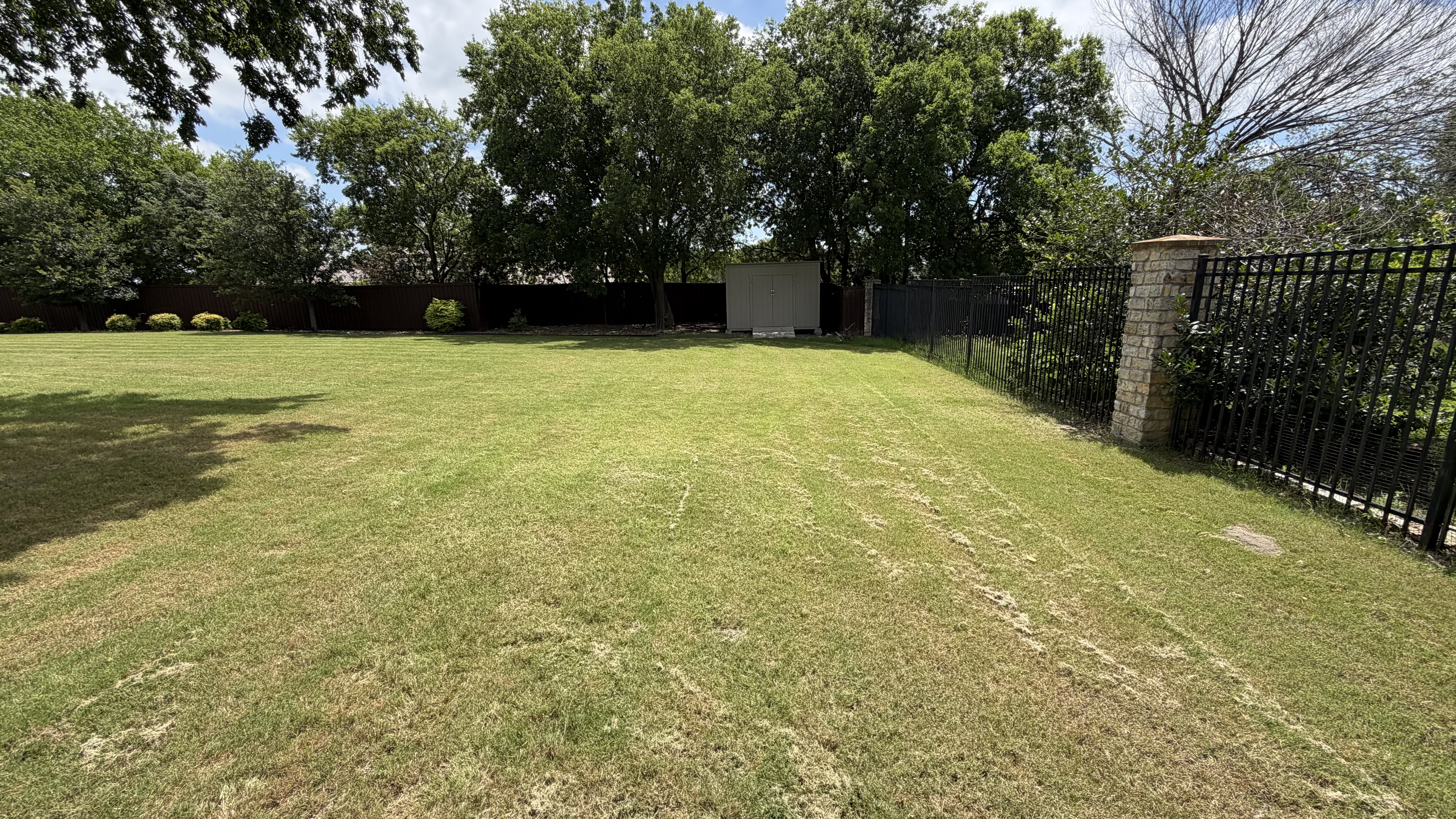
Before
What we started with.
Decades of neglected grass and bare zones. Good bones, pool, sports court, kitchen all in place, but the surface tying it together had been losing the fight for years.
During
In the build.
Demo, sub-base lifts, laser grading, putting green build, and seaming. One week start to finish.
After
The finished space.
Completed-project photography — on-the-ground, in context.