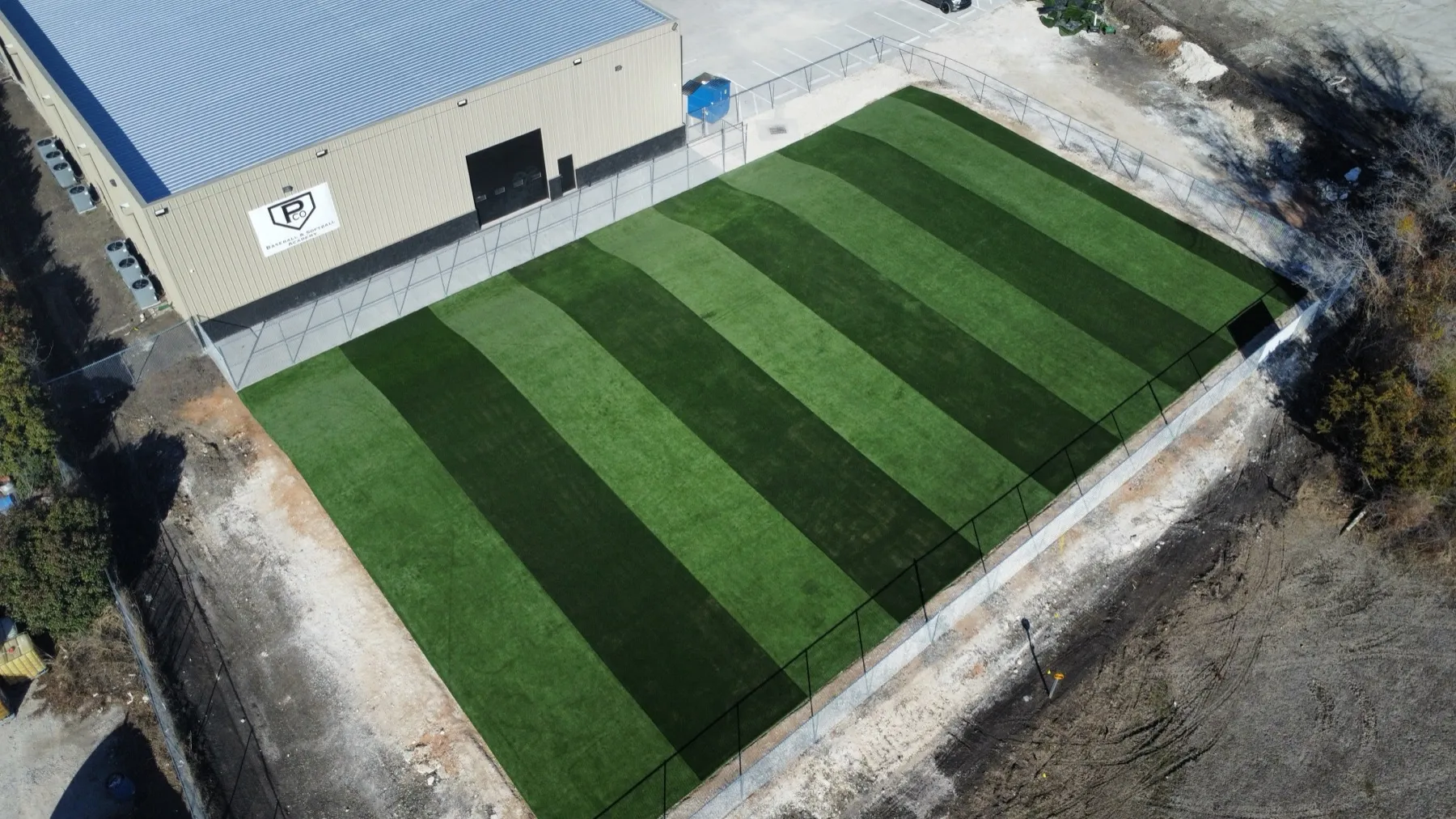
Mini-pitch · Small-sided soccer · Futsal
Mini-pitches: the field between a backyard and a stadium.
Small-sided soccer fields for HOAs, churches, schools, academies, apartment developers, and parks departments across Dallas-Fort Worth. Convert a dead tennis court for $17K to $25K in surfacing, or build ground-up from $45K to $125K. Line-item bids either way.
Bonded · Insured · HUB Certified · BBB Accredited · Based in Aledo, TX
What a mini-pitch actually is.
A mini-pitch is a hard-sided or open small-sided soccer field, usually somewhere between 30x50 feet and 60x100 feet (futsal regulation is roughly 82x49 feet, if you want a reference point). The surface is short-pile sport turf with inlaid lines. Rebound boards or perimeter fencing keep the ball in play, which keeps the game continuous: no chasing balls into a parking lot, no dead time. Add LED lighting and it becomes an evening amenity that gets used more after 6pm than before.
It sits in a gap in the market. Residential installers stop at the backyard practice field. Institutional builders start at the full-size field. The $45K to $125K project in between, the one an HOA board or a church facilities committee is actually budgeting for, is the tier almost nobody in DFW markets to. We build it.
Two build paths, two very different budgets.
Mini-pitch pricing confuses buyers because the same finished court can cost $20K or $100K. The difference is not the turf. It is what you are building on.
Path A: the budget path
Over an existing court or slab
An old tennis court, a cracked basketball court, an unused parking pad: if the concrete is sound, the expensive work is already done. We install sport turf directly over the slab at our published surface-only rate of $3.60 to $4.70 per square foot, so a 4,700 square foot small-sided court lands in the $17K to $25K range, plus goals and fencing.
About a week of construction. The single best value in sports turf, and most properties with a dead tennis court do not know this option exists.
Path B: the ground-up build
On grass or dirt
Starting from turf-less ground means a full engineered base build: excavation, compacted aggregate, drainage sized for North Texas clay, a curb or timber perimeter, then sport turf with inlaid lines. At this scale that typically runs $10 to $16 per square foot all-in, so $45K to $125K depending on footprint and how far you go on perimeter, fencing, and lighting.
2 to 4 weeks of construction. You choose the exact footprint, orientation, and spec instead of inheriting a tennis court's dimensions.
Which one are you?
Honest test: walk the property. If there is a flat concrete or asphalt slab of at least 2,500 square feet that nobody has used in years, you are a Path A buyer and your project just got 60 to 75 percent cheaper. If the candidate site is lawn, dirt, or a slope, you are a Path B buyer, and the base and drainage are where the money goes, exactly as they should. If you are not sure the slab is sound, we will look at it before you commit to either number.
Why every DFW board is suddenly asking about soccer.
Two forces are driving this tier. Nationally, the US Soccer Foundation and similar programs have spent years popularizing mini-pitches as the highest-usage-per-dollar soccer infrastructure there is: a small lit court in a neighborhood gets played on more hours per week than most full-size fields, at a fraction of the capital cost. The model is proven, and buyers who research the category find it quickly.
Locally, the 2026 World Cup is being hosted partly in Dallas-Fort Worth, with matches at Arlington. We have no affiliation with any of it, and neither does your HOA, but the effect is real: every youth program, church, and community board in the metroplex is thinking about soccer amenities this year, and the boards that move now will have a finished court while their neighbors are still forming committees.
Who builds mini-pitches, and why.
HOAs
The amenity that shows up in listings
A mini-pitch photographs like a resort amenity and programs itself: kids use it after school, adults use it evenings and weekends. For communities competing on amenities, it is one of the few additions that both realtors and residents bring up unprompted.
HOA turf projects →Churches
Weeknight youth programming, weekend rentals
A lit mini-pitch turns an unused corner of the property into the reason families show up Wednesday night. Many churches also rent court time to local clubs and leagues, which puts real revenue against the build cost.
Talk through a church project →Private schools + academies
Training density per square foot
A 60x100 sport court hosts more touches per player per hour than a full grass field, and it never closes for rain, reseeding, or wear. For schools without the acreage or grounds crew for natural grass, it is the honest alternative to a field they cannot maintain.
Athletic field services →Multifamily developers
The courtyard amenity that leases units
Mini-pitches fit the odd-shaped parcels that pools and clubhouses cannot use, and they market to exactly the demographic most DFW lease-ups are chasing. We already build turf amenity spaces for multifamily projects across the metroplex.
Multifamily turf projects →Parks departments
The highest-usage-per-dollar soccer asset
A mini-pitch serves more residents per capital dollar than almost any other soccer investment a parks department can make: open play all day, league play at night, no mowing, no irrigation, no reseeding budget.
Commercial athletic fields →What a Bearcat mini-pitch build includes.
Whether it is a slab conversion or a ground-up build, the proposal covers the whole project, not just the turf:
Base or slab preparation
Engineered aggregate base on ground-up builds; crack repair, patching, and drainage evaluation on existing-slab conversions.
Sport turf with inlaid lines
Short-pile sport system with permanent inlaid boundary and goal-box lines. No paint to refresh. 15-year manufacturer warranty on turf products.
Goal and rebound-board coordination
Anchored steel goals sized to your format, plus rebound-board systems where continuous play is the goal.
Fencing and lighting coordination
Perimeter fencing or containment netting and LED lighting scoped and coordinated with our fencing and electrical partners under one proposal.
Drainage on ground-up builds
North Texas clay moves with moisture. Ground-up builds get a drainage plan appropriate to the site, not an afterthought.
Line-item proposal
Every scope element priced on its own line with an exclusions list, whether the buyer is a board, a committee, or a GC.
For the full cost picture across every field size, from backyard to stadium, see our turf field cost guide.
Sports Attack authorized dealer
Soccer machines for the mini-pitch.
Bearcat is an authorized Sports Attack dealer. Buy the machine with your build or on its own, at the manufacturer’s list price plus published freight.
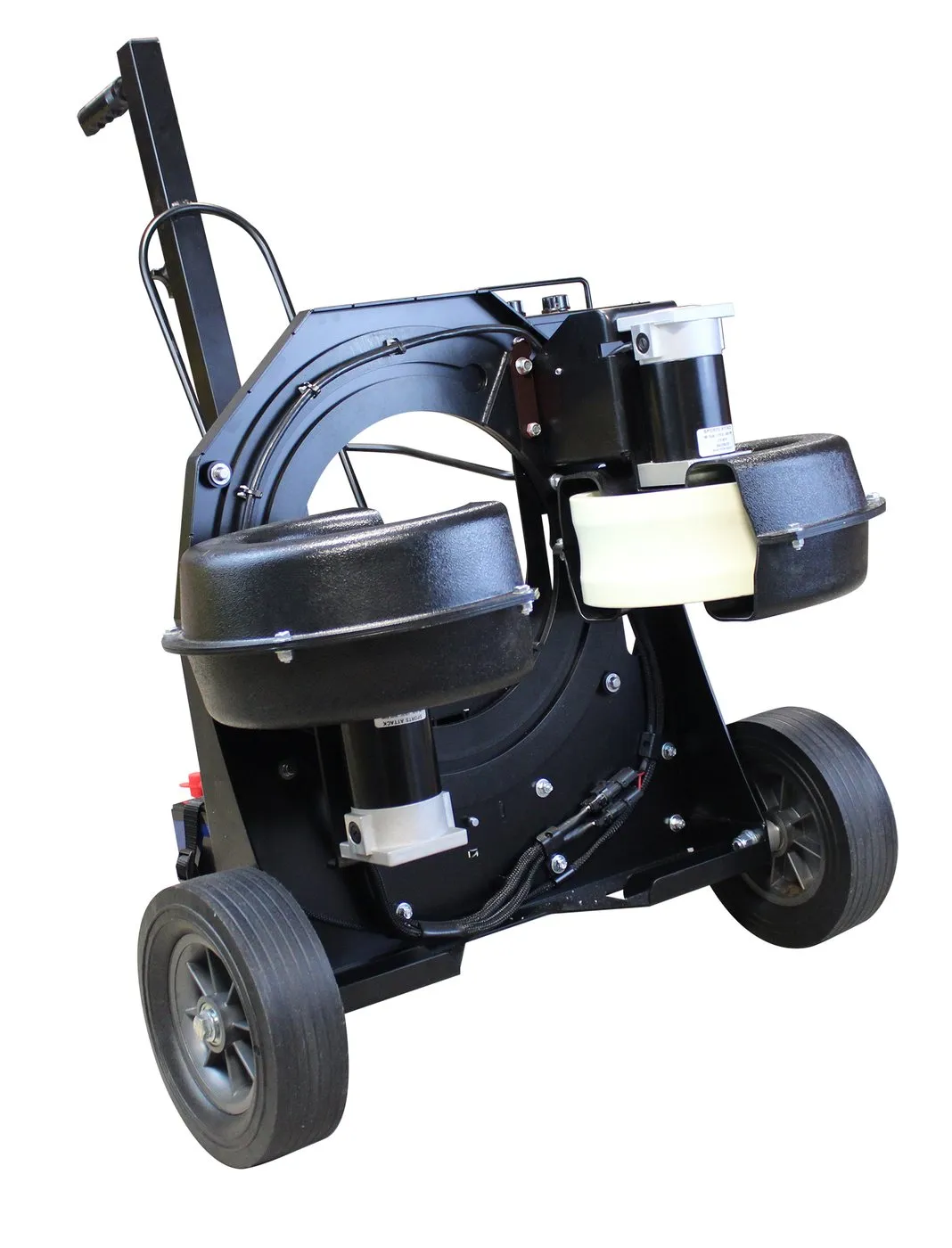
70+ MPH, 70+ yards
Strike Attack
International-speed kicks for keepers, defenders, and attackers.
From $3,099 MSRP + $400 freight
See specs & pricing →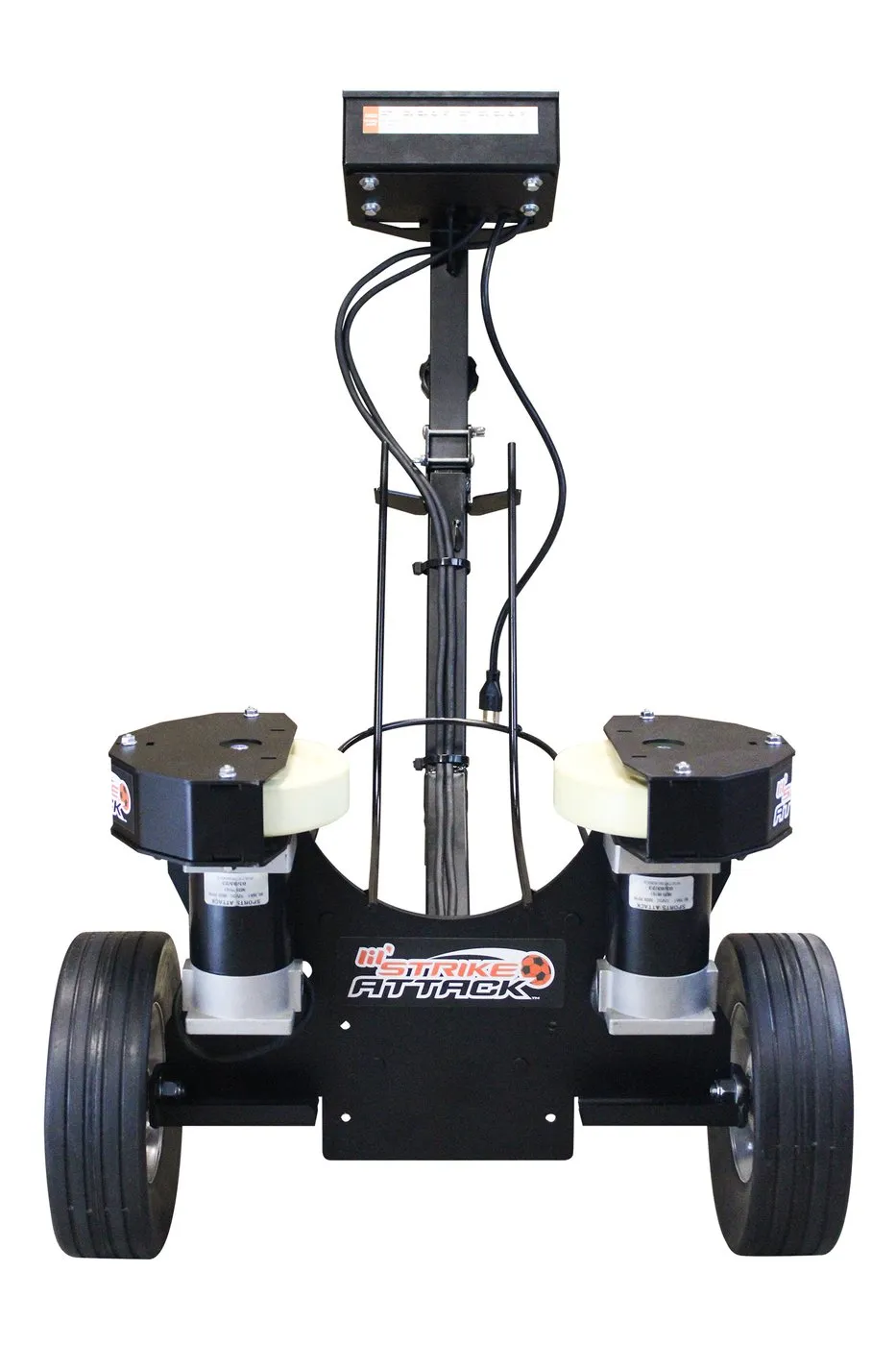
40 MPH, 50 yards
Lil’ Strike Attack
Youth soccer machine for backyards and club training.
From $1,599 MSRP + $160 freight
See specs & pricing →Price is MSRP. Machines ship direct from Sports Attack to your door; freight is listed with each machine from the Sports Attack 2026 rate sheet (continental US). Items without a listed rate are quoted. Warranty through Sports Attack. See every Sports Attack machine.
Mini-pitch questions, answered.
How much does a mini-pitch cost? +
It depends almost entirely on what you are building on. Over an existing tennis court, basketball court, or unused slab, a surface-only install at our published $3.60 to $4.70 per square foot rate puts a 4,700 square foot small-sided court in the $17,000 to $25,000 range, plus goals and fencing. Ground-up on grass or dirt, with an engineered base, perimeter, drainage, and sport turf with inlaid lines, most projects run $10 to $16 per square foot all-in at this scale, so $45,000 to $125,000 depending on footprint and how far you go on fencing, rebound boards, and lighting.
Can you convert an old tennis court into a soccer court? +
Yes, and it is the budget path by a wide margin. A sound tennis or basketball slab is already flat, drained, and structurally done, which means the most expensive parts of a mini-pitch are paid for. We evaluate the slab for cracking and drainage, patch where needed, then install sport turf directly over it at our surface-only rate of $3.60 to $4.70 per square foot. A standard 60x120 foot tennis court is about 7,200 square feet, comfortably larger than most small-sided formats, so one dead court can become a full mini-pitch with room to spare.
What size should a mini-pitch be? +
Common footprints run from 30x50 feet (backyard scale, 3v3 play) up to 60x100 feet (full 5v5 or 7v7 small-sided). Futsal regulation is roughly 82x49 feet, a useful reference if your programming leans toward organized futsal. For most HOA, church, and school sites we recommend the largest rectangle the site allows up to about 60x100: usage scales with size, and the incremental cost per square foot drops as the footprint grows.
Do mini-pitches need special turf? +
Yes. Landscape turf is engineered to look like a lawn; a mini-pitch needs consistent ball roll, predictable bounce, and durability under concentrated foot traffic. That means a short-pile non-infill or low-infill sport system, the same category of product used on padel and futsal courts, not the tall soft pile that goes in a backyard. It plays faster, wears dramatically better in high-traffic zones, and carries a 15-year manufacturer warranty like our other turf products.
How long does mini-pitch construction take? +
On an existing slab, about a week: surface prep, turf install, inlaid lines, and goal placement. Ground-up builds run 2 to 4 weeks at this scale, covering excavation, base construction, drainage, perimeter curb or timber, turf, and lines. Fencing and lighting are coordinated in parallel so they do not extend the schedule. Weather is the main variable on ground-up work; slab conversions are nearly immune to it.
Have a site in mind? Start with the honest number.
Send us the address and a photo of the candidate site: the dead tennis court, the unused corner of the property, the lawn nobody programs. We will reply within one business day with which build path fits and a line-item planning number a board can actually vote on.
Bonded · Insured · HUB Certified · BBB Accredited · Based in Aledo, TX
Related sports turf guides
Cost pillar
Turf field cost, every size
2026 numbers from backyard practice fields to full stadium builds, with per-square-foot tiers.
Residential
Backyard soccer field guide
What a 20x40 to 50x100 backyard pitch costs installed in DFW, and what fits your lot.
Institutional
Full-size field construction
Multi-use soccer and football fields for districts, clubs, and municipalities.