Barn & Metal Building Buildouts
Your building already has four walls and a roof. We do the rest.
If you have a barn, metal building, large detached garage, or pole barn with exposed rafters, you already have the hardest part. We rig Cimarron cage netting from your existing structure, lay a sport turf floor, and build out a practice space that rivals a commercial facility — and still lets the building be a building.
How it works.
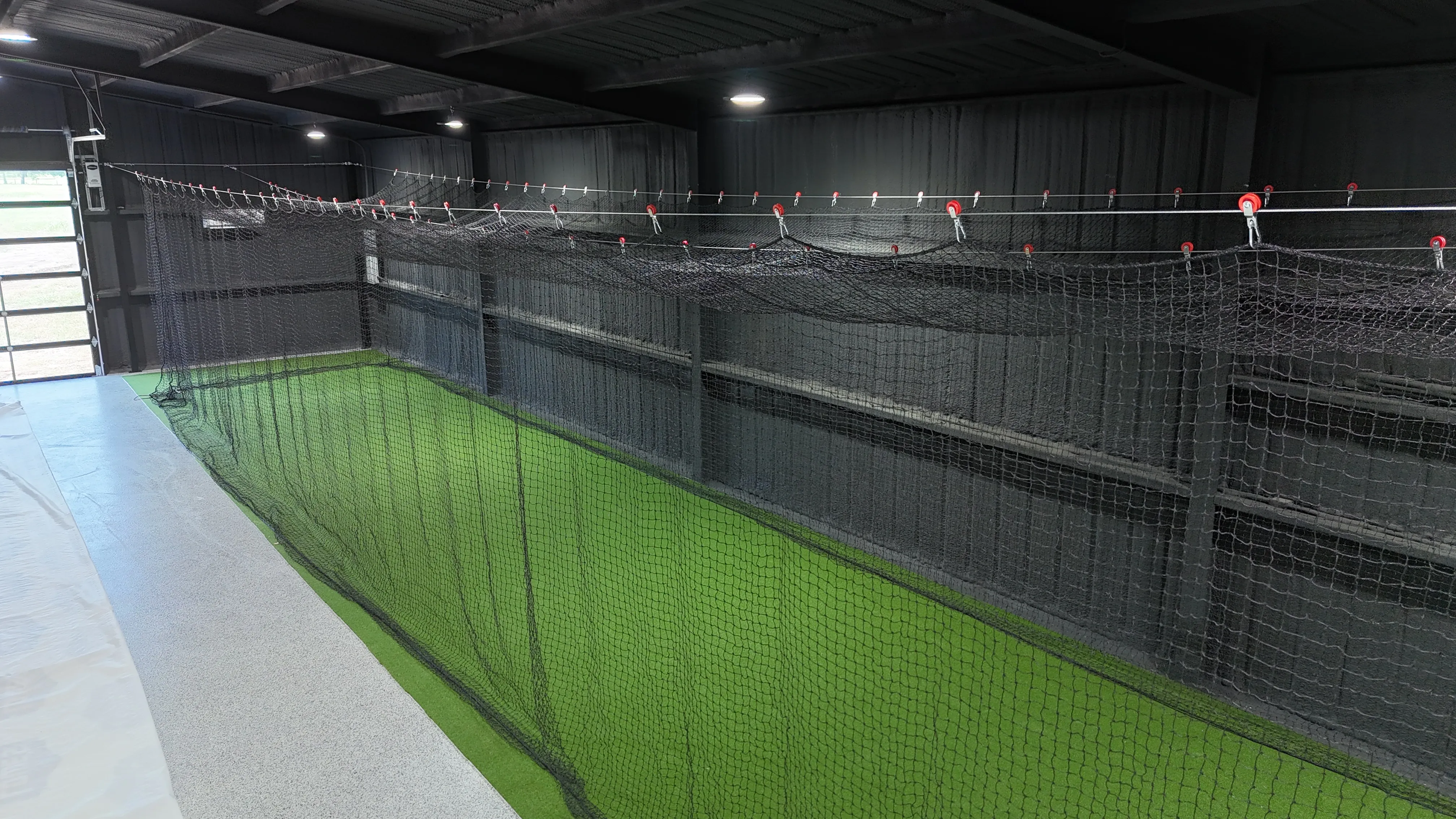
Freestanding outdoor cages need a frame because there is nothing to attach to. Inside a barn or metal building, the existing roof structure does that job. We thread stainless Cimarron cables through your rafters or purlins and clip Cimarron cage netting down from them. The result is a full batting cage suspended from your building — no concrete footings, no steel uprights, no permanent modification to the structure.
The netting clips on and unclips. Push it to the side when you need to move vehicles or equipment in and out. The floor turf stays down; the cage disappears against the wall. When you are ready to hit, pull it back out and clip it down. The whole thing sets up in minutes.
Step 1
Free site visit
We measure ceiling height, rafter spacing, and building dimensions. We tell you exactly what cage size fits and what the install will involve before any money changes hands.
Step 2
Cable & netting install
Cimarron cables run through the rafters. Cimarron cage netting hangs from them. Hardware is attached without cutting or compromising the structural members. Most installs take 1–2 days.
Step 3
Turf & finish
Sport turf goes down inside the cage footprint. Custom batter's box inlay and optional LED lighting added on request. The cage is ready to use the same day the turf is finished.
What we install.
Cimarron cage netting
Cimarron is the standard for serious residential cage installs. High-tenacity polyethylene netting in #42 or #60 gauge, pre-cut to standard cage dimensions. Clips to the cable system and unclips when you need the building back.
Stainless cable rigging
Cimarron cables thread through existing rafters and purlins, distributing the netting load across the structure. No welding. No drilling through structural members. Attachment hardware is removable if you ever need to take the system out completely.
Sport turf floor
Performance Pro or comparable short-pile sport turf installed inside the cage footprint. Dense enough to take cleats and machine use without matting. The rest of the barn stays concrete — we only turf the area that needs it.
Custom batter's box inlay (optional)
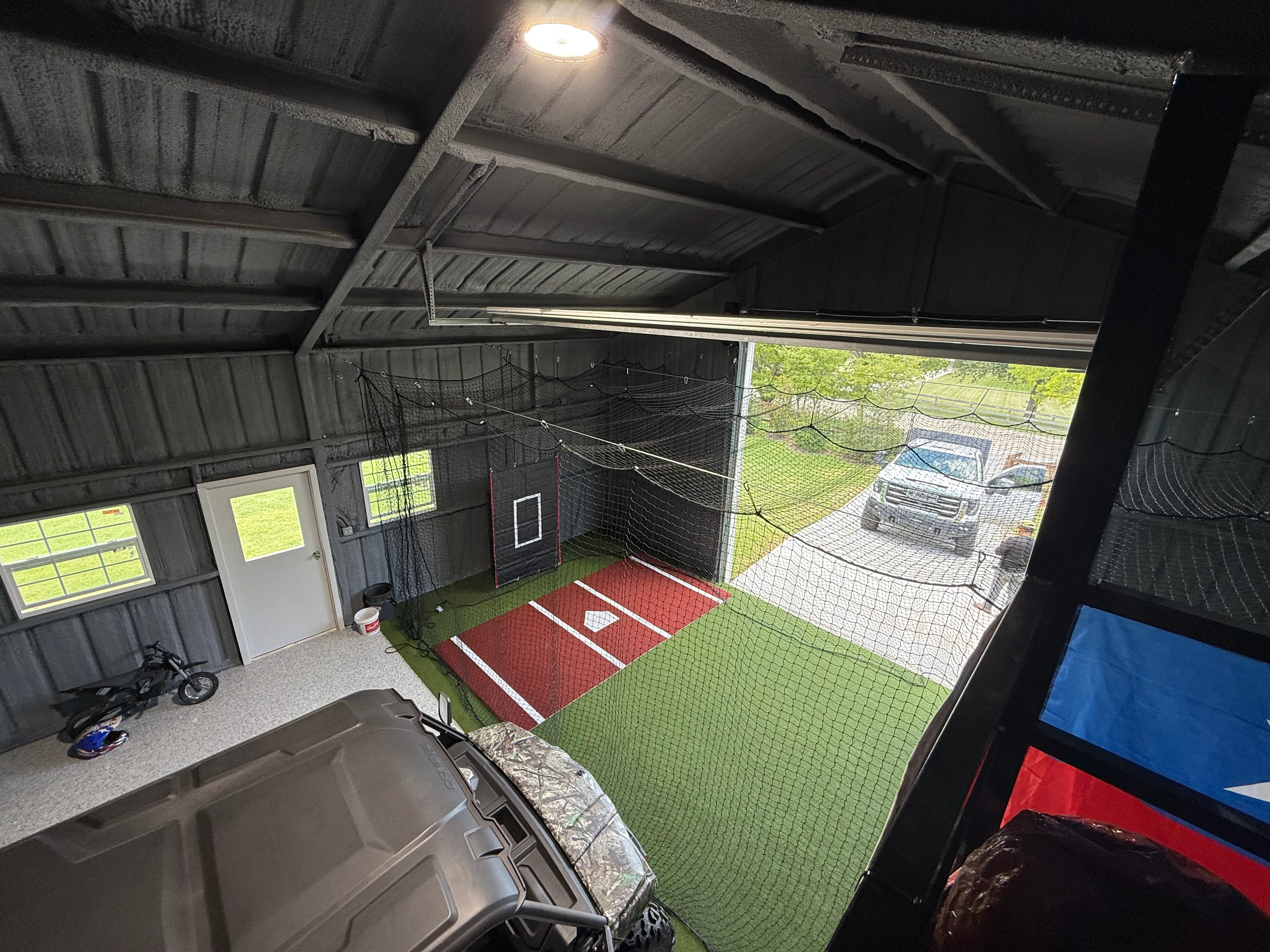
A second turf color (typically maroon or red) cut and inlaid to create a real batter's box setup with painted lines, home plate diamond, and pitching rubber marking. The hitter steps into the same visual setup they see on a real field. Takes the install from "a cage in a barn" to a proper training environment.
LED lighting (optional)
Puck or flush-mount LED fixtures installed in the ceiling above the cage. Most barns have some existing electrical — we work with what's there. Proper lighting makes the cage usable year-round at any hour, not just daylight hours in summer.
Why a barn cage over an outdoor cage.
Year-round use
DFW summers hit 105 degrees. DFW winters bring cold fronts and mud. An outdoor cage shuts down for both. An indoor cage runs 365 days regardless of what the weather is doing.
No frame cost
A freestanding outdoor cage needs steel uprights, anchors, and a concrete pad. Your barn already has the structure. The install cost reflects that — you're paying for netting, hardware, turf, and labor, not the frame.
Building stays functional
The cage clips on and unclips. Push the netting to the wall and the barn is a barn again. Vehicles, equipment, and storage all share the same footprint — the cage doesn't take anything away permanently.
Private facility access
No facility membership. No scheduling around other teams. No driving. The cage is on your property, available whenever the player wants to swing, at any hour, any day of the week.
Recent project
Argyle, TX — barn batting cage buildout
A dad with a baseball-playing son in Argyle wanted to use the barn he already had. We rigged a 15x30 Cimarron cage from the rafters using Cimarron cables, laid Performance Pro sport turf inside the cage footprint with a custom maroon batter's box inlay, and left the rest of the barn exactly as it was. The cage pushes to the side when the UTV needs in. Argyle is one of the most baseball-crazed towns in North Texas — the setup matches the level of commitment the player already has.
See the full project →Barn & metal building cage FAQ
Can you install a batting cage inside a barn or metal building? +
Yes. If the building has exposed rafters or purlins, we rig Cimarron cage netting directly from the structure using Cimarron cables — no freestanding frame required. Wood frame barns, metal buildings, large detached garages, and pole barns all work. The building structure replaces the frame, which keeps the cost below a comparable freestanding outdoor cage.
Does the cage take over the whole building? +
Not unless you want it to. The netting clips to cables and can be pushed to the side when you need the space for other things — the UTV, vehicles, storage, or whatever else lives in the building. The footprint during practice is only the cage area. When you are done, the building goes back to being a building.
What size batting cage fits inside a typical barn or metal building? +
A standard single-lane batting cage runs 12 to 15 feet wide and 55 to 70 feet long for a full pitching-machine setup, or as short as 30 feet for a tee and short-toss configuration. Most residential barns can fit a 12x35 to 15x55 cage depending on ceiling height and building length. We measure the building during the free site visit and size the cage to what actually fits.
What goes on the floor inside the cage? +
We install sport turf inside the cage footprint — typically Performance Pro or a comparable short-pile sport turf designed for training surfaces. The turf handles cleats, repeated foot traffic, and dropped equipment without matting down. We can inlay a custom batter's box section (a different color turf with painted lines, home plate, and pitching rubber marking) so the hitter steps into a real setup. The rest of the barn floor stays as concrete.
How high does the ceiling need to be? +
A minimum of 12 feet of clear height is needed for a functional batting cage. 14 feet or higher is better for pitching-machine setups, and 16+ feet allows high-arc ball flight without restricting the swing. We check the clear height at the ridge and at the sidewalls during the site visit — many standard barns and metal buildings in the 30x50 to 40x70 range have 14 to 16 feet of clear height.
Does the netting damage the building structure? +
No. We attach cables to existing rafters or purlins using hardware that does not compromise the structural members. The load from the netting is distributed across multiple attachment points. We have installed cages in wood-frame barns, metal buildings, and post-frame structures without any structural modification required.
What does a barn batting cage build cost in DFW? +
A typical residential barn cage build in 2026 DFW pricing runs $8,000 to $18,000 depending on cage size, netting gauge, turf footprint, and whether you add a batter's box inlay or LED lighting. It is generally less expensive than a comparable freestanding outdoor cage build because the building provides the frame. Get a free site visit and we'll put a firm number on it.
Have a barn or metal building in DFW?
Free site visit anywhere in the metroplex. We measure, spec the cage, and put a real number on it — no obligation.
Also see: Batting cage packages · Commercial training facilities · Full facility construction