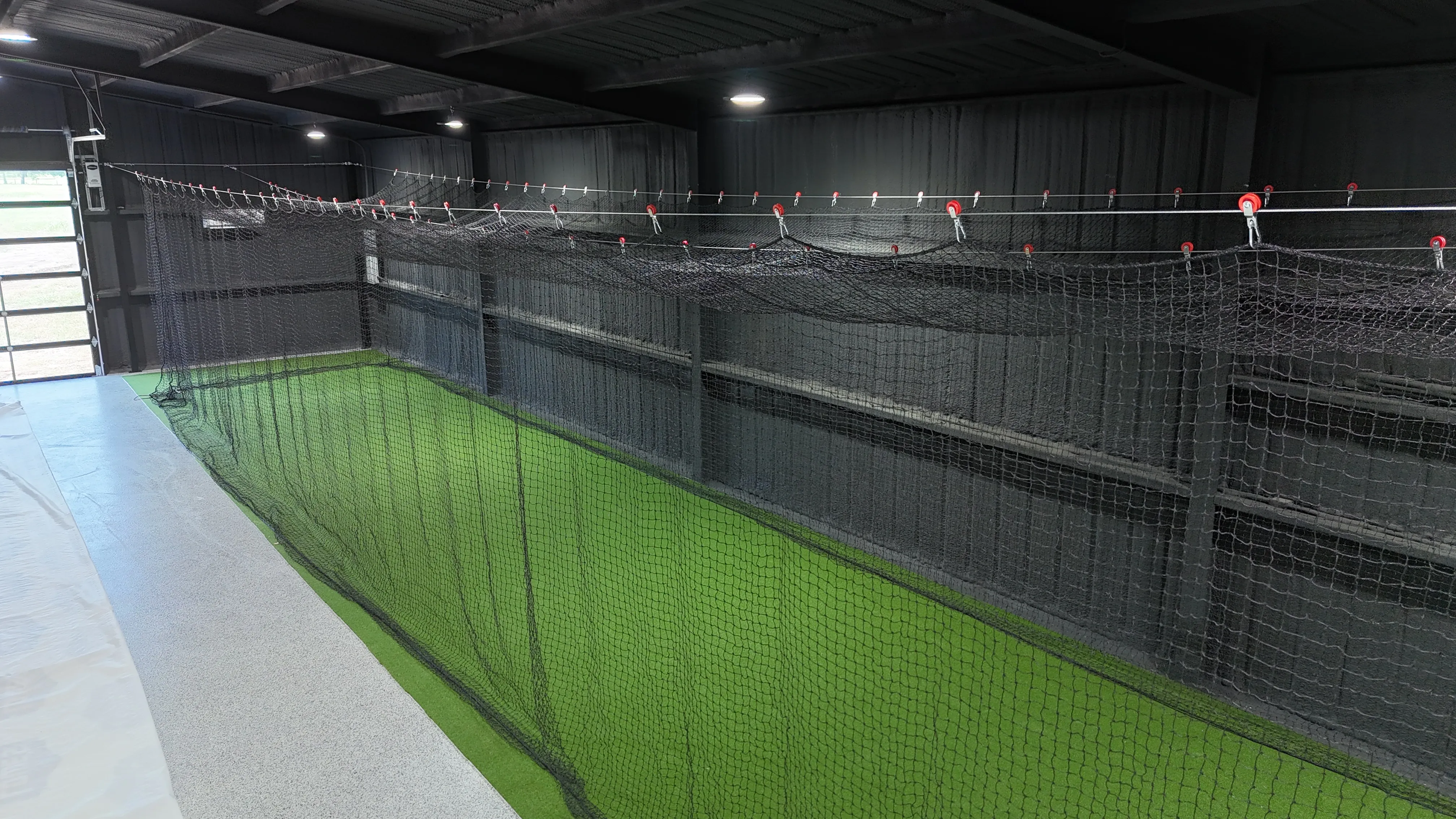
Some barns are barns. This one, in Aledo, is now also a 70-foot indoor batting cage, and by the end of the day it still needs to be, it can go back to being a barn.
The family has two athletes in the house: a daughter playing softball at a high level and a younger brother who’s a serious baseball player. Both wanted a place to get reps on their own time instead of working around a public facility’s schedule. Both also needed a space big enough to host full team practices when the group showed up. The barn, running the full length of the property, was the obvious footprint. The open question was whether we could convert it without turning it into a single-purpose structure.
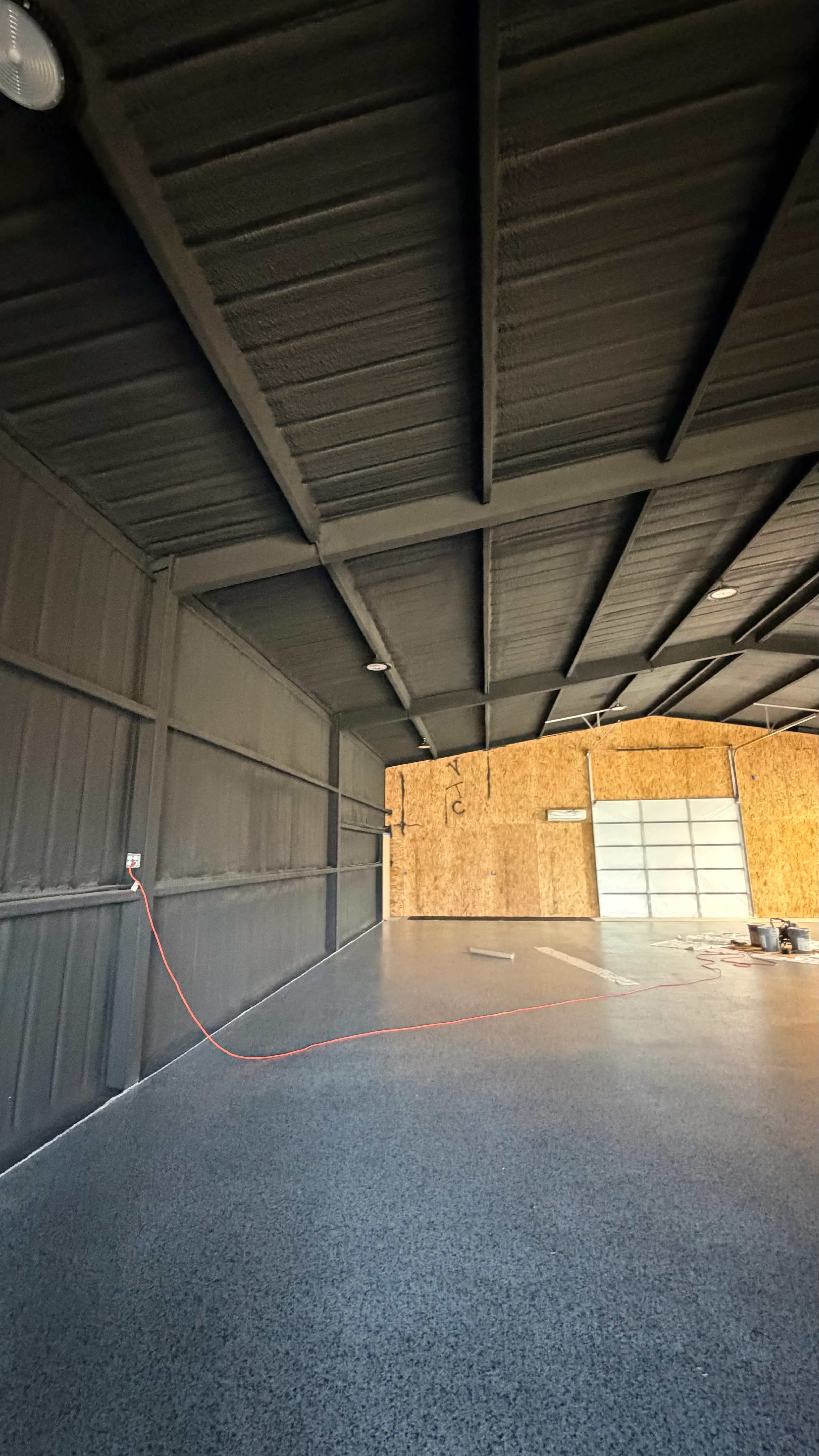 The barn before: epoxy floor finished, rafters exposed, nothing else installed yet.
The build
- 70’ long x 15’ wide x 12’ tall, running the full length of the barn
- Full retractable cage and net from Cimarron Sports, rigged on a cable trolley system
- Performance Pro turf over a 5mm pad, roughly 1,050 square feet
- Clay-look batter’s box at the working end, painted lines and home plate
- Cables, net, and turf installed in a single day, timed to be ready before fall baseball season
Why retractable mattered
A fixed net is the easier build. Hang it, tension it, done. This family needed more than that: the ability to pull the whole cage back when it wasn’t in use, so the barn could still function as a barn the rest of the time. UTVs, storage, whatever else a working barn needs to hold, none of that goes away just because a batting cage moved in.
The answer is the same cable-trolley approach we’ve used on other rafter-hung barn cages, scaled up to run the entire 70-foot length. Stainless cable strung down the barn, red-hooked trolleys riding on it, netting clipped in at intervals along the cable. Pull it back along the trolley line and the whole cage collapses out of the way in minutes. Deploy it and it’s a full enclosed hitting tunnel, backstop and target at the far end.
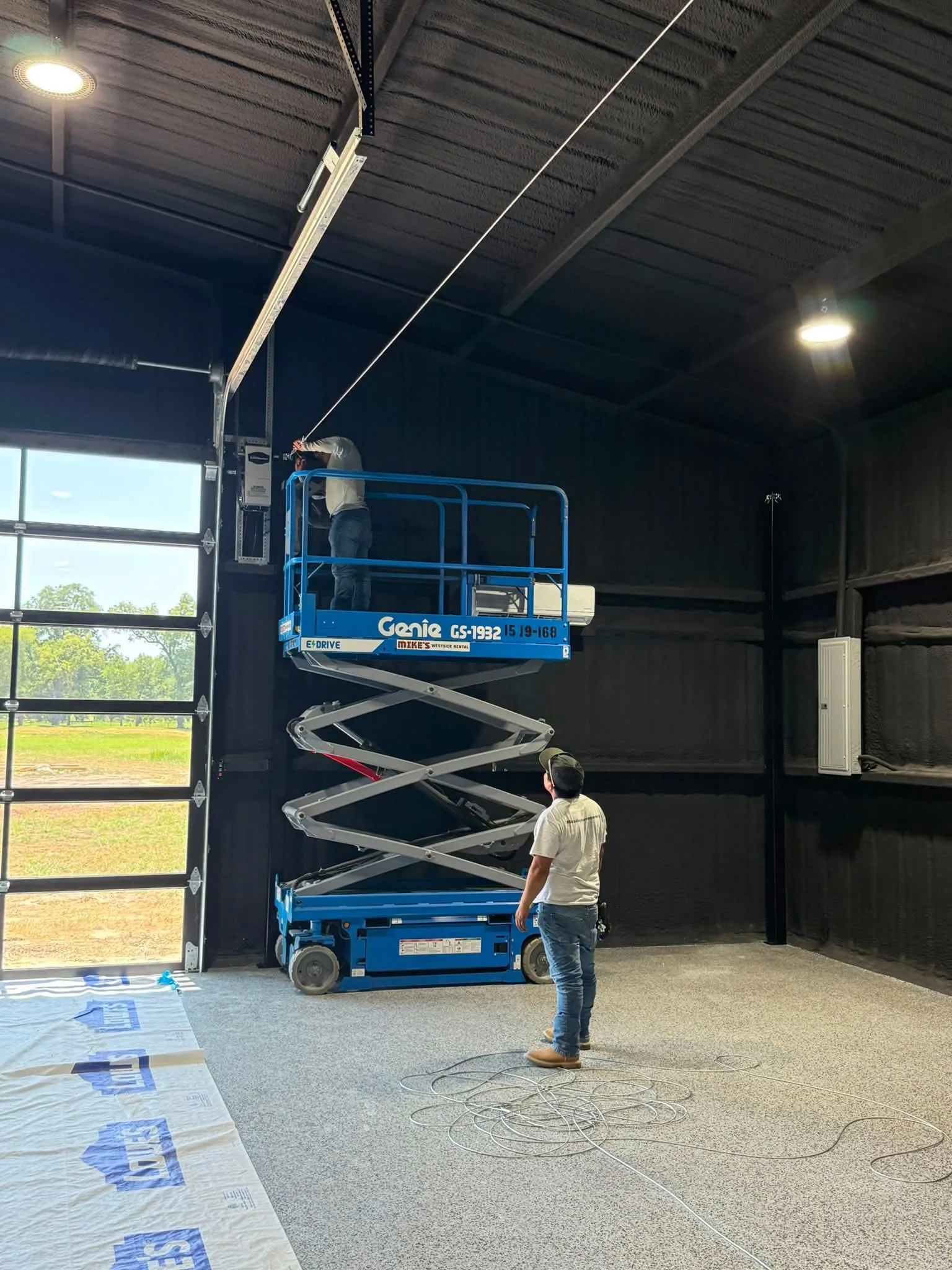 Running the cable rigging off a scissor lift. The trolley hardware clips to this cable, and it’s what lets the whole net retract.
Turf, pad, and a real batter’s box
The floor is Performance Pro turf over a 5mm foam pad, laid the full 70’ run at 15’ wide. It’s a dense, short-pile turf built for training surfaces, made to take repeated cleats-and-swing traffic without compressing flat the way a lighter residential turf would.
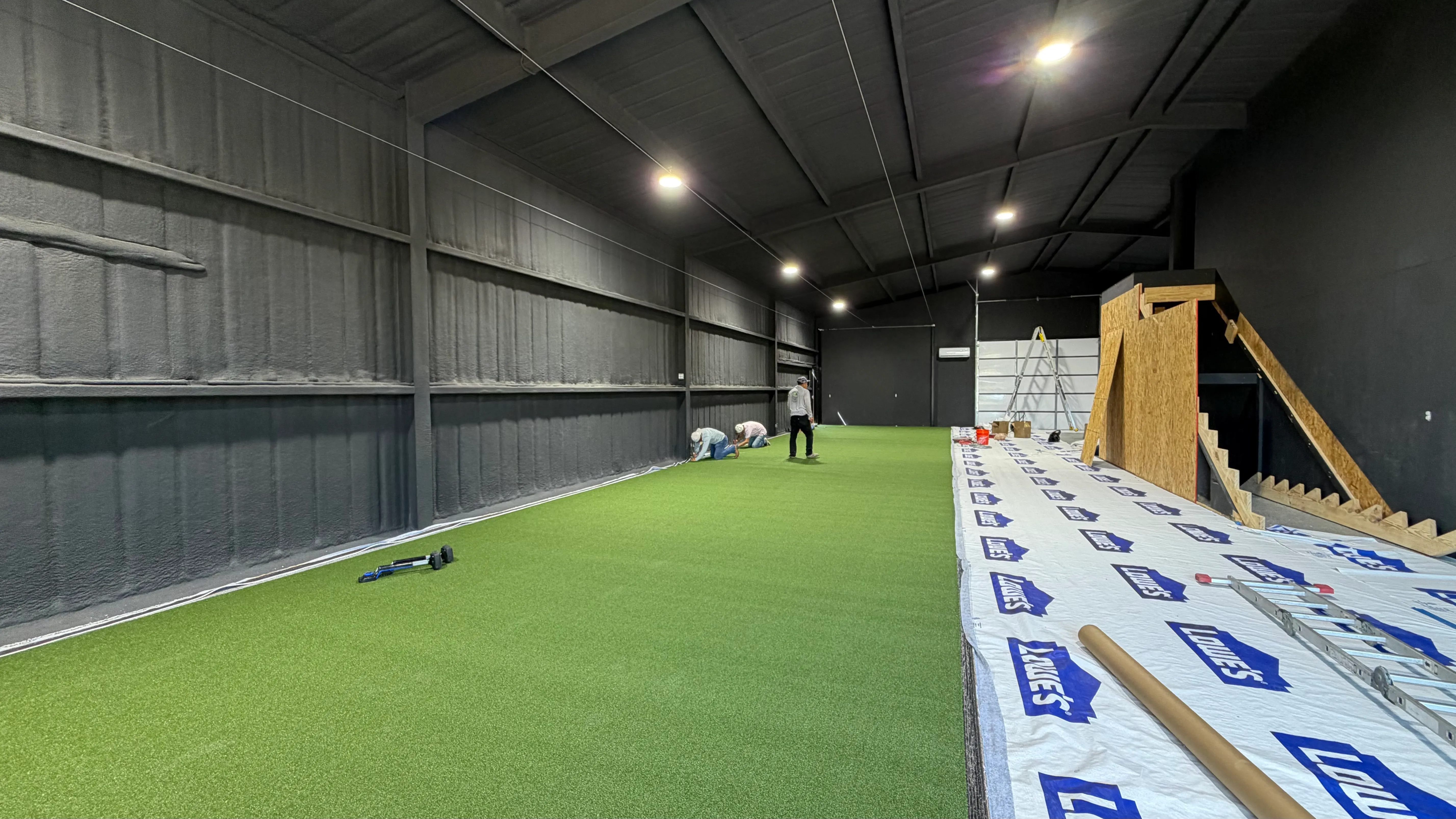 Seaming turf down a 70-foot run. Getting the seams straight over that distance is most of the labor on a job this size.
At the hitting end, a clay-colored batter’s box breaks up the green field the same way an actual diamond does: painted foul lines, a home plate marker, a surface color that reads as dirt instead of turf. Step into the box and the visual cue is the same one you’d get on a real field, not just an open stretch of green carpet.
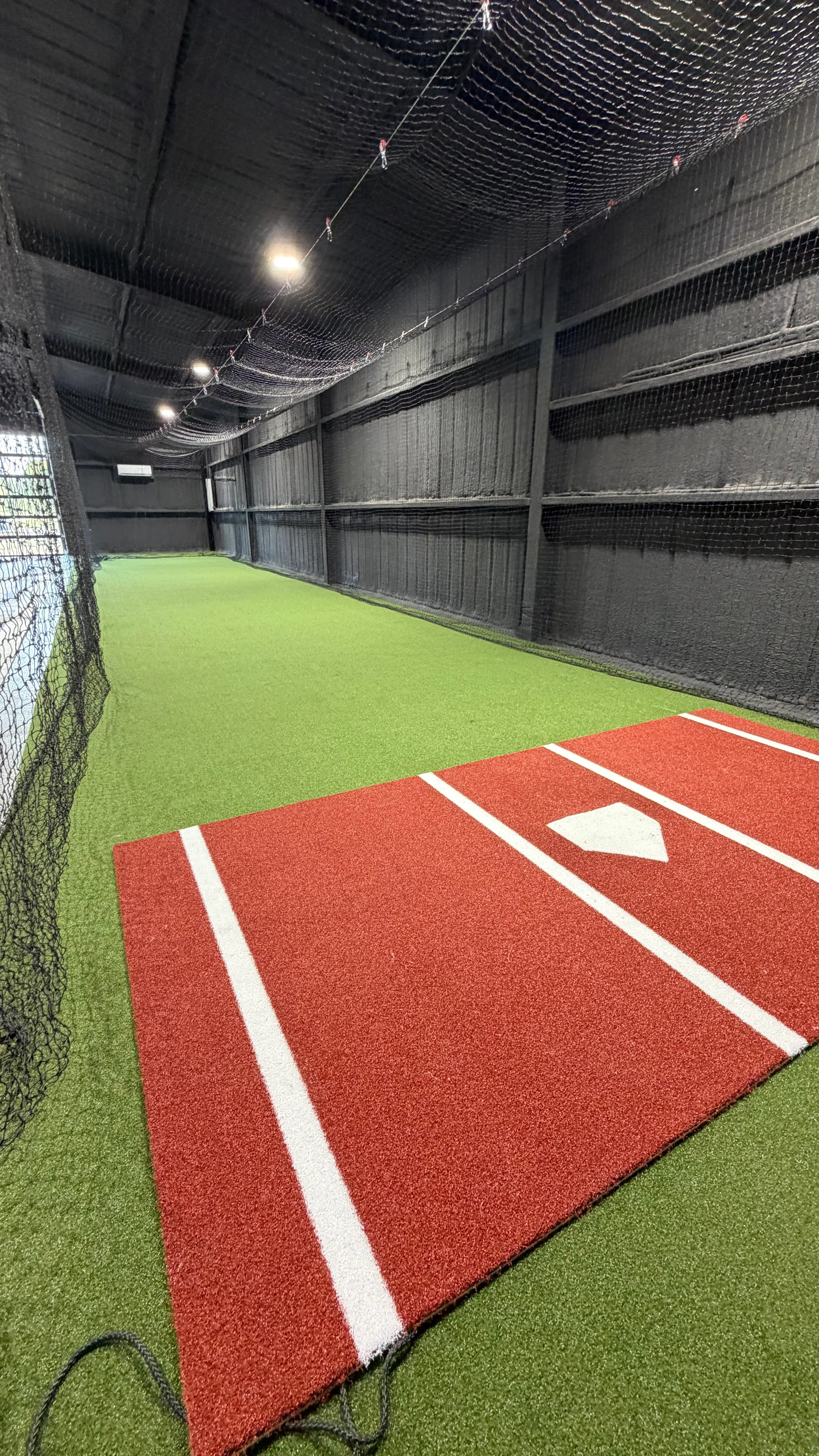 The batter’s box at the working end. Painted lines and a home plate marker instead of just a patch of turf.
Installed in a day, ahead of fall ball
Cable rigging, net hanging, and the full 70’ turf install all went in over a single day. That’s the advantage of converting a finished barn shell instead of building a freestanding structure from scratch: the building, the concrete floor, and the roof framing to hang from were already there. We were installing a system into an existing shell, not building the shell itself.
The timing was the point. Fall baseball season was coming, and the goal was to have both athletes swinging in it before practices ramped back up.
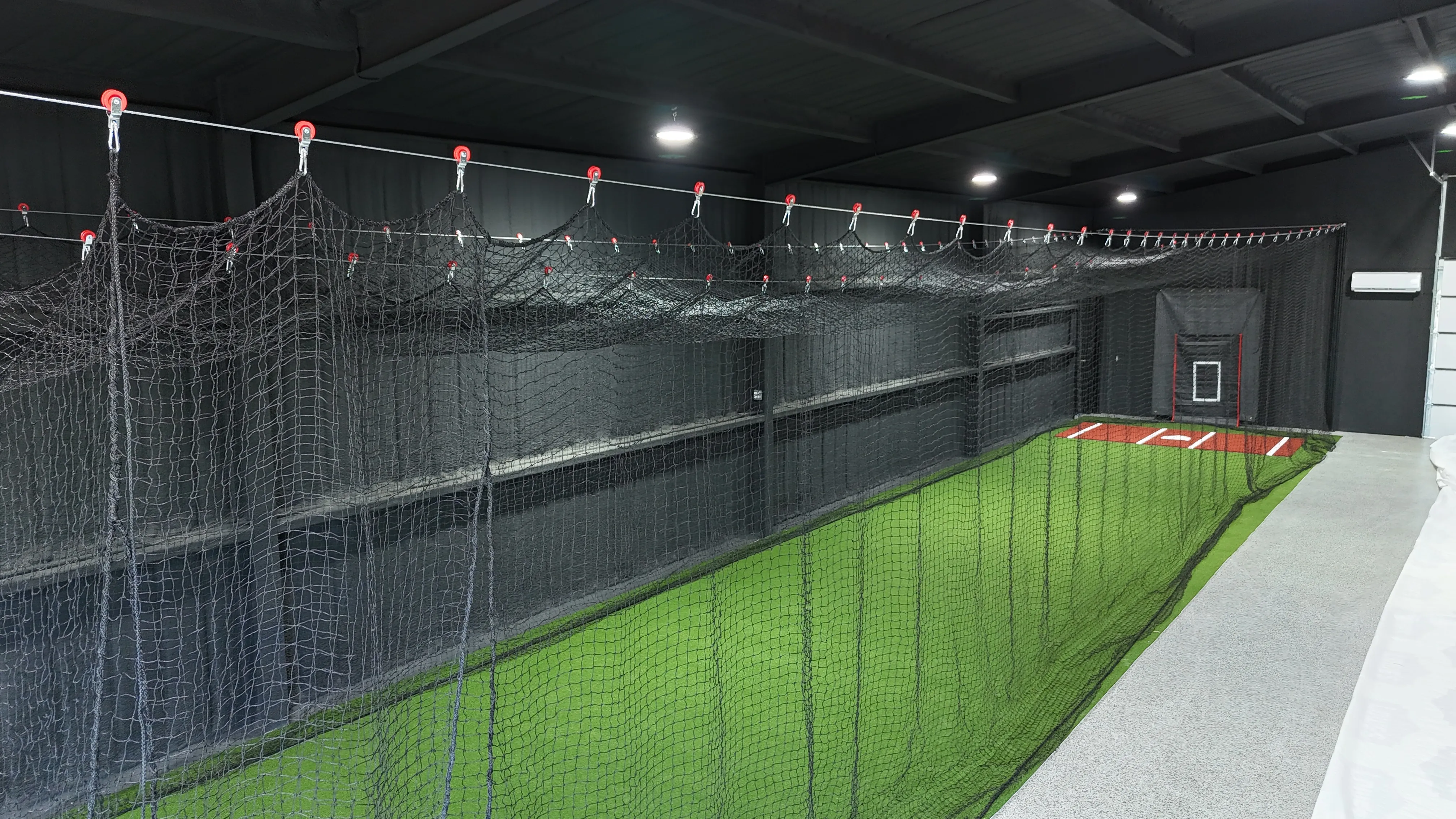 The finished cage, full length. Turf, net, and batter’s box running the entire 70-foot barn.
One cage, two sports, and a full team
A 70-foot run gives real separation for pitching and hitting work, whether that’s fast-pitch softball or baseball, and enough width that both siblings can use it the way their own sport actually trains. Either kid can pull the net out and take solo reps whenever they want, no drive, no waiting for an open bay at a public facility. When the travel team shows up for a full practice, the same run handles the group.
That dual demand, always-available for two individual athletes plus team-sized capacity when needed, is what pushed this build past a standard fixed net and into a retractable system. The family didn’t want to choose between “the cage is always up and ready” and “the barn still works as a barn.” The trolley system gets them both.
Cimarron Sports netting, Performance Pro turf, installed by Bearcat Turf & Outdoors.
See the full project write-up or see our barn & metal building batting cage build-out — reserve online with a deposit and we’ll come measure the rafters.