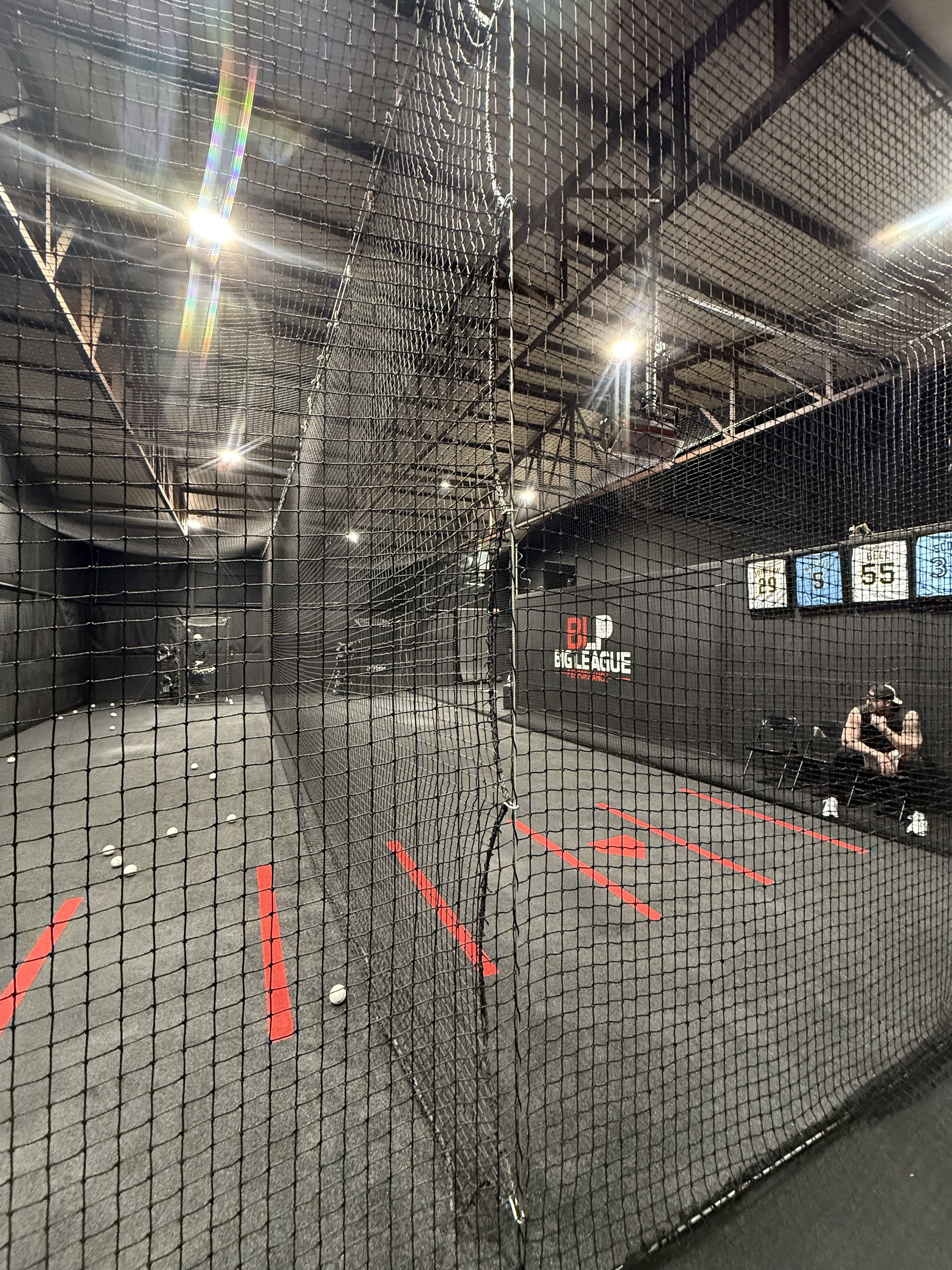
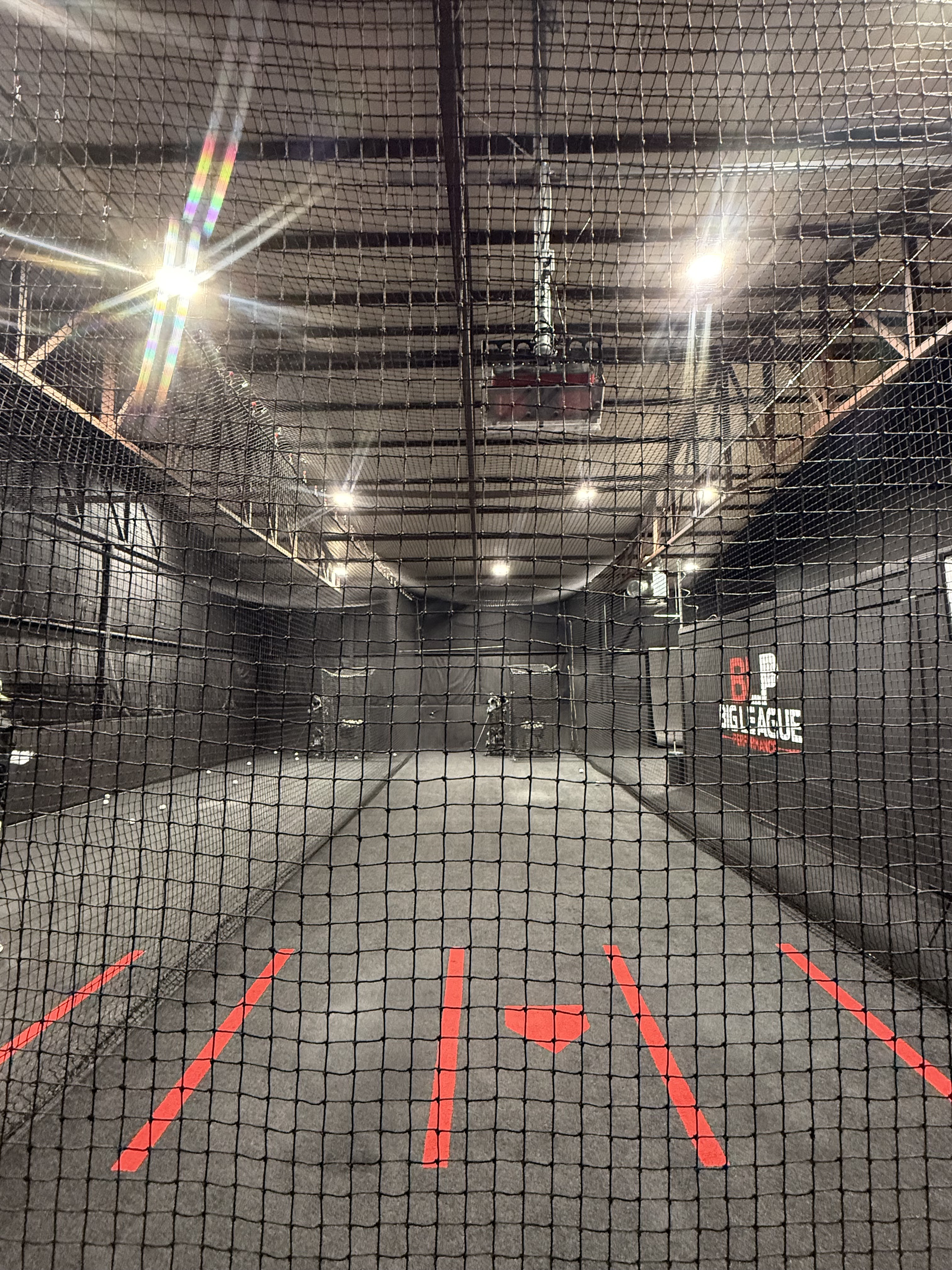
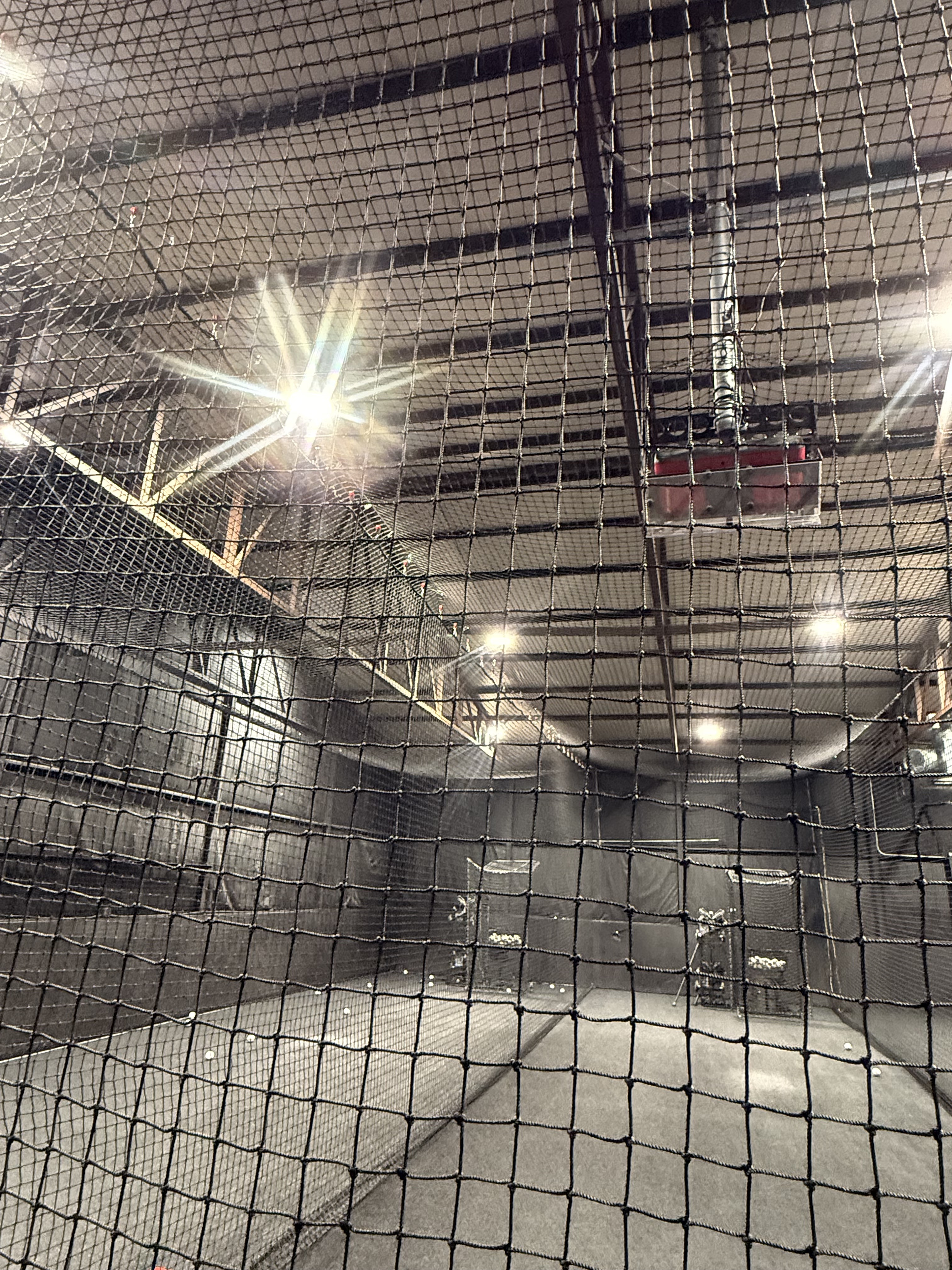
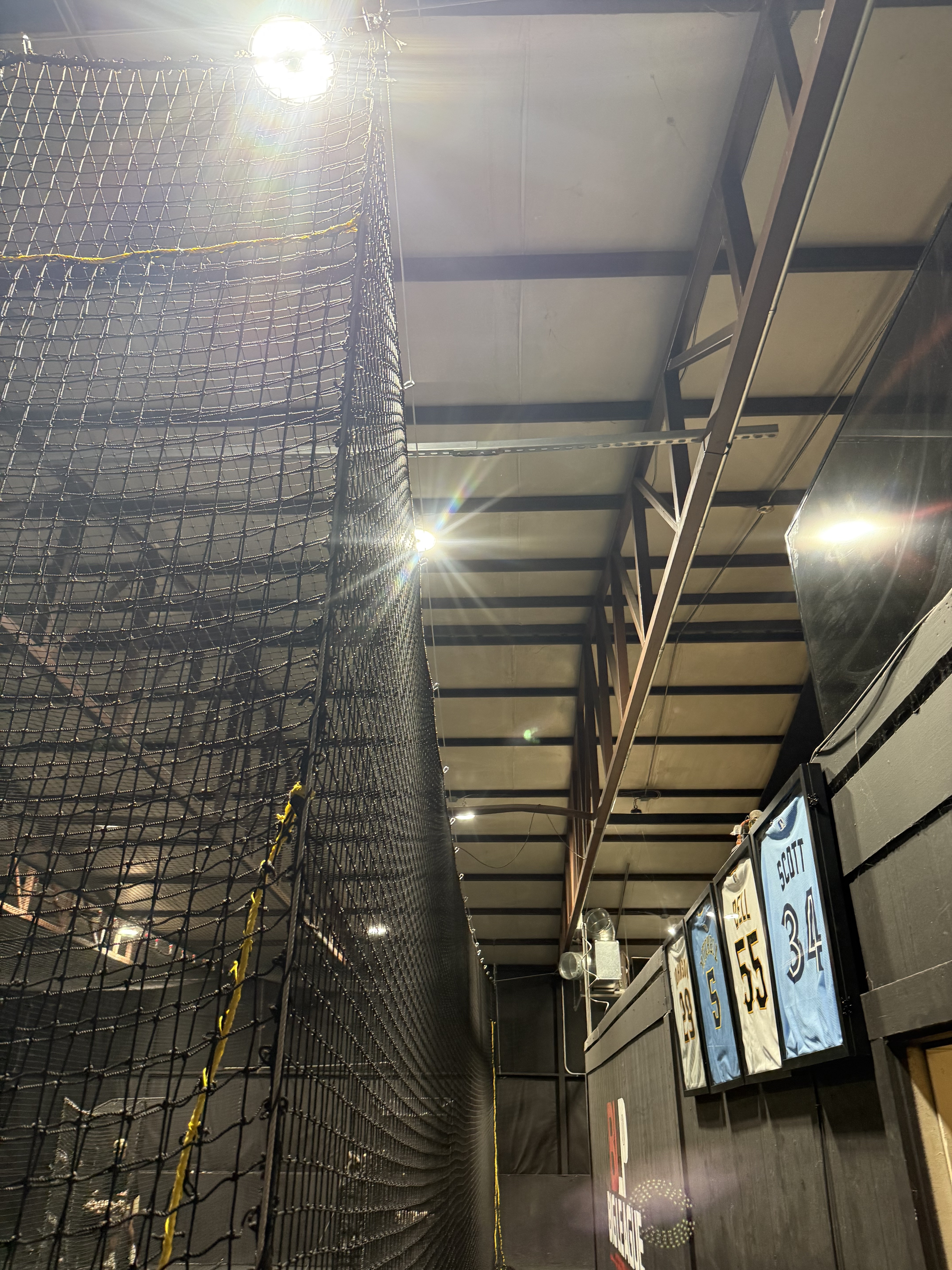

The call
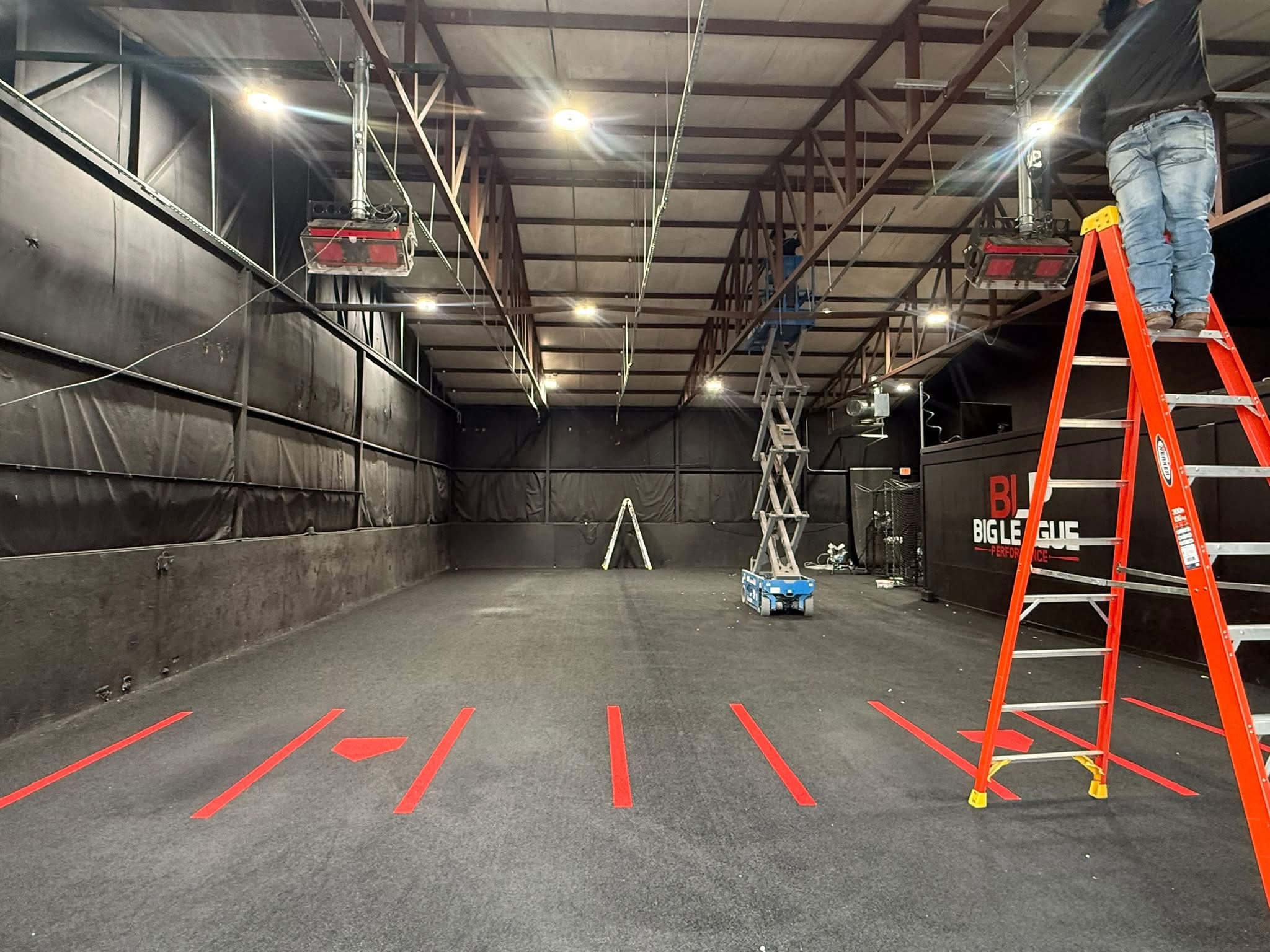
The owner of Big League Performance in Prosper works with serious hitters: high school players chasing a roster spot, college athletes home for the offseason, and pros getting in their winter work. He had just had the facility built. The building was right, the lighting was right, the lanes were laid out the way he wanted them.
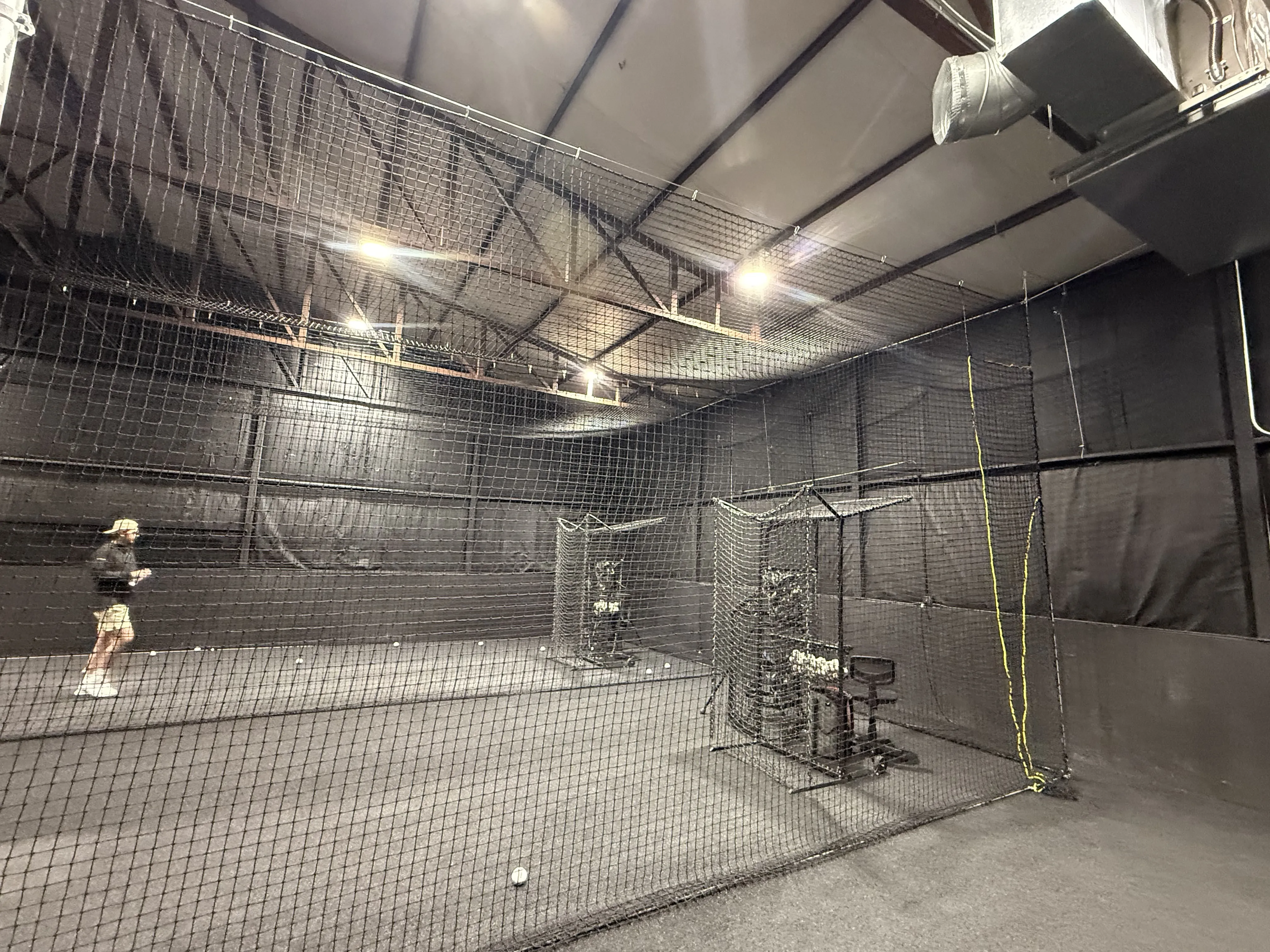
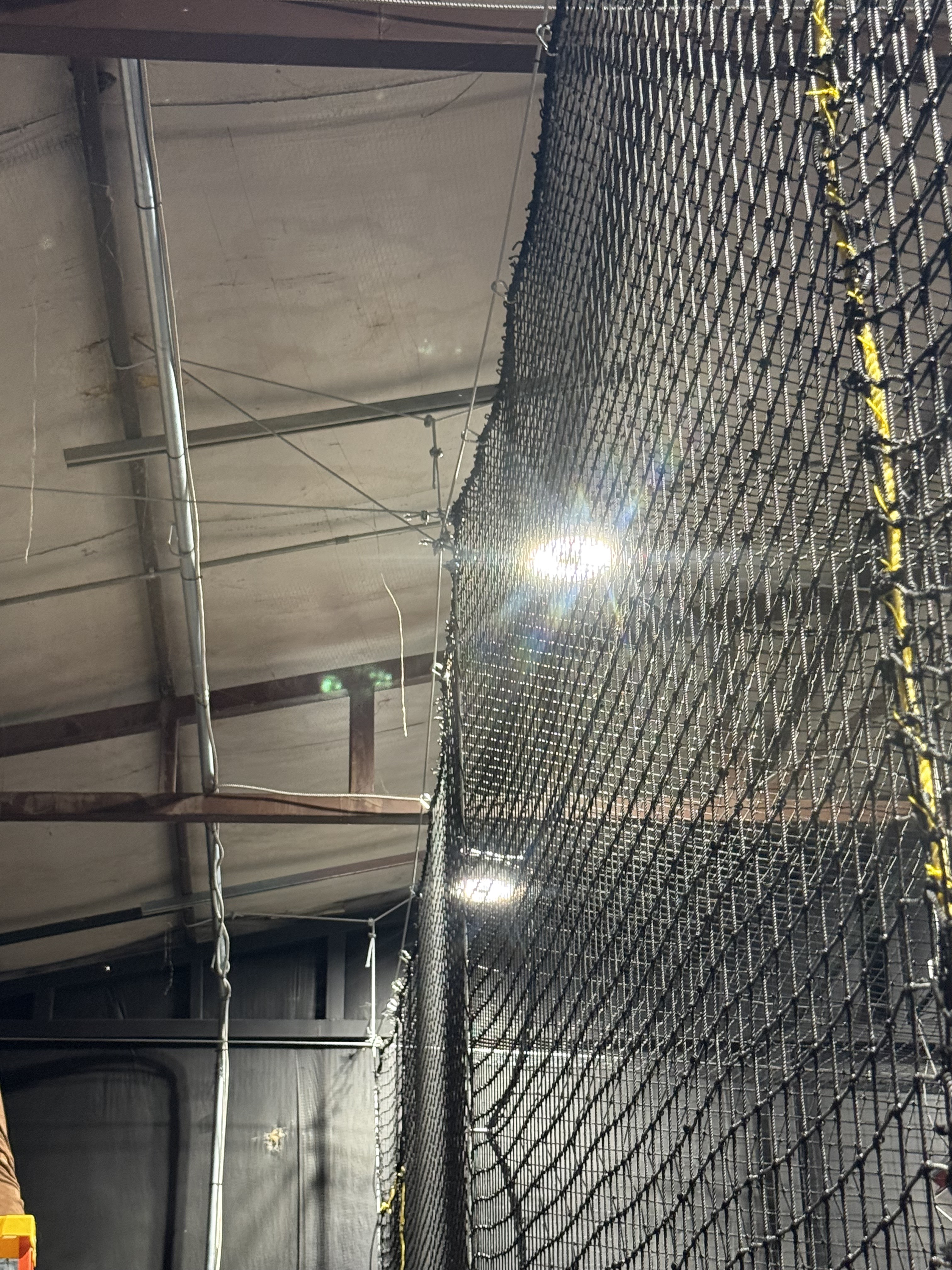
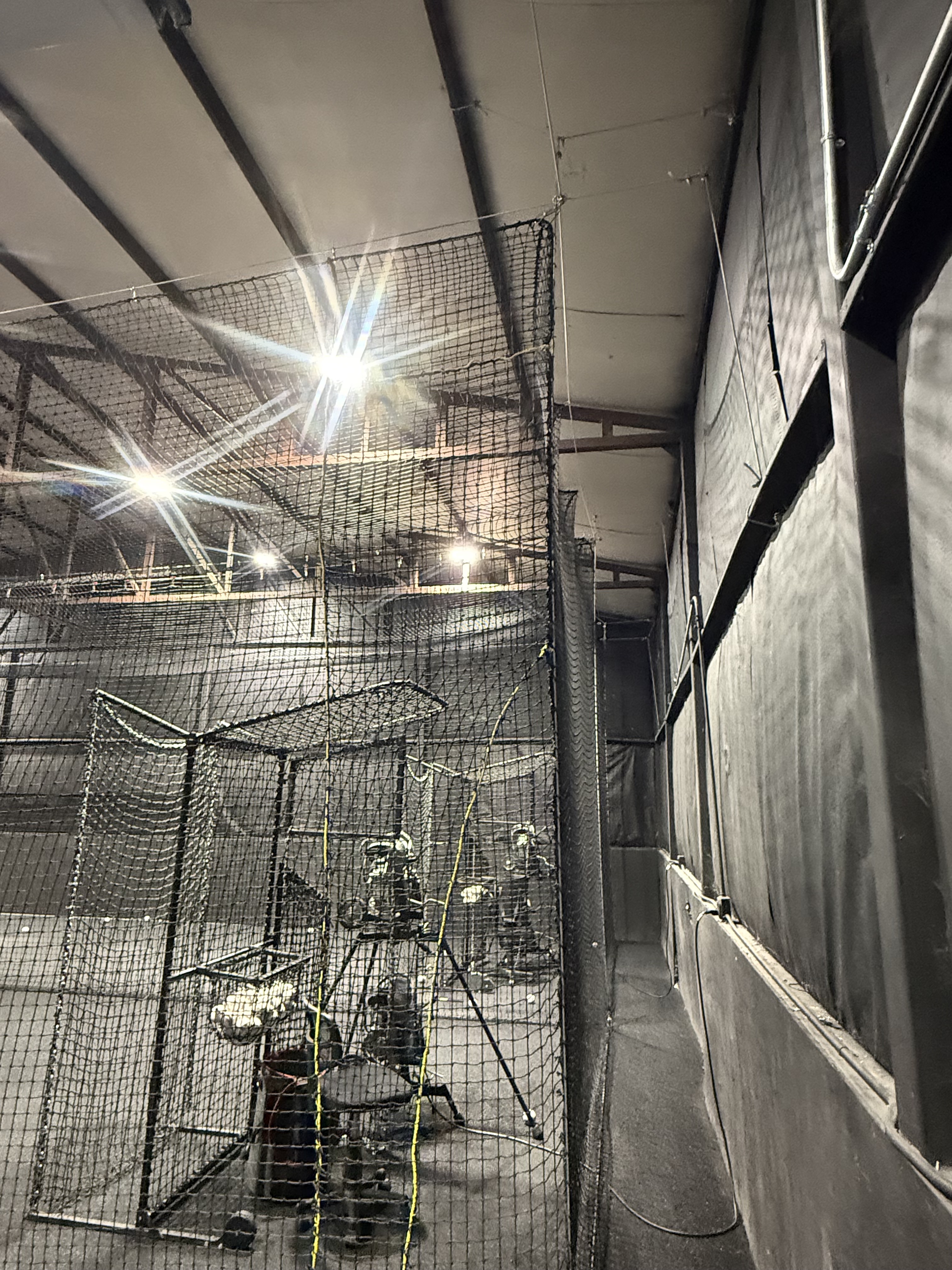
The nets were not. From the day the cages went in, the netting looked stretched too far in some places and drooped in others. Panels bellied out between attachment points. Seams did not line up with the frame. For a facility that charges for cage time and books pro athletes, it read as unfinished, and it was never going to tighten up on its own.
He called Bearcat. He did not want a patch. He wanted the nets to look and perform like the rest of the building.
What we found
We went out more than once before we quoted anything. The owner’s read was that the nets had been stretched past their size. Our read, after walking every lane with a tape, was that the nets had been ordered to the wrong dimensions for the frame in the first place. A cage net that is short in one direction gets pulled to reach its attachment points, and that pull is what shows up as sag everywhere else. Stretching a net to fit is a symptom. The cause is a net that was never the right size for the opening.
The facility was built by a general contractor who had done good work on the building itself. Rather than work around them, we worked with them. We walked the cages together, agreed on what the nets needed to be, and put together a scope that would get the owner what he had paid for the first time:
- Take down the existing nets in every lane, without damaging the frame, cable runs, or ceiling attachments the building already had.
- Re-measure every cage opening against the actual frame, not the plan set, and size the new nets to the building as built.
- Order new Cimarron netting cut to those dimensions, one panel set per cage.
- Hang and tension the new nets with our crews, our way. Bearcat installers, Bearcat hardware, Bearcat tensioning.
Hung the Bearcat way
There is nothing exotic about hanging a cage net correctly. It is a sequence, and skipping any part of it is what produces a drooping cage.
- Size the net to the opening, with intentional slack. A cage net wants a few inches of ease so it absorbs a ball instead of acting like a trampoline. Too little and the net pulls tight and abrades at the attachment points. Too much and it pools on the floor. Ours were cut for the actual frame dimensions with that ease built in.
- Hang from the cable line, not the frame. Each ceiling panel rides on a tensioned cable run so the weight is carried the length of the lane, not at a handful of hard points. That is what keeps the ceiling flat instead of scalloped.
- Clip at consistent intervals. Snap clips at a tight, even spacing along every edge, so no span is long enough to belly.
- Tension walls after the ceiling is set. Walls get pulled plumb once the ceiling is carrying its own weight, so the corners meet square instead of fighting each other.
- Walk every lane with a ball in hand. The last step is throwing into every wall and watching how it gives back. If it slaps or trampolines, it is not done.
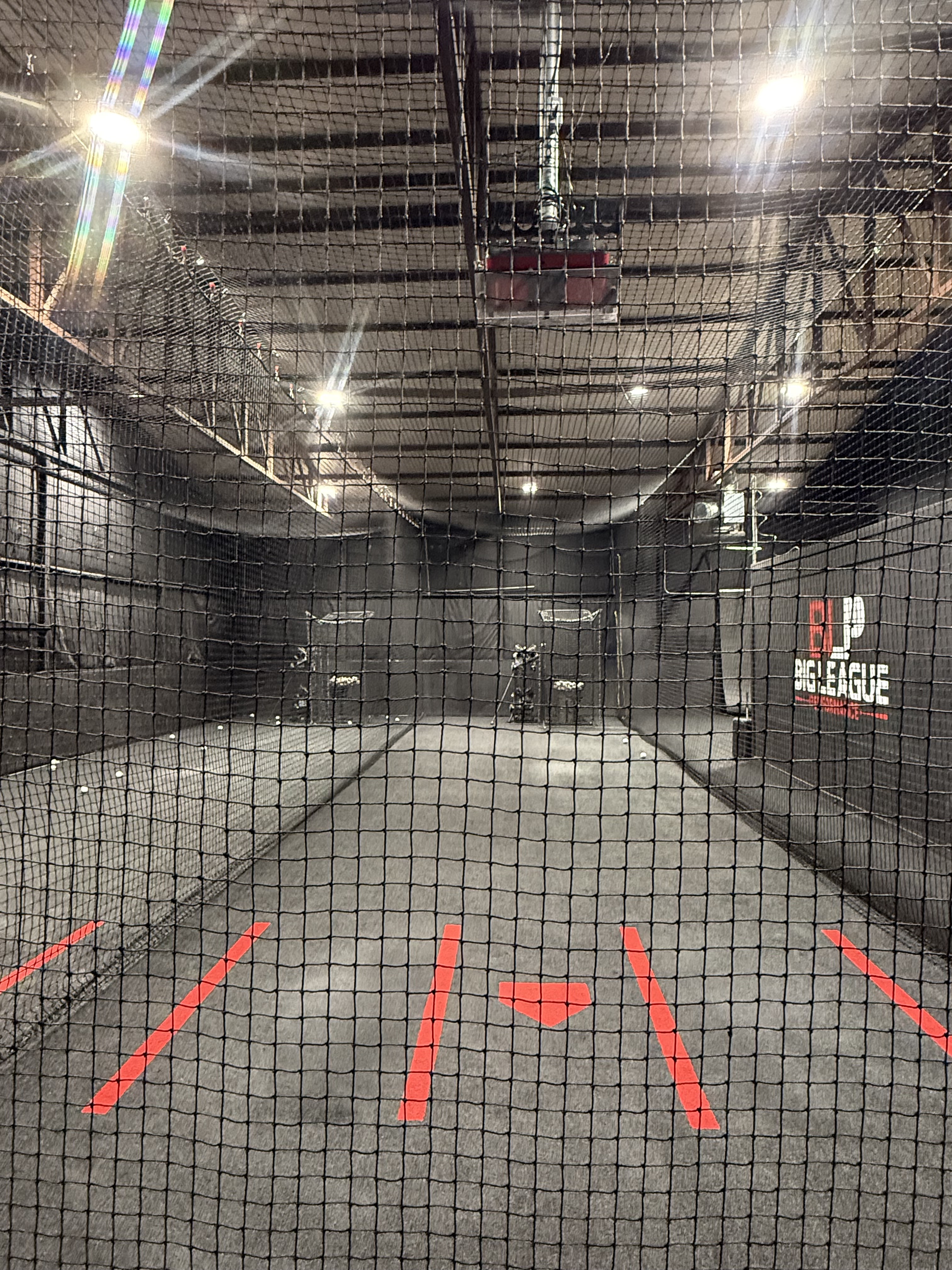
The old nets came down, the new Cimarron panels went up, and both full-length hitting cages got the same treatment start to finish, in two days on site.
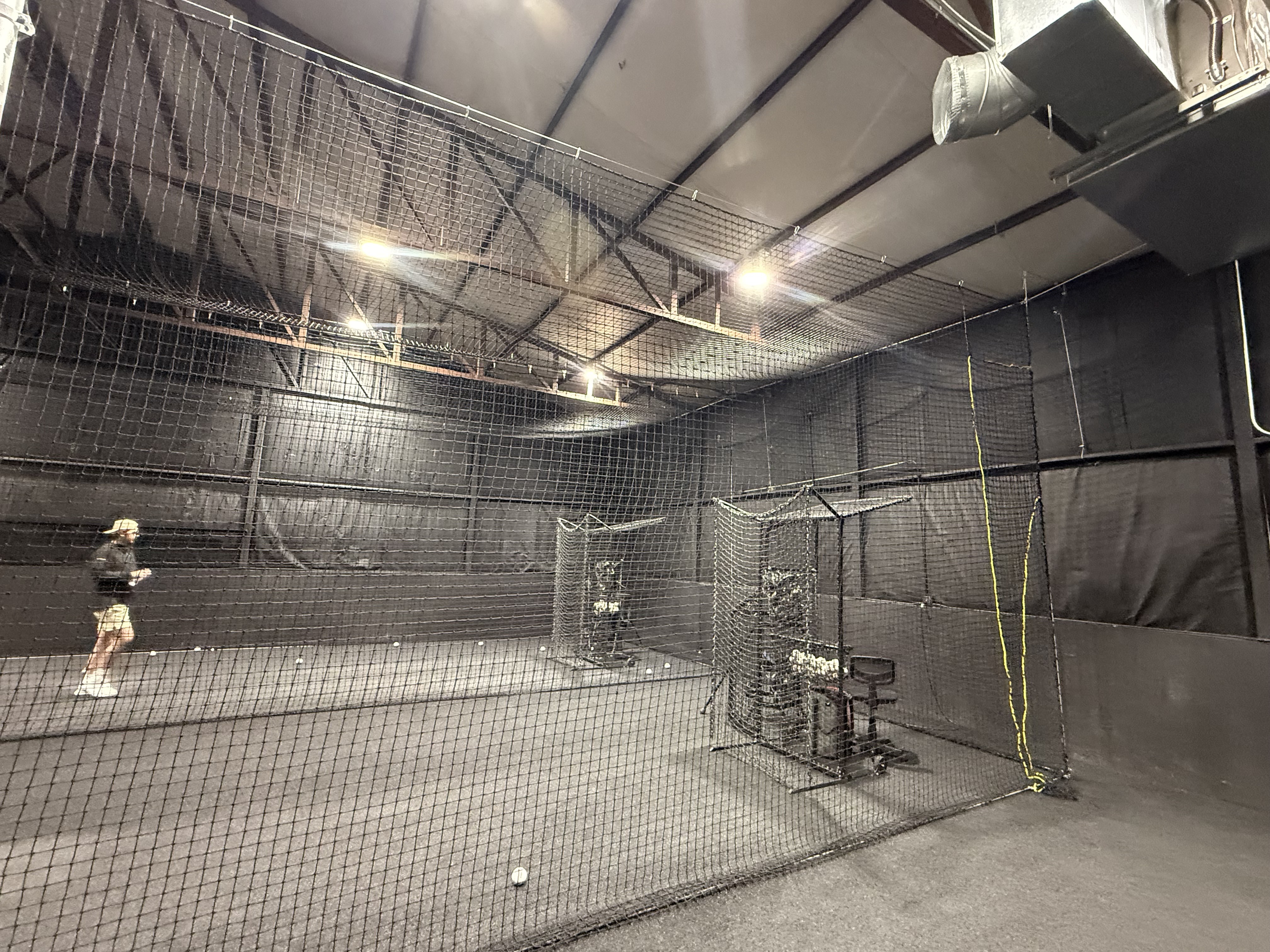
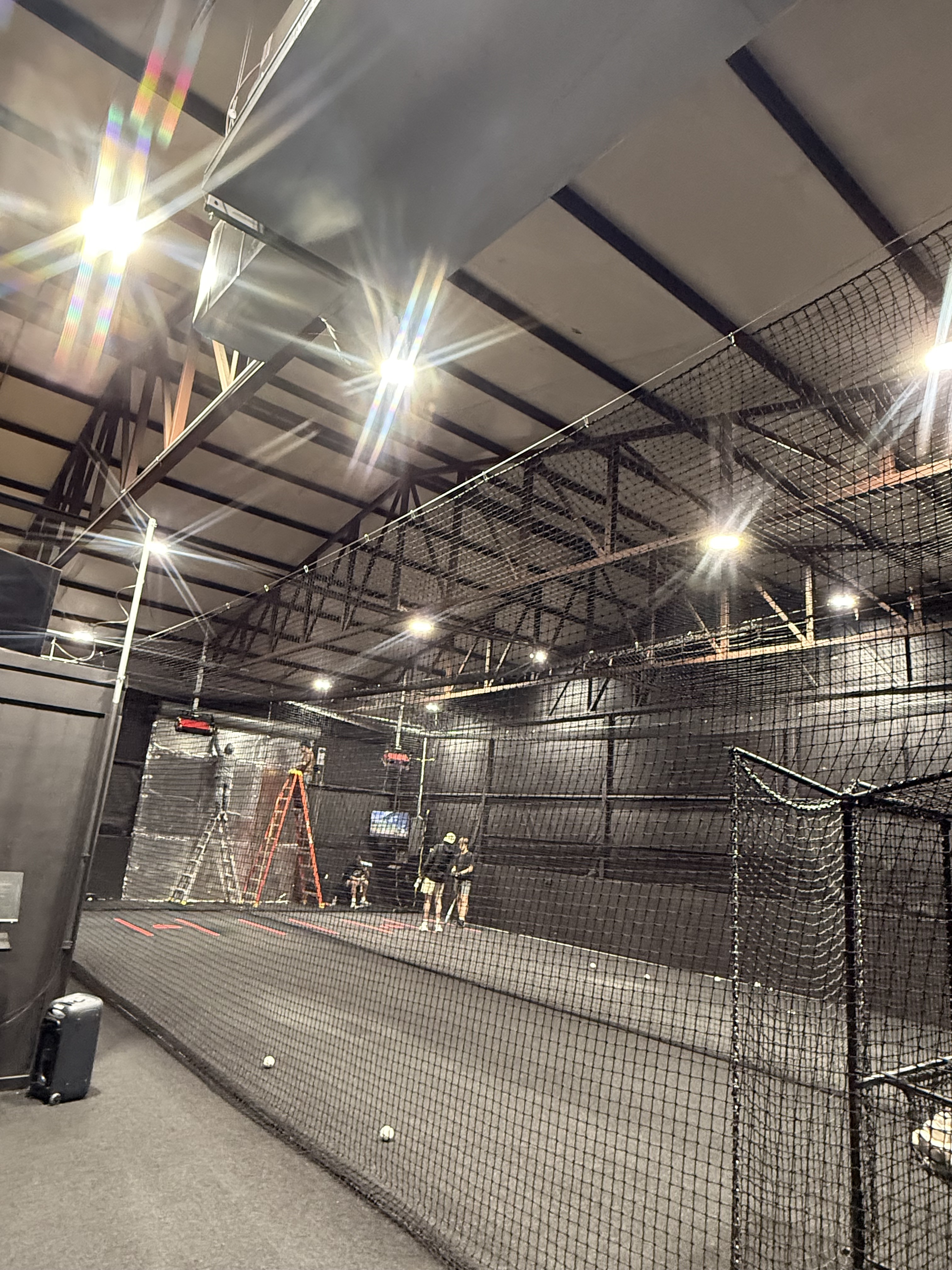
Players in the cages before we left
As we were loading the trucks, Big League Performance players were already walking into the lanes to hit. The owner walked the cages with us before we left and signed off on the spot. The result is the look he had in mind when he built the place: straight lines down every lane, ceilings that run flat, corners that meet square, and a net that gives on contact and goes right back.
That look is not cosmetic. Properly sized and tensioned netting is what keeps a ball in the lane it was hit in, what keeps a net from abrading itself at a stretched seam, and what makes the net last the way a Cimarron net is built to last. The clean install is the safety install and the durable install. They are the same thing.
If your cages went in wrong
This is a more common call than you would think. A facility gets built, a netting contractor orders panels off the plan set instead of the frame, and the owner inherits nets that never fit. The building is fine. The frame is fine. The fix is new nets, sized to what was actually built, hung by a crew that does it every week.
We do this for new facilities that were never right, and for older facilities where the nets have simply reached the end of their life. The process is the same: a site walk, a measured scope, a fixed price, and an install date.
Cage net replacement FAQ
My cage nets sag and droop. Can they be re-tensioned instead of replaced?
Sometimes. If the net is the right size for the opening and only the attachment points have loosened, re-tensioning is a half-day fix. If the net was never the right size, no amount of tensioning will fix it, because every pull in one direction opens a sag in another. A site walk with a tape tells us which one you have.
Do you work with the general contractor who built the facility?
Yes, and we prefer to. At Big League Performance the original builder stayed involved, we agreed on the scope together, and the owner never had to referee between two contractors.
What netting do you install?
Cimarron Sports netting, sized per lane to the frame as built. We are a Cimarron dealer and carry their full cage, barrier, and ceiling product line.
How long does a net replacement take?
Most indoor facilities are a one to three day install depending on lane count and ceiling height. The lead time is on the nets themselves, since they are cut to your dimensions.
Are you HUB Certified?
Yes. Bearcat Turf & Outdoors is HUB Certified for public-sector and qualifying private procurement.
Working with Bearcat on an indoor facility
We build and retrofit indoor baseball and softball facilities across DFW: cage netting, custom sports netting, sport turf, and full warehouse-to-facility conversions. One site walk, one fixed price, and our own crews on the install.
Get a quote → · Batting cages · See all projects
During
In the build.
Old nets down lane by lane, every opening re-measured against the frame, new Cimarron panels unrolled and hung from the cable lines, then tensioned and clipped until each wall and ceiling ran straight.