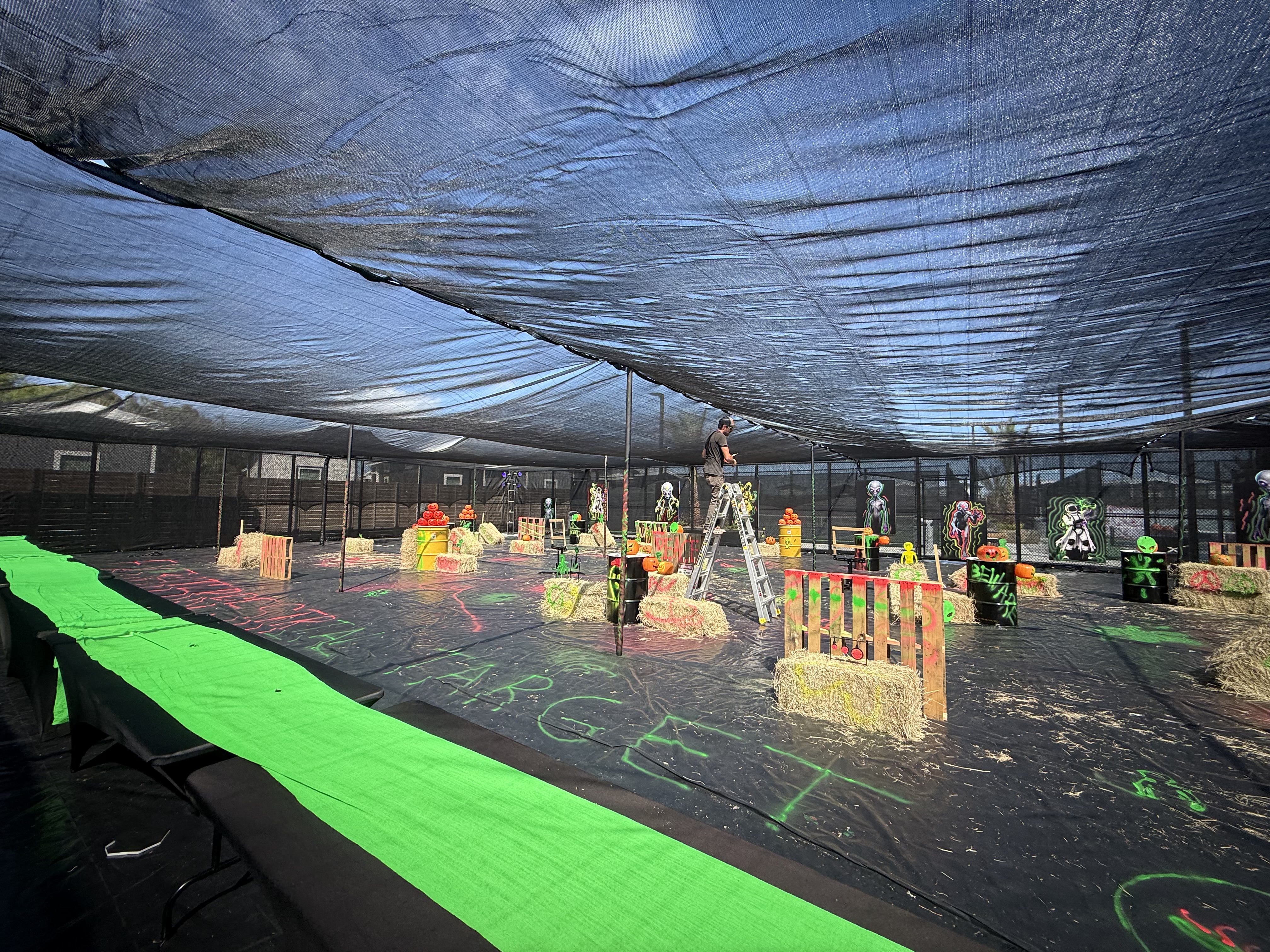
The ask: turn a sport court into a paintball course, 500 miles from home, by Halloween
A very large technology company with a campus in far South Texas wanted a paintball course for its employee Halloween party. They had the space: an outdoor multi-sport court, fenced and lit, right in the middle of the campus. What they did not have was a way to keep paint inside it. A paintball course next to parked vehicles, other courts, walkways, and buildings needs more than a fence.
They called Bearcat. The job had three hard constraints before anyone talked about netting:
- Security. The campus is a controlled site. Every crew member and every vehicle had to clear the company’s security process before we could set foot on the court.
- Timeline. The party had a date. The course had to be finished, inspected, and handed to the event team with time to dress it.
- Distance. The site is more than 500 miles from our Aledo shop. One trip, one window, no second mobilization.
We cleared security, drove down, and built it in two days. The event team was setting hay bales under a finished ceiling the afternoon before the party. On time and on budget.
What we built
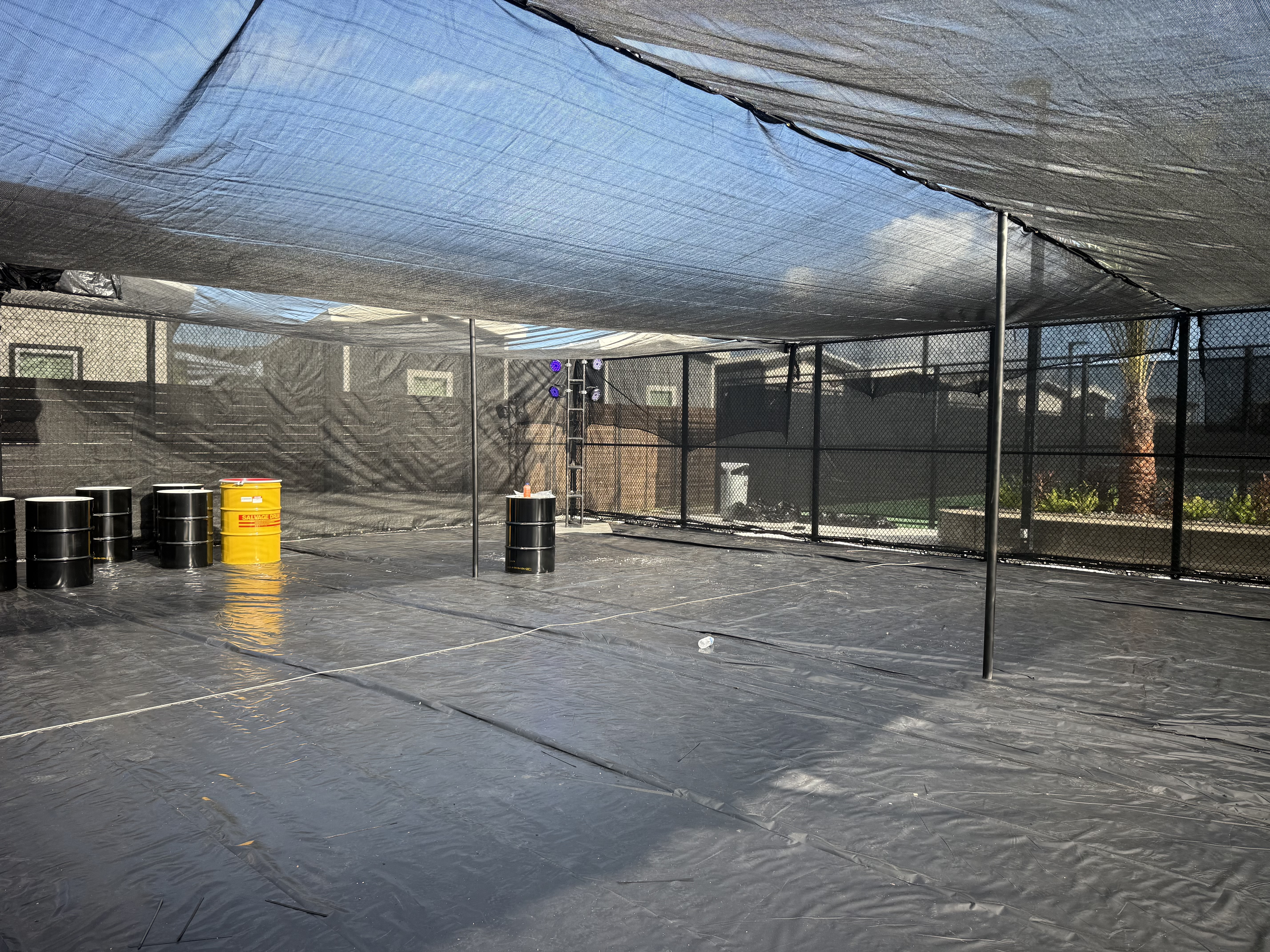
Paint does not stay inside a four-sided fence. Anyone shooting high sends it over the top. So the court got a full enclosure: walls, ceiling, and floor.
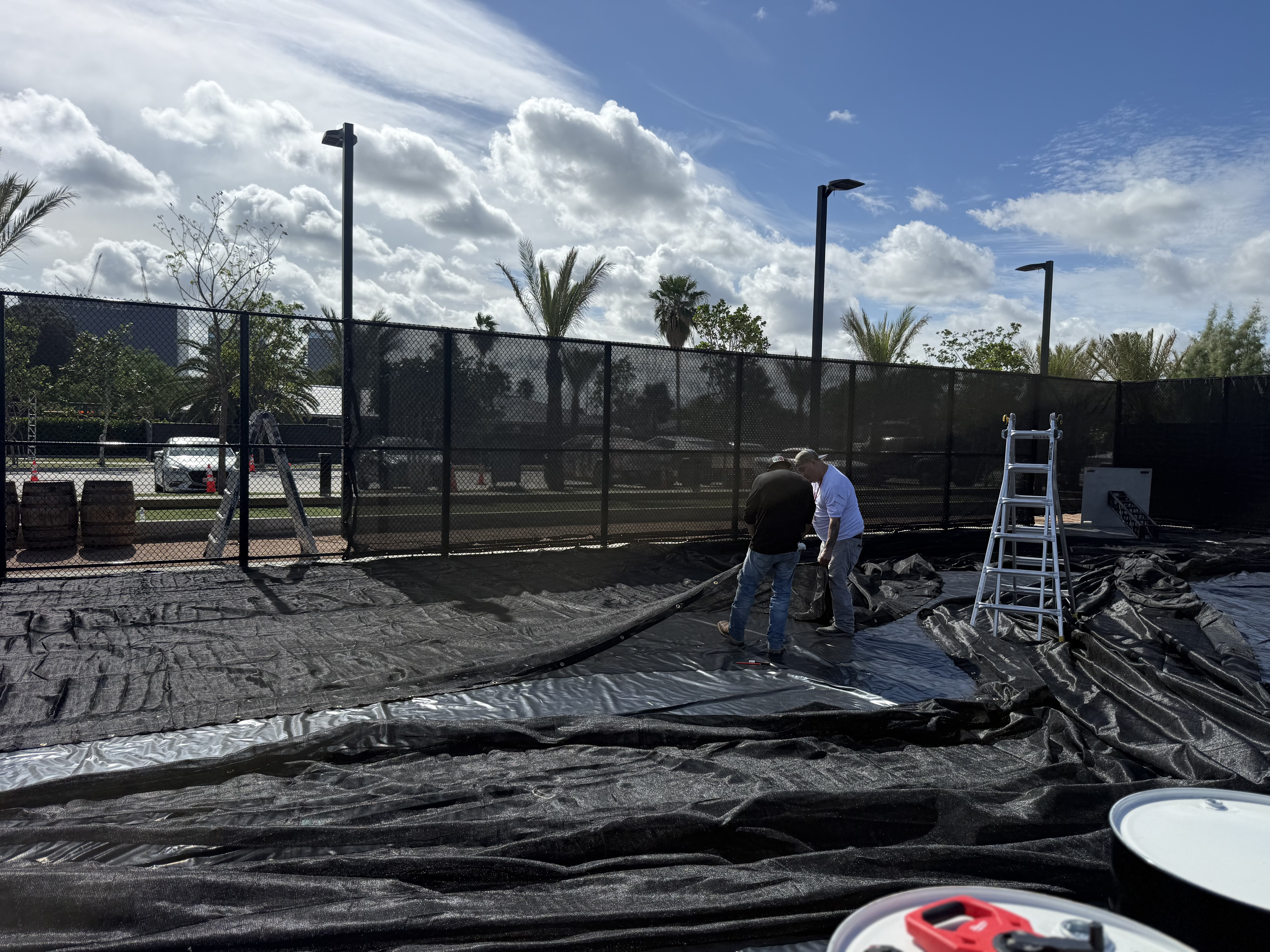
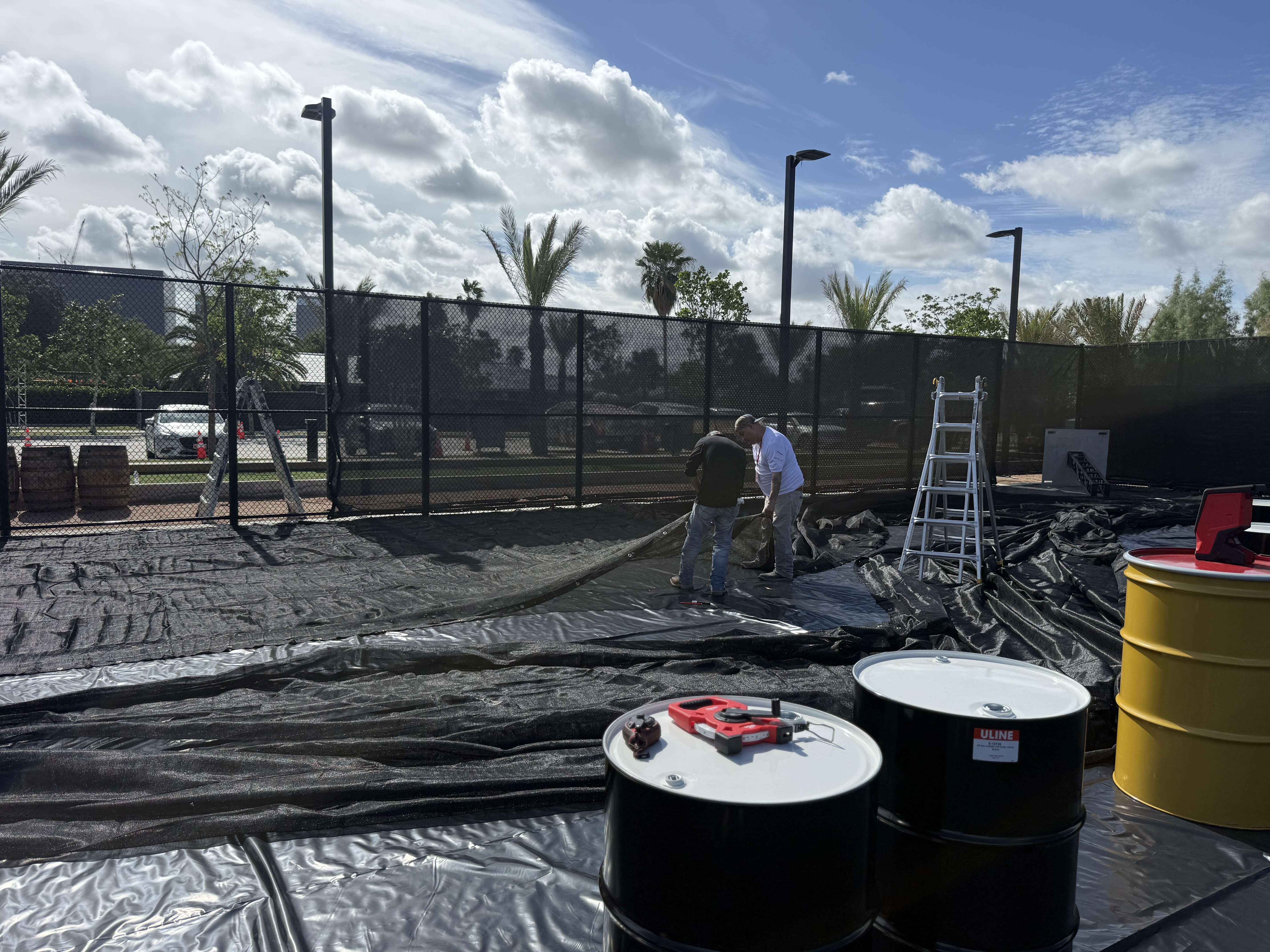
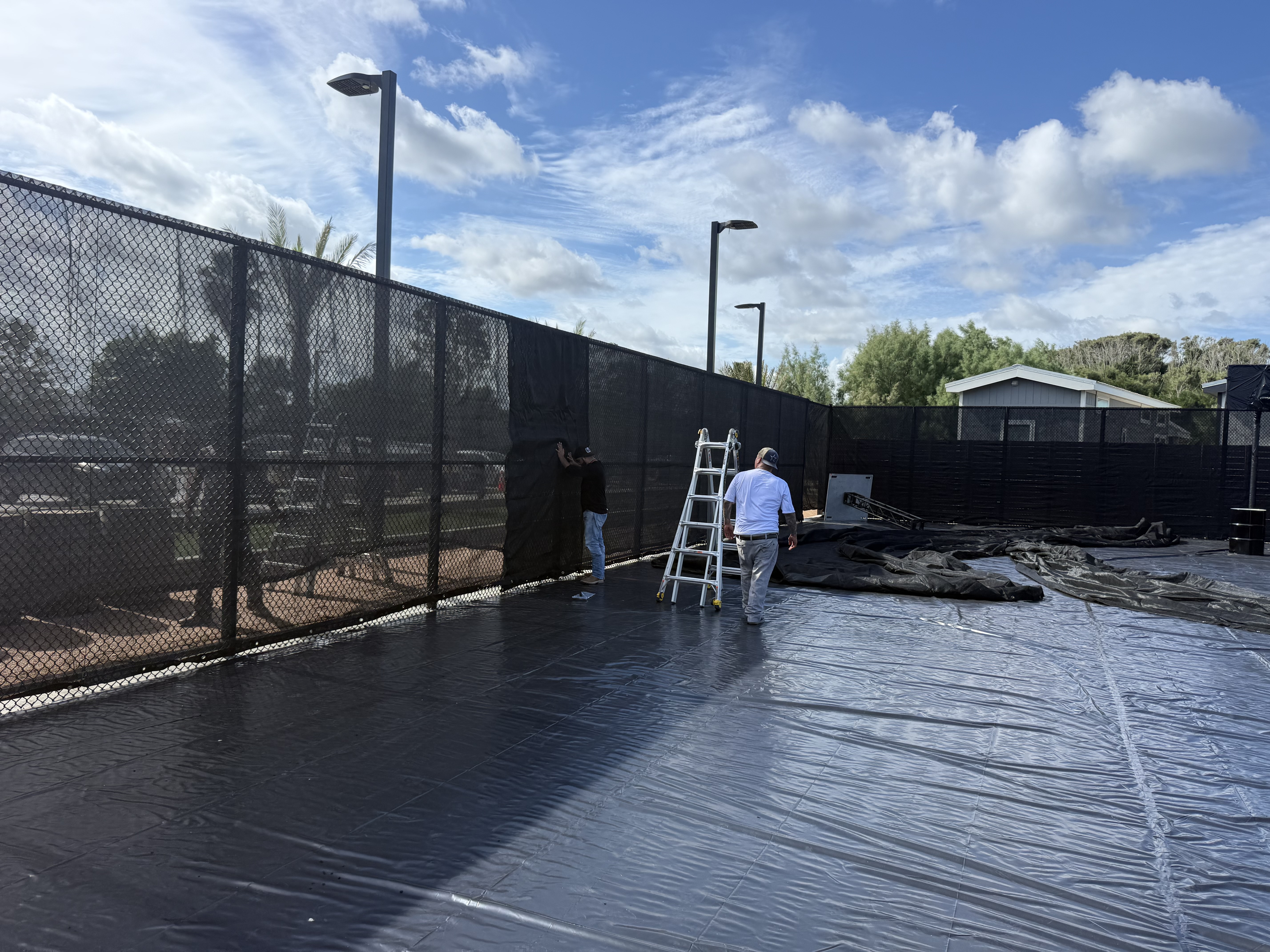
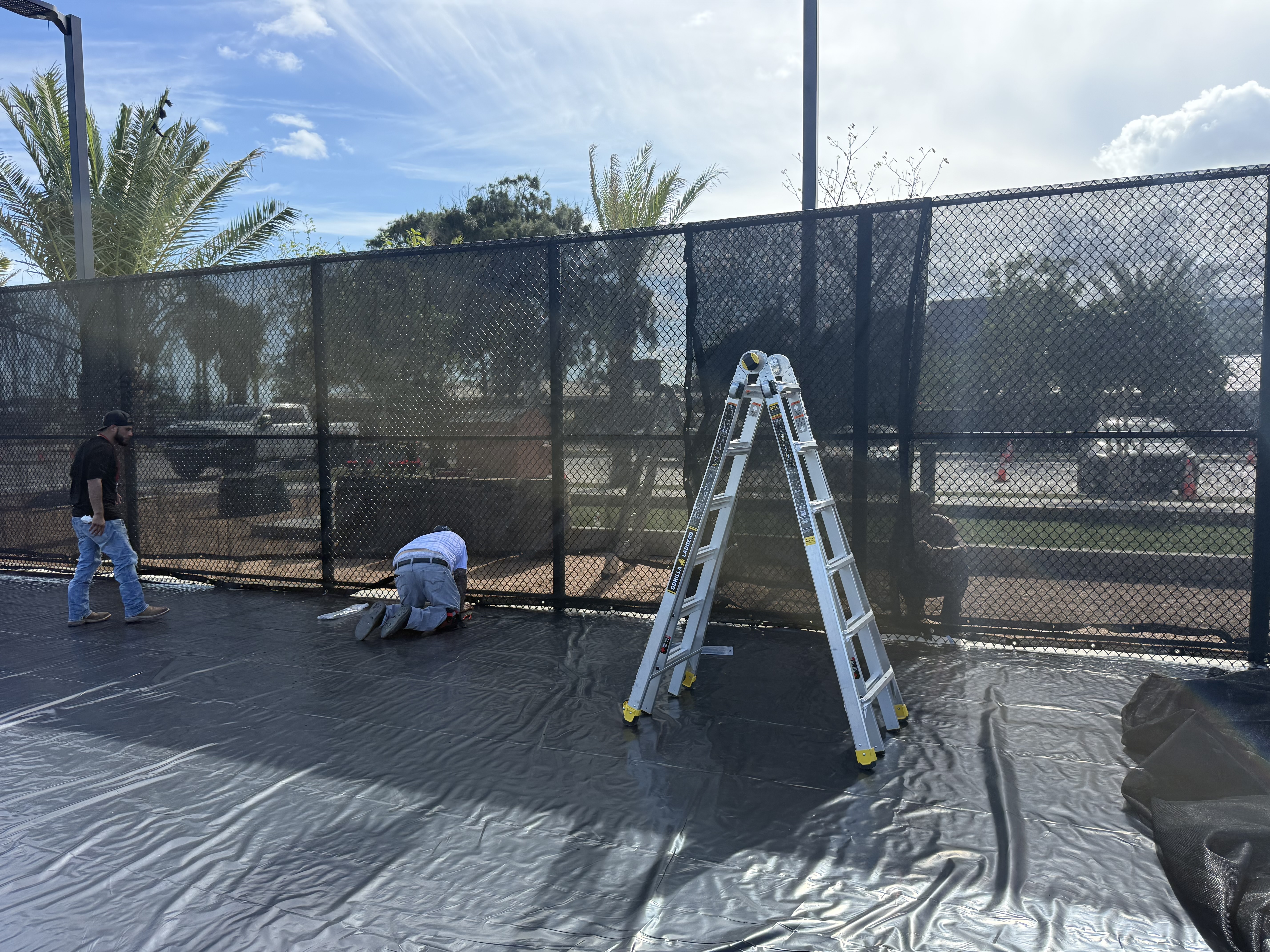
- Wall mesh on the existing fence — black paintball mesh hung on the inside face of the court’s chain-link, fastened at the top rail and tensioned at the bottom so there is no gap for a ball at ground level. The fence was never sized to carry a net in wind, so the mesh carries on the fence fabric, not the posts.
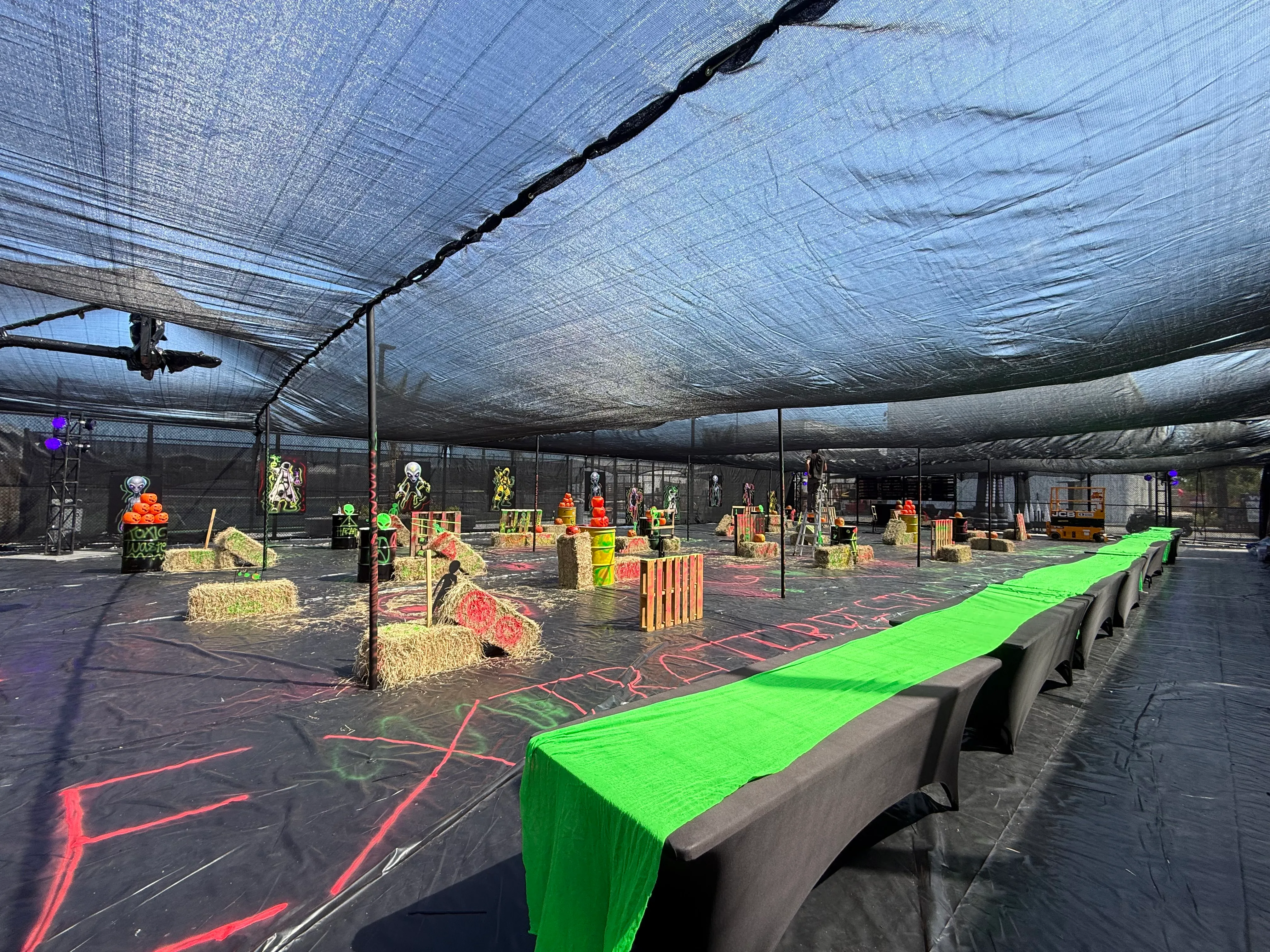
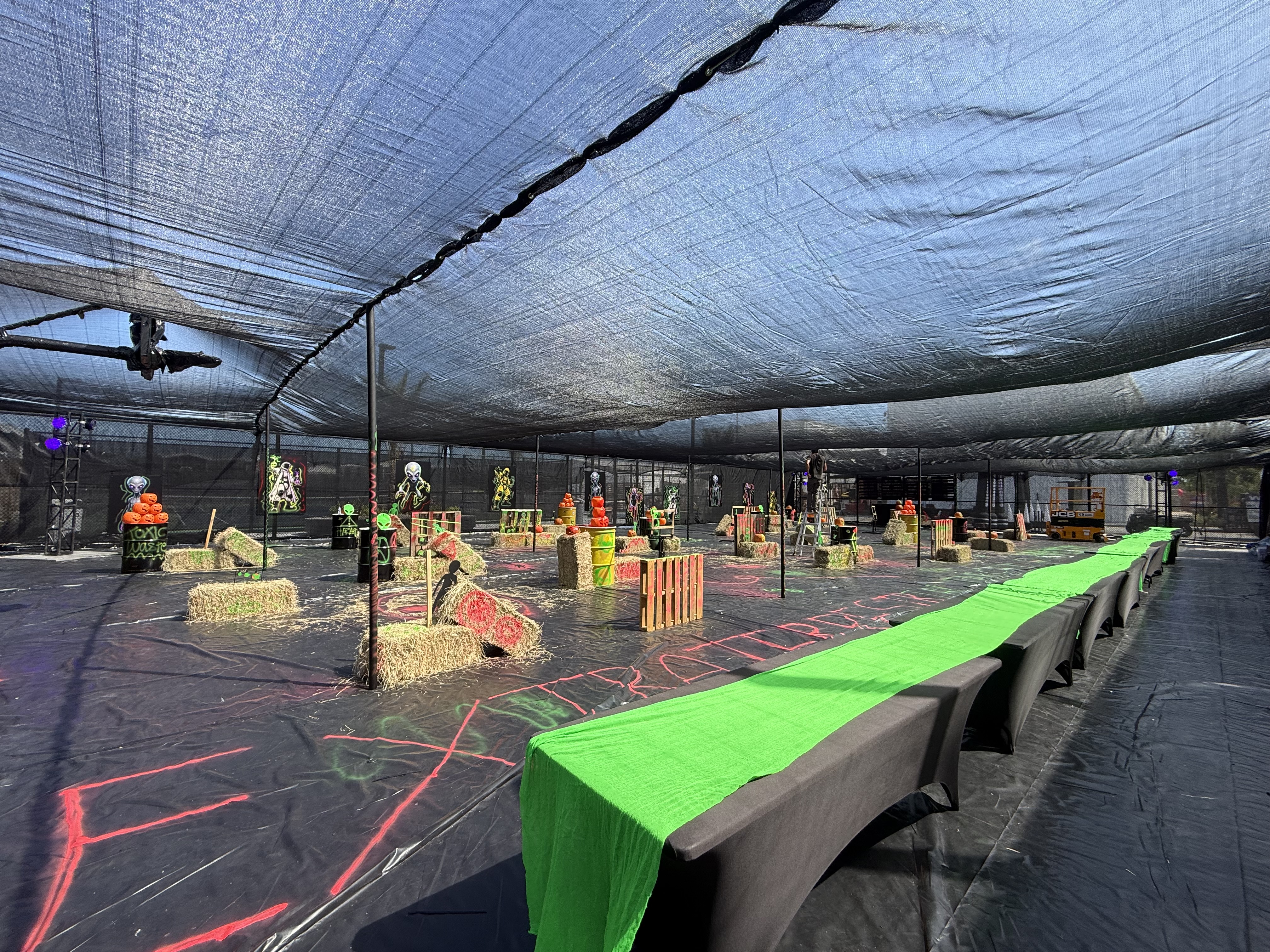
- Overhead containment ceiling — a net across the full court footprint, carried on freestanding galvanized steel poles and tensioned top cables running the length of the court. Cables terminate at the fence corners and the interior poles so the ceiling drapes evenly instead of pooling between supports.
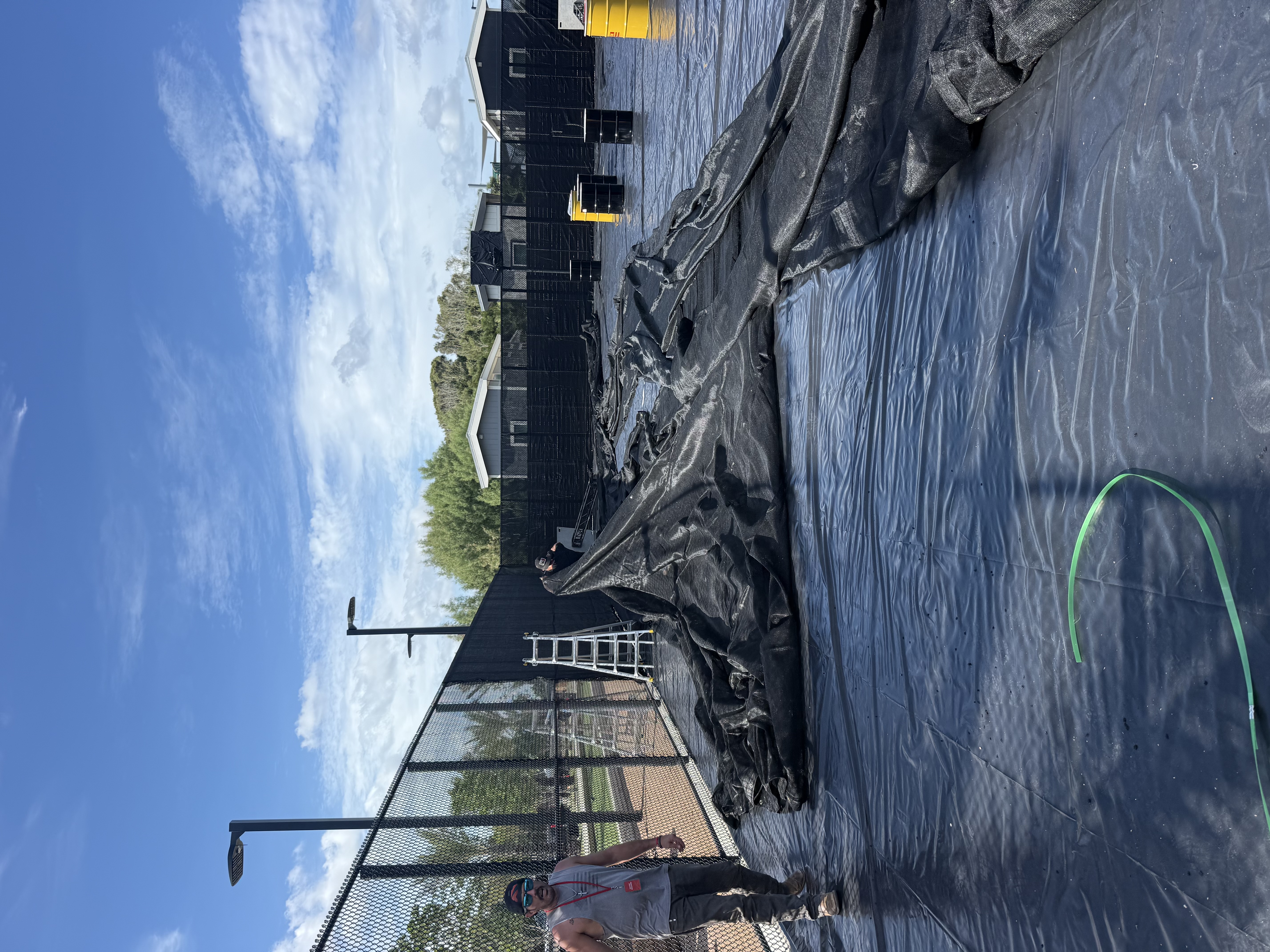
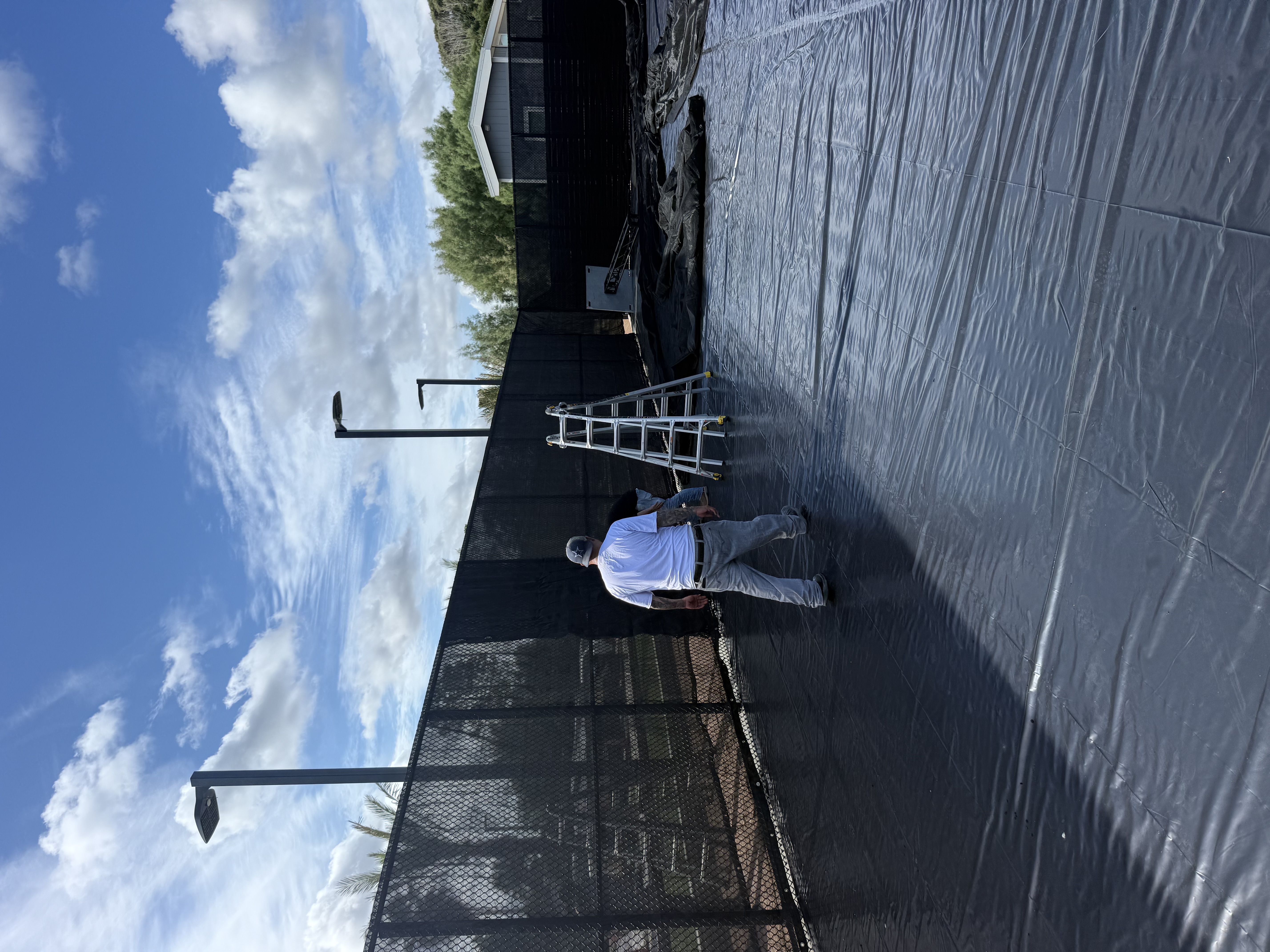
- Sealed floor liner — a black liner over the entire court, lapped under the wall mesh. Paint washes off the liner. It does not wash off a sport court. When the party was over the liner came up and the court underneath was untouched.
- Nothing permanent — no holes in the court, no welds on the fence, no footings. Everything is clipped, laced, and cabled so the same crew can take it down in a morning.
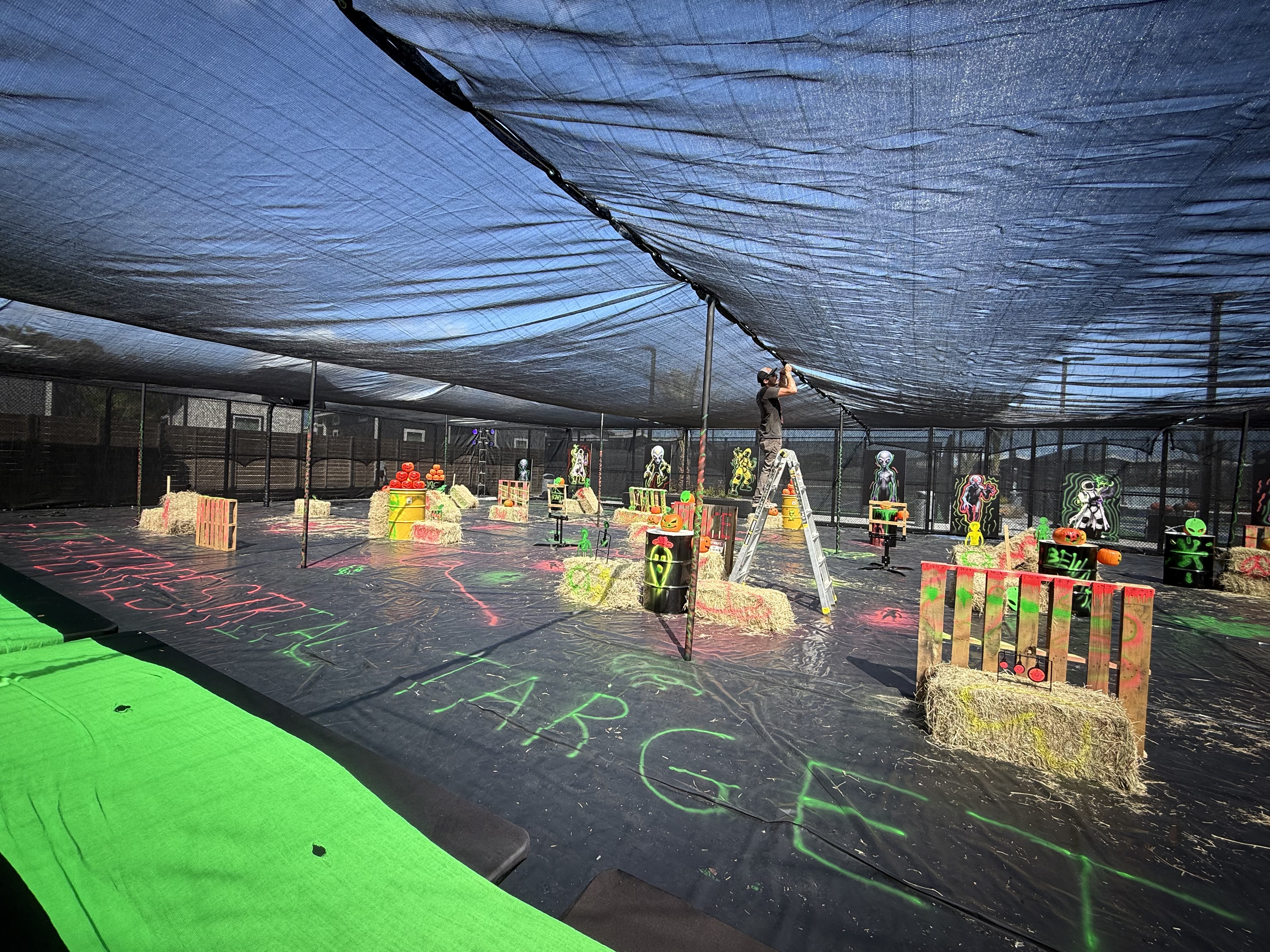
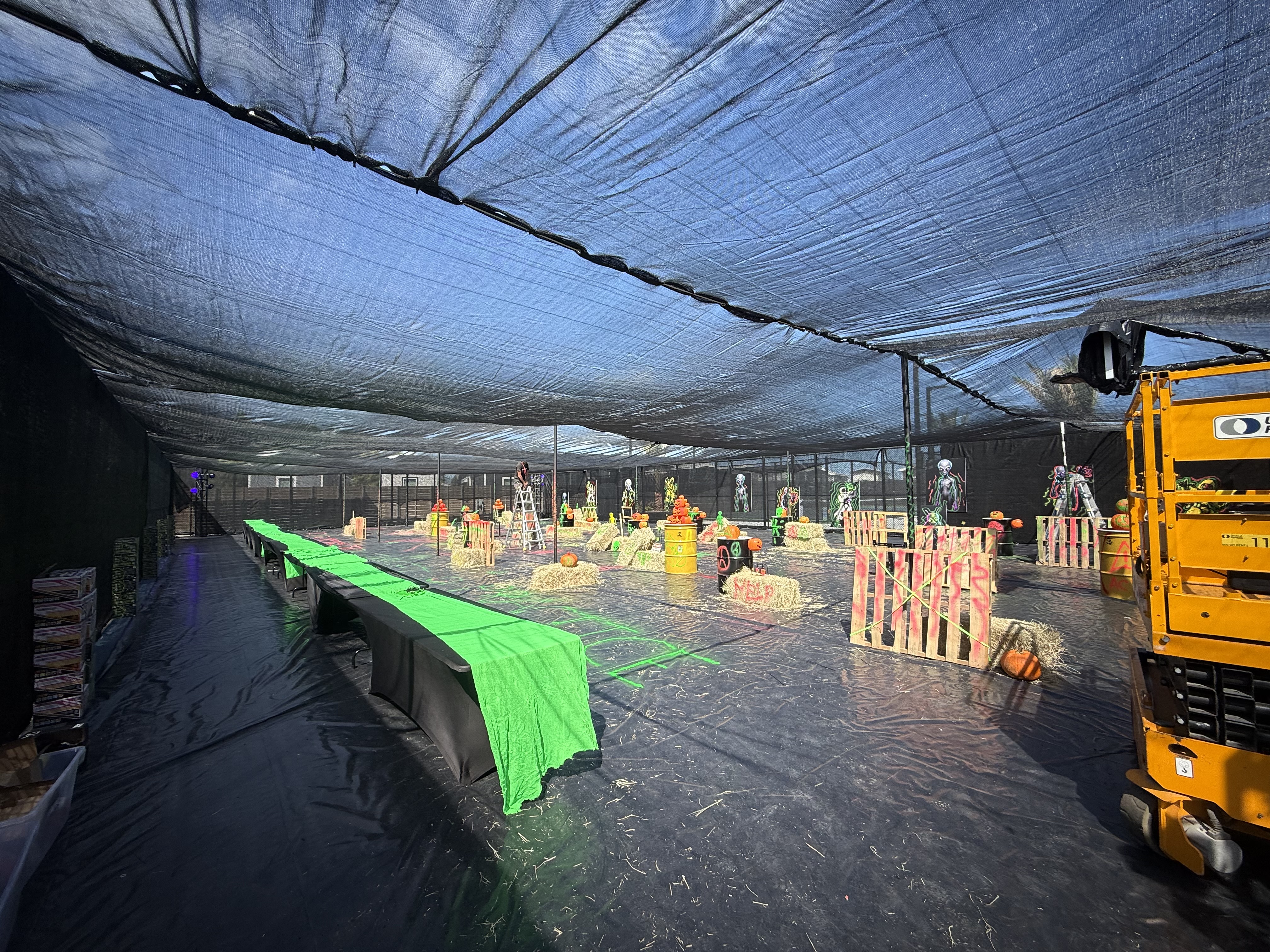
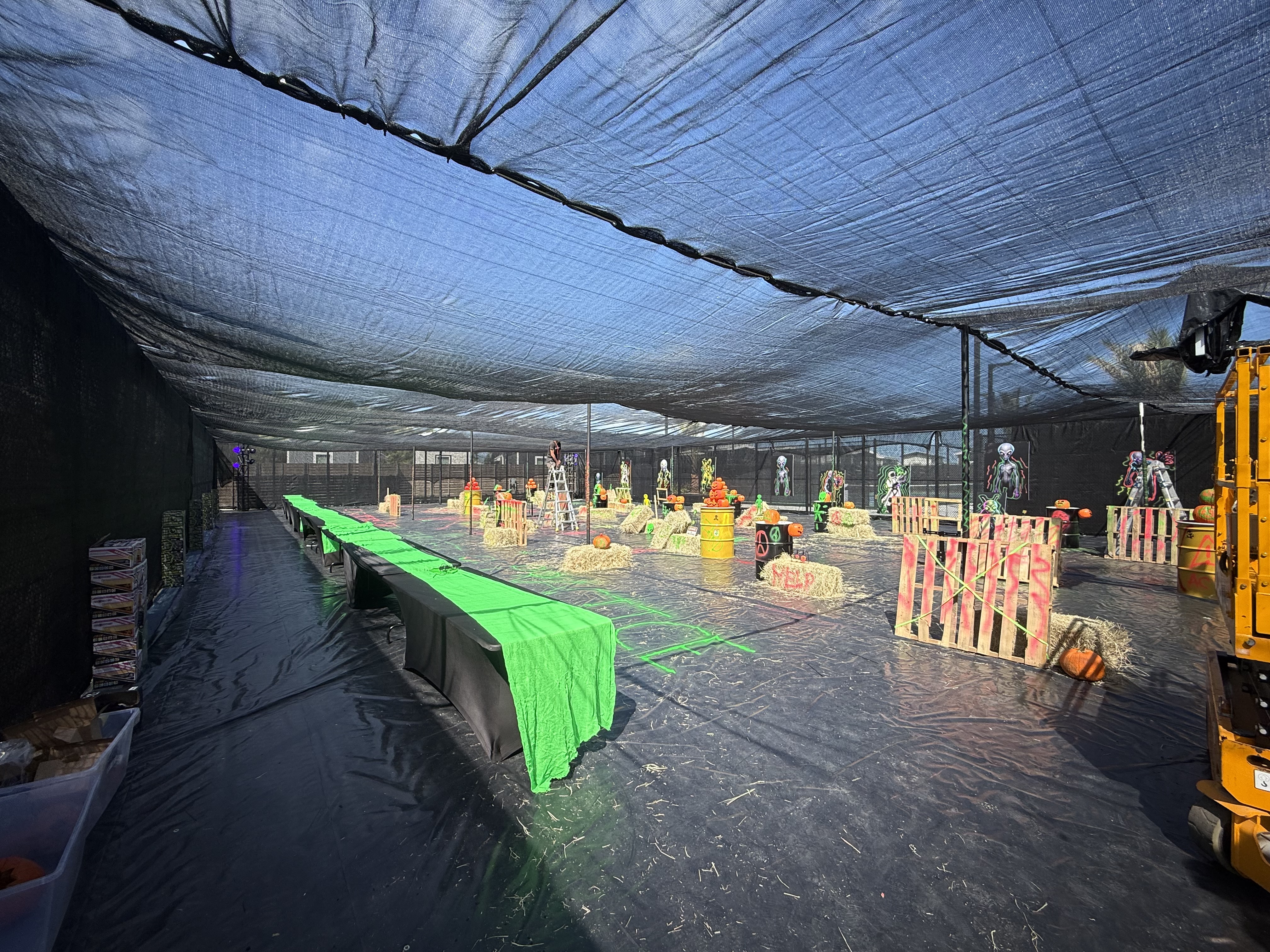
The company’s event team took it from there: a long shooting line of tables, hay-bale cover, pallet targets, barrels, glow-paint silhouettes, and the rules spray-painted on the floor.
Why a temporary course is a harder netting job than a permanent field
A permanent paintball field has poles set in concrete and a net that stays up for years. This one had to go up in two days, hold through South Texas coastal wind for the length of the event, and come down without a trace.
- No footings. With nothing in the ground, the structure is the fence plus freestanding interior poles. The ceiling cables are what make it rigid: tensioned corner to corner, they tie the enclosure into one shape.
- A ceiling is a sail. Paintball mesh is tight, and a tight net overhead catches wind like a tarp. Cable spacing and tension were set so a gust lifts the ceiling evenly instead of loading one pole.
- Paint goes everywhere. Walls, ceiling, and floor all take fire. The floor liner is the part people forget, and it is the part that keeps the client’s court from being a cleanup bill.
- Reversibility is the spec. Every attachment was chosen so teardown is a fraction of the install time.
Clearing security and hitting the date
Corporate campuses at this scale do not hand out gate access. We submitted the crew and vehicle information the client’s security team asked for, cleared their process ahead of the trip, and badged in on the morning of day one. The event team was dressing the arena while we were still hanging the ceiling, so we sequenced the work so theirs never waited on ours:
- Day one: floor liner down, wall mesh up on all sides.
- Day two: interior poles, ceiling cables, overhead net pulled across from the lift, final tensioning, walkthrough with the event team.
Standalone netting is usually a DFW build. A commercial enclosure for a client like this one travels, and a 500-mile drive each way was part of the quote, not a surprise on the invoice.
Far South Texas, on the coast
The site sits near the Gulf at the southern tip of Texas. Coastal wind, salt air, and sun are the three things that kill netting there, and all three were in the spec for a job that only had to last a party. Galvanized cable and UV-stable mesh were the floor, not the upgrade.
Three things to take into your next event or temporary course spec
- Enclose all six sides, not four. If the venue cares about what is next to the field, you need a ceiling and a floor. Walls alone are a permanent-field answer.
- Tension makes a footing-free structure rigid. Without concrete, the cables are the structure. Insist on turnbuckle tensioning and real corner terminations, not zip ties to a fence.
- Plan the teardown on day one. Every attachment should be reversible by the same crew in a fraction of the install time.
Paintball and event netting FAQ
How much does a temporary paintball or airsoft enclosure cost?
It is priced on footprint, wall height, and whether it needs a ceiling. A walls-only enclosure on an existing fence is the cheapest version. A full ceiling on interior poles roughly doubles the rigging labor. Send us the court dimensions and the dates and we will give you a planning range before the site visit.
Can you work on a secured corporate or industrial campus?
Yes. This install ran inside a controlled campus for a large technology company on a two-day window. We clear your security process ahead of time, badge in, sequence around your schedule, and leave nothing behind.
Does the netting damage the fence or the court?
No. Wall mesh is clipped to the fence fabric, interior poles stand on the floor liner, and the liner protects the court from paint. The enclosure comes down without holes, welds, or footings.
Do you install permanent paintball, airsoft, and range netting too?
Yes. Permanent fields get poles set in concrete, sized for the wind in your county. The mesh and rigging logic are the same; the structure underneath is built to stay.
Are you HUB Certified?
Yes. Bearcat Turf & Outdoors is HUB Certified for public-sector and qualifying private procurement.
Working with Bearcat on a commercial or event netting project
We build containment, barrier, and perimeter netting for corporate and campus events, paintball and airsoft venues, baseball and softball complexes, driving ranges, and multi-sport facilities across Texas and Oklahoma. One site walk, one fixed price, and a crew that travels.
Get a quote → · Custom sports netting · Facility construction
During
In the build.
Floor liner first, then wall mesh clipped to the chain-link from the inside, then interior poles and the ceiling cables, then the overhead net pulled across one bay at a time from a scissor lift.