Bearcat Turf & Outdoors Services
Cricket Facilities
Backyard cricket practice nets and commercial indoor cricket training facilities across DFW. Steel-frame netting, turf or true-bounce matting pitch, bowler run-up length options. Backyard nets from $9,000; commercial multi-lane builds priced per lane.
DFW's cricket scene has grown fast — new indoor cricket facilities have opened across the metro in the last couple years, and rentals run $40-75 an hour just like batting cage time. We build the same thing those facilities are made of: a steel-frame netting enclosure over a turf or cricket-specific matting pitch. It's the same trade as our batting cages and bullpens — poles, netting, turf, concrete footers — sized and rigged for a bowler's run-up instead of a pitcher's mound.
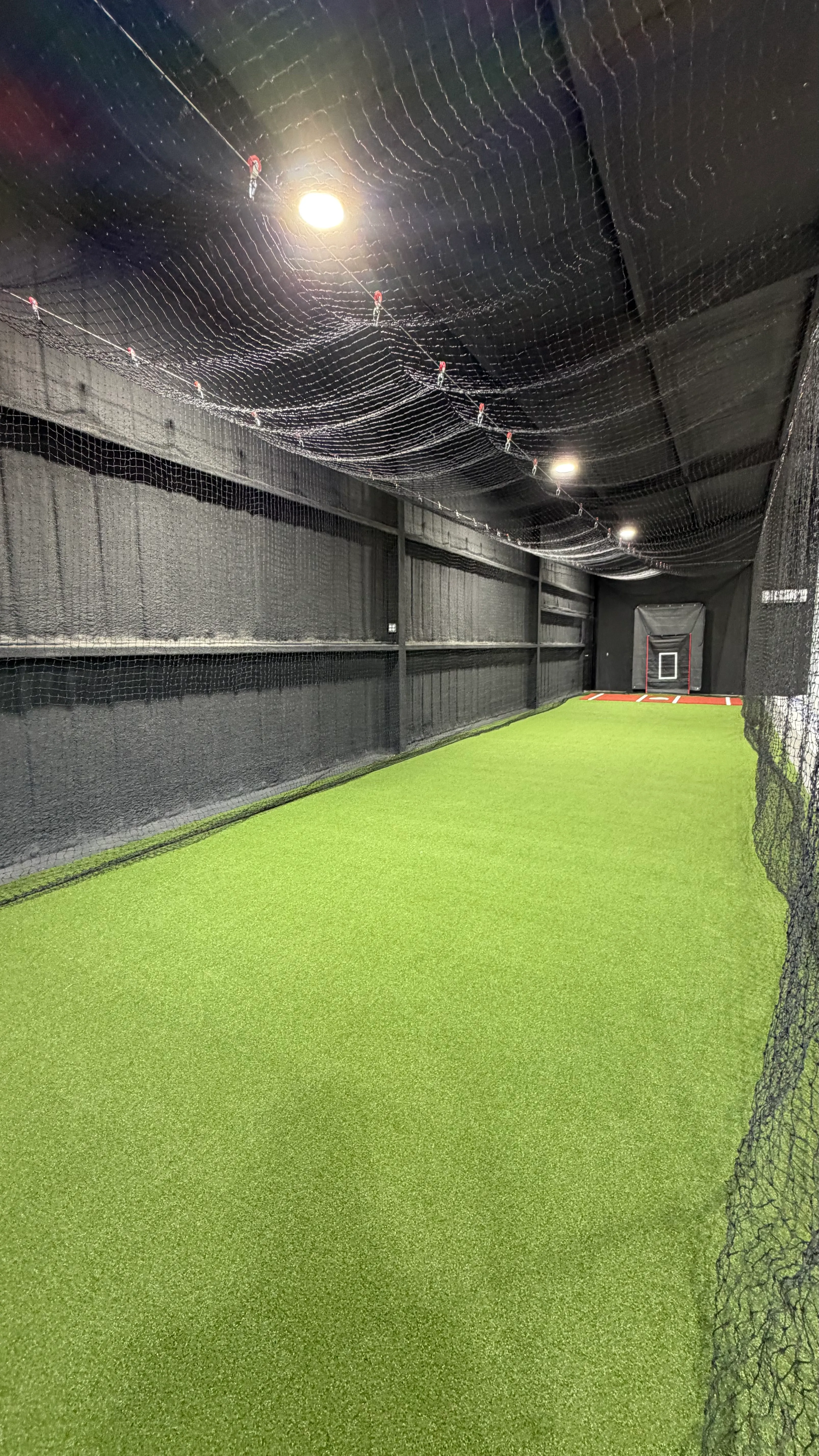
One of our indoor batting cage builds — same steel frame, cable-hung netting, and turf construction we'd use for an indoor cricket net.
Why build a cricket net instead of renting
A serious player doing regular net sessions at $40-75/hr adds up fast across a season, on top of booking a lane and driving to it. A backyard or facility net replaces that with unlimited reps on your own schedule. It's also the build a lot of cricket clubs and youth programs are asking for right now — there's real demand and not many local builders who've done one.
What a Bearcat cricket net includes
- Steel-pole frame anchored into a poured concrete footer, sized to the bay length and rigged for full-speed bowling, not just soft-toss.
- Heavy-duty netting. UV-stabilized HDPE, 50mm knotted mesh, in 1.5-3.0mm twine gauges depending on how much bowling speed and daily use the net needs to take — the heavier gauges are the same weight class we use for batting cage backstops.
- Turf or true-bounce matting pitch. Performance turf for a general-purpose net, or dedicated cricket matting where realistic ball bounce off the pitch matters more than turf feel.
- Proper drainage base. Crushed-stone sub-base with a timber or steel edge restraint, graded so the net plays the same in a wet Texas spring as a dry August (outdoor builds).
How we build it
We scope off photos and dimensions first, then walk the site to confirm anchoring, drainage, and any permitting the shell needs before a pole goes in the ground. You get one quote for the full scope, not a per-linear-foot estimate that changes once the crew is on site. Foundations and posts go in first, then netting and cable rigging, then the pitch surface — same sequence whether it's a backyard net or a multi-lane commercial floor.
Common Bearcat cricket net builds
- 35-55' backyard net. Compact single-lane net for individual or family practice — batting and short-run bowling work. 35'x12' is the smallest cage that fits a real bowling run-up. $9,000-$14,000.
- 65-70' net with full bowler run-up. International-standard length, room for a full approach and follow-through. $14,000-$20,000.
- Box cricket arena. A compact, fully-netted turf arena for the shorter box-cricket / 5-a-side format — boundary netting on all sides instead of a single lane, popular as a warehouse, rooftop, or metal-building conversion. Priced by footprint; ask for a quote once you have a space in mind.
- Commercial multi-lane training facility. Indoor, climate-controlled shells with two or more lanes side by side, partition nets between them, lighting and sight-screen coordination. Priced per lane, starting around $15,000-$22,000/lane for frame, netting, and pitch surface — site work and shell construction quoted separately.
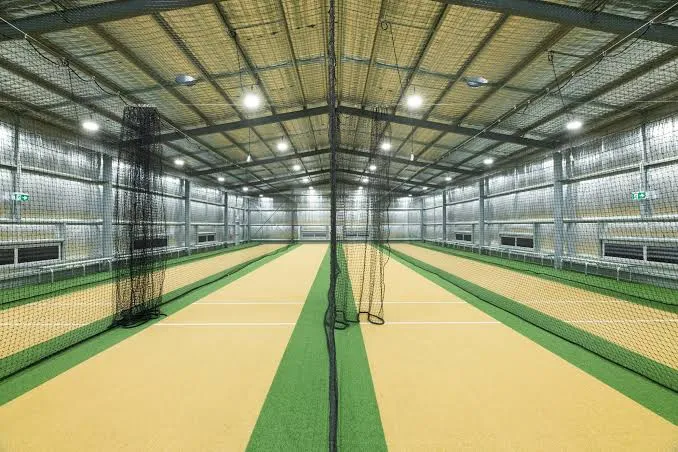
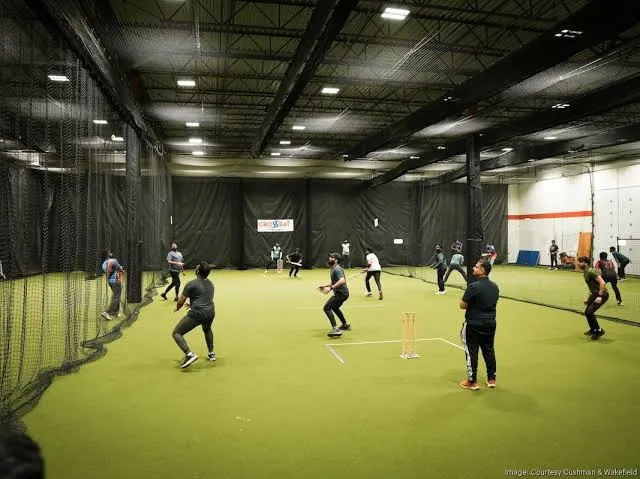
For reference, here's what a professional multi-lane indoor cricket facility looks like — not a Bearcat project, but the layout we'd be building toward on a commercial job:
Indoor vs. outdoor
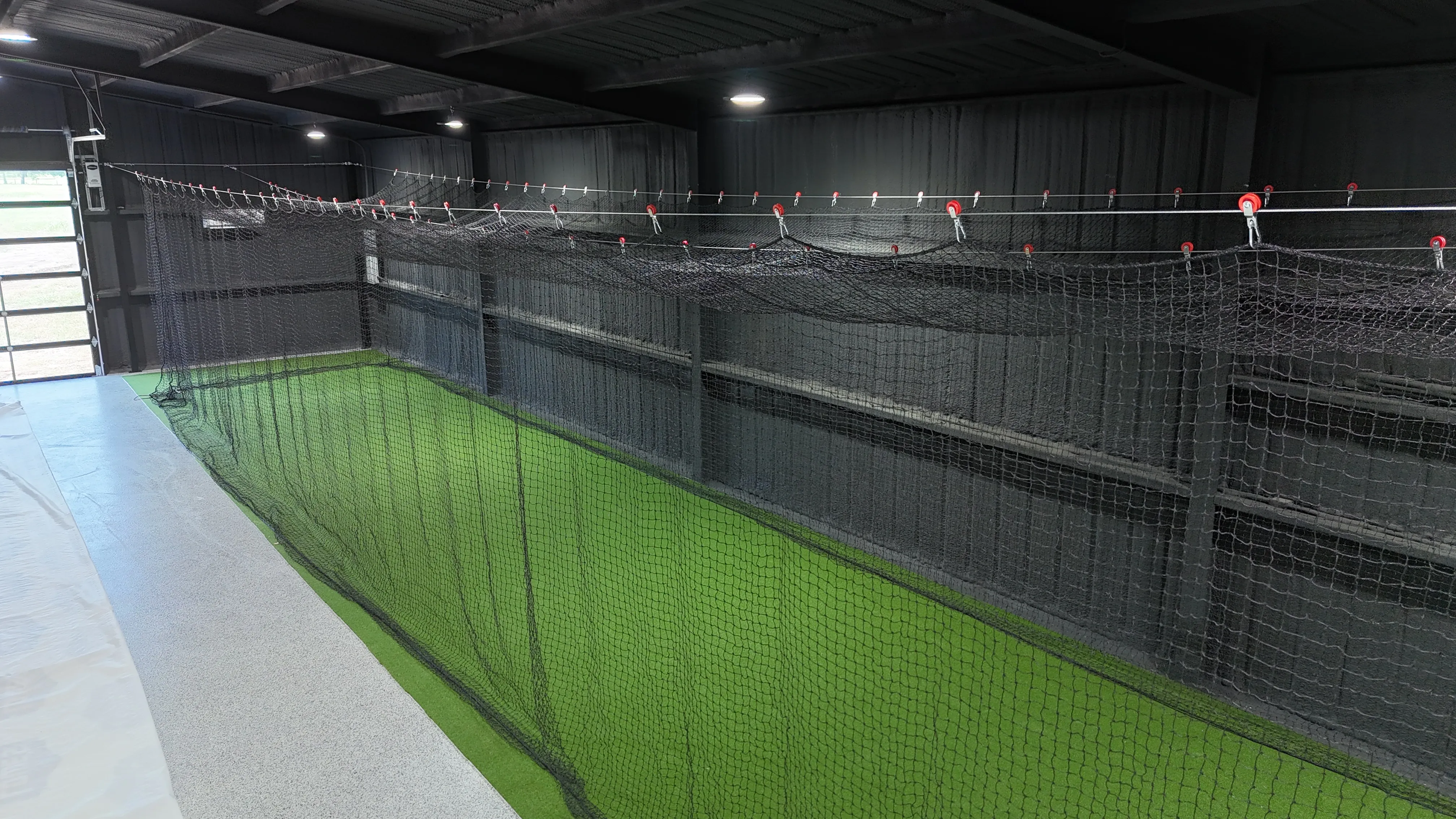
Every DFW cricket facility we've looked at is indoor and climate-controlled, which fits a market that wants to train year-round regardless of Texas heat or a wet week. Outdoor backyard nets are the more common ask for individual families, since they don't need the enclosure a commercial facility does. We build both — indoor conversions follow the same anchoring and lighting approach as our indoor batting cage training facilities, shown below in a metal-building batting cage we built.
Pairs well with
If you're already getting a batting cage or bullpen quoted, ask about adding a cricket net to the same proposal — it's the same crew, the same netting supplier, and often the same concrete pour.
Run the calculator or request a free on-site walkthrough — we'll measure the space and send a fixed-price proposal within 48 hours.
Budget check
What would artificial turf cost for cricket facilities?
Three quick questions. Real price range for your project in under a minute. No email required to see the number.
Run the Calculator →Related services
More ways we can help.
Backyard Turf
Residential backyard turf across DFW. Stays green through the Texas summer, drains fast after a storm, holds u ...
Sports Fields
Full sports field turf for schools, parks, and youth leagues. Baseball, football, soccer, lacrosse. No more ra ...
Putting Greens
Tournament-grade backyard putting greens across DFW from $5K to $32K, built on Tour Elite turf with tuned stim ...